
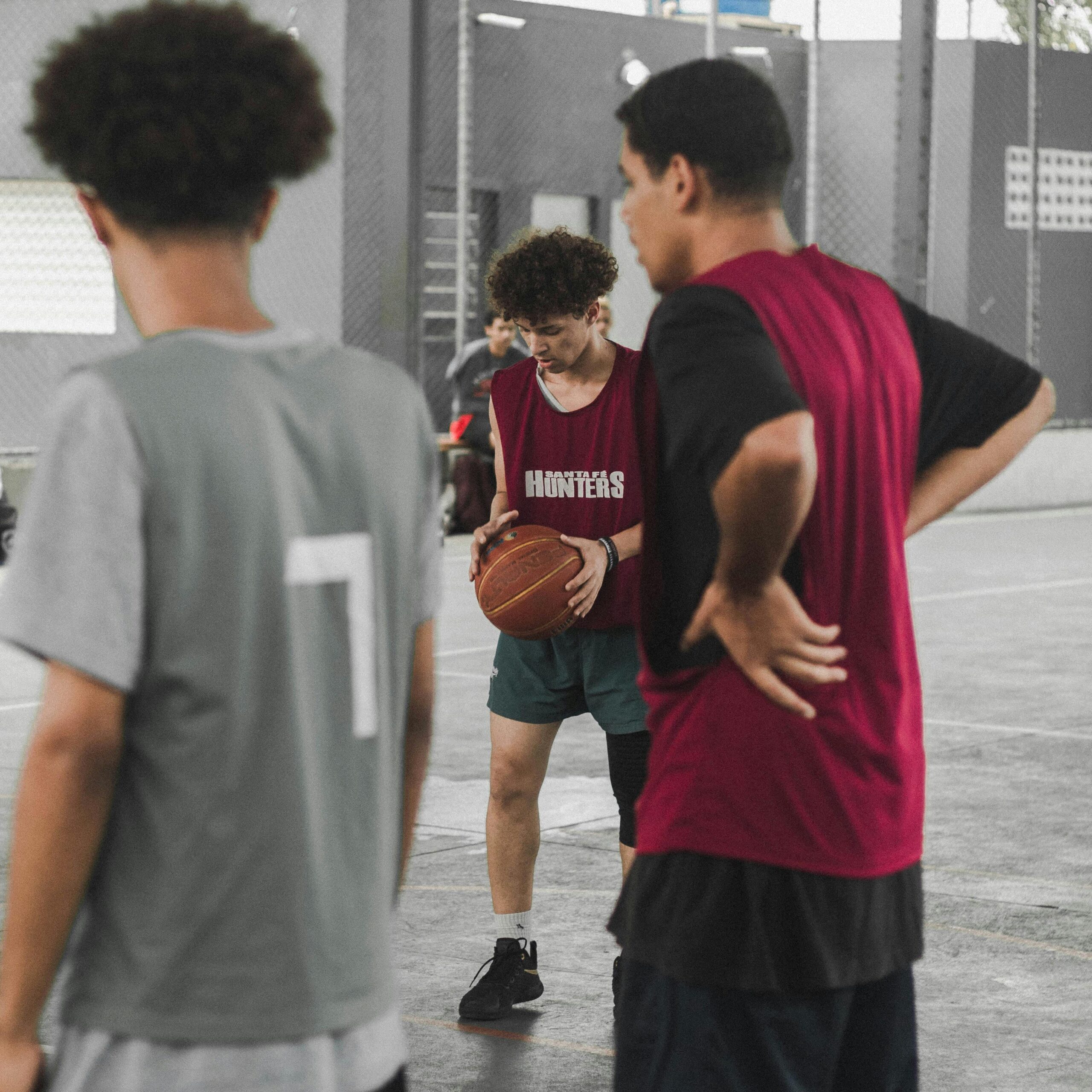
Basketball development rarely happens in a straight line.
A player might be an excellent ball handler but struggle to finish with their weak hand, while another may shoot well in workouts but have trouble finding good shots once defenders are involved. A strong, athletic player may still need work on footwork and decision-making.
That’s why good development isn’t simply about moving from “beginner drills” to “advanced drills” as a player gets older. It’s about figuring out what the athlete can already do, where the gaps are, and then adding difficulty at the right time.
USA Basketball takes that approach in its current Player Development Curriculum. Rather than assigning every player to a level strictly by age, the curriculum progresses through Introductory, Foundational, Advanced and Performance levels based largely on skill mastery. USA Basketball specifically notes that a player can be advanced in one area and foundational in another.
That’s a much better way to think about building a complete basketball player.
Fundamentals Still Come First
There is a reason coaches keep returning to footwork, passing, ball handling and shooting, and that’s because more advanced basketball depends on those skills.
A player who can’t control the ball under pressure will have trouble running a pick-and-roll no matter how well they understand the concept. A player whose footwork breaks down around the basket isn’t ready for ten different finishing moves. Someone who struggles to make a basic pass on time probably doesn’t need a complicated offensive system yet.
USA Basketball organizes player development around eight broad areas:
- ball handling and dribbling
- footwork and body control
- passing and receiving
- rebounding
- screening
- shooting
- team defense
- team offense
Coaches are encouraged to establish a baseline first, and then build from what the player demonstrates. Of course, that doesn’t mean athletes should stay in basic drills forever. Once a player has control of a skill, the next step should make it harder in a way that starts to resemble basketball.
A young player may first learn a crossover without defense. Then they can use it while moving. Next, add a defender. Eventually, the crossover isn’t the point of the drill at all, it’s that the athlete has to recognize whether the defender has actually given them a reason to use it.
Skills Have to Survive Against a Defender
One of the easiest traps in basketball training is getting really good at workouts.
A player can look polished moving through cones, taking uncontested shots and performing predetermined combinations, but the real test comes when another player is trying to stop them, and this is where decision-making has to become part of development.
The Jr. NBA’s current instructional curriculum has moved further in that direction, adding more 1-on-1, 2-on-2 and 3-on-3 games, unpredictable starting situations and activities where players have to choose what to do instead of knowing the answer before the drill begins.
That approach matters because basketball is constantly changing and players learn to handle those situations by seeing them.
For example, instead of running a finishing drill where the athlete is told, “Take two dribbles and finish with your left hand,” put a defender near the rim and let the athlete choose the finish.
Instead of practicing the same pass ten times against air, play 2-on-1 and make the ball handler decide when the defender has committed enough to create the passing lane.
You’re still developing technique, but now you’re just putting it into a situation where the athlete has to think.
Athletic Development Supports Basketball Skills
Skill matters enormously, but basketball is also a physical game.
Players accelerate, stop, jump, land, cut and change direction repeatedly. As athletes get older, strength and power become increasingly important for things like maintaining balance through contact, getting off the floor and controlling the body when changing speed.
The National Strength and Conditioning Association’s long-term athletic development model emphasizes gradually building fundamental movement ability, motor skills and foundational strength as young athletes mature. The goal is safe progression rather than rushing children into adult-style training.
For a younger basketball player, athletic development may include learning how to decelerate without losing balance, land under control, move laterally and produce force from both legs. As the athlete develops, resistance training and more advanced speed and power work can be introduced appropriately.
But physical training should support basketball rather than replace it. The goal is to become more capable physically so those qualities can actually be used during the game.
Players Need Time to Learn the Game
“Basketball IQ” is a phrase that gets thrown around constantly, but it usually comes down to recognition and decision-making.
- Does the player understand spacing?
- Do they know when a teammate needs help?
- Can they recognize an advantage instead of forcing the play they planned before receiving the ball?
- Do they know where the next pass should go when the defense rotates?
Those skills develop through coaching, film, experience and a lot of live basketball.
This is one reason small-sided games can be so effective. With fewer players on the court, each athlete gets involved more often and sees the same types of decisions repeatedly.
A 3-on-3 possession might force a player to defend the ball, help on a drive, recover to a shooter, box out and then immediately transition to offense. There is nowhere to hide.
That doesn’t mean every practice should become an unstructured scrimmage. Coaches can manipulate the game to emphasize whatever the player needs. Limit dribbles to encourage passing. Give an extra point for a paint touch. Play 3-on-2 so the offense has to recognize an advantage.
The rules create the problem, and then the players learn to solve it.
Development Should Get More Individual Over Time
As athletes improve, their needs become increasingly specific.
A guard may need to learn how to manipulate a defender in ball-screen situations. A wing might need more work attacking closeouts. A post player may need to improve screening angles, finishing through contact or passing when double-teamed.
Even within those positions, no two athletes develop exactly the same way.
USA Basketball’s progressive coaching model recommends establishing individual baselines, setting attainable goals and modifying training for players who are ahead or behind the rest of the group in a particular skill.
That’s one reason individual training can become useful alongside team basketball.
Team coaches have to prepare an entire roster, while a private coach can spend much more time on the one or two things holding a particular athlete back.
The important part is making sure the extra training has a purpose.
Basketball Development Isn’t Only About the Box Score
Players must learn things through basketball that don’t show up in shooting percentages.
They have to listen to coaching, respond when someone else gets the role they wanted, communicate with teammates and keep working after a difficult game.
Those experiences can help build qualities such as accountability, resilience and teamwork, but they aren’t automatic simply because a child plays basketball, it’s the coaches and adults who shape that environment.
For young players, that may mean learning to be a good teammate when they aren’t scoring. It may mean taking responsibility for effort or preparation. As athletes get older, leadership, communication and handling increasingly competitive environments become more important.
None of that requires turning every practice into a life lesson, it means having clear standards and treating the moments that come up during basketball as opportunities to teach.
A Complete Player Is Never Really Finished
There isn’t a point where an athlete checks off shooting, passing, strength and basketball IQ and becomes “complete.”
The game keeps getting harder.
Defenders get faster. Space disappears more quickly. Players get stronger. Decisions have to happen sooner. Skills that worked comfortably at one level have to hold up against better competition at the next.
Progressive development prepares players for that.
Start with fundamentals. Add pressure. Make the decisions harder. Build the physical qualities needed for the next level. Continue identifying what the athlete does well and what still needs attention.
Sometimes the next step is an advanced skill.
Sometimes it’s going back and cleaning up a fundamental that never became as reliable as everyone assumed.
Find Basketball Training That Matches the Player
Private basketball training can be especially useful when it is built around the athlete rather than a one-size-fits-all workout.
Athletes Untapped connects players with private basketball coaches who can focus on the areas where an athlete needs more attention, whether that’s shooting, ball handling, footwork, finishing, defense or decision-making.
The goal shouldn’t be to make a young player look advanced as quickly as possible, it should be to build skills that hold up when the game gets harder.


