
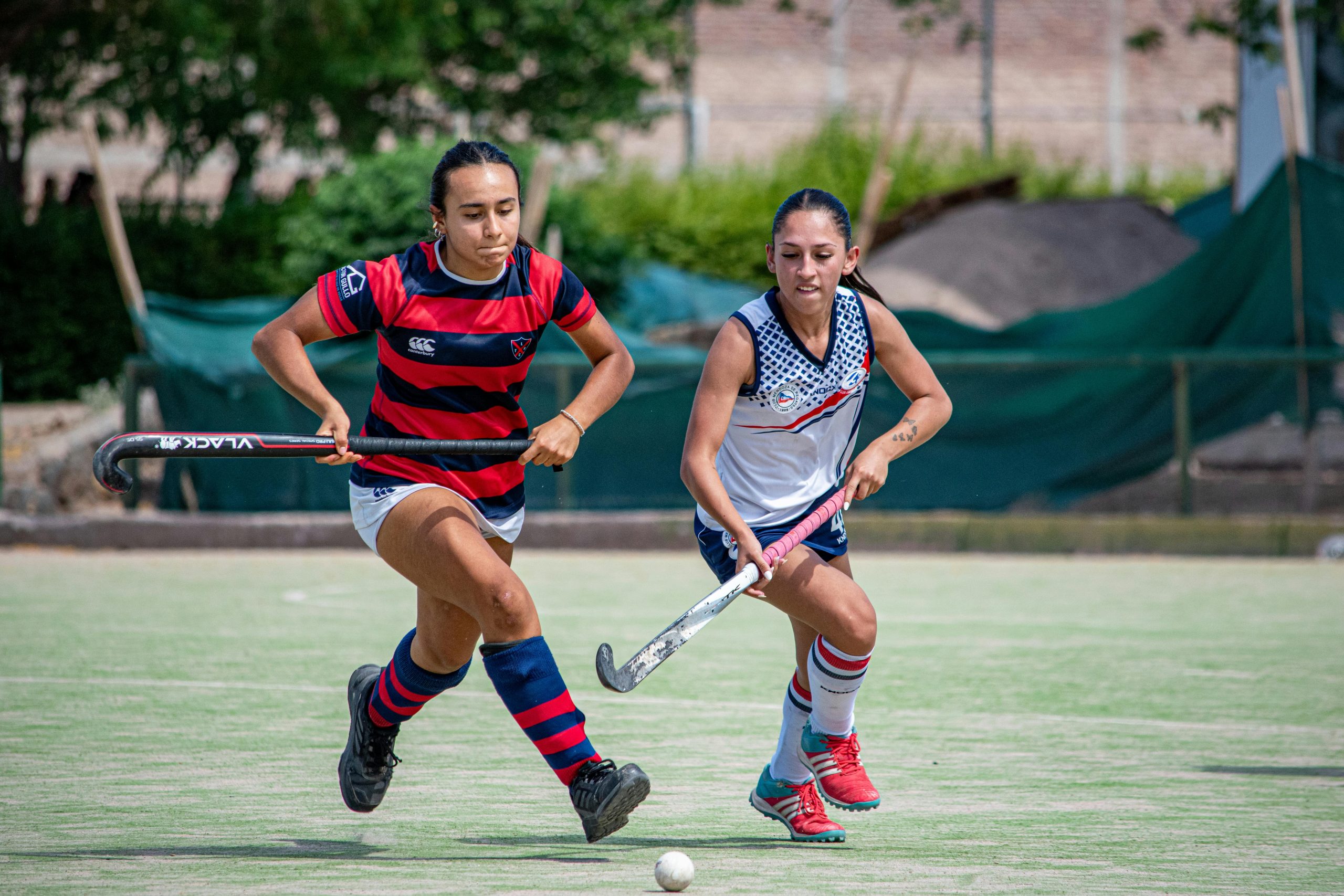
In field hockey, having a star player with dazzling 3D stick skills is a tremendous asset, but passing is the connective tissue that actually wins championships. You can have the fastest forward line in your conference, but if your midfield cannot string together three consecutive passes to break out of your own defensive half, your speed is completely neutralized. Field hockey is a game of angles, spatial awareness, and exploiting gaps in the defense. The team that moves the ball faster than the opposition can run is the team that controls the scoreboard.
At Athletes Untapped, our coaches notice that many young players treat passing as an afterthought, preferring to put their heads down and dribble directly into triple coverage. When they are finally forced to pass, they panic, resulting in weak, inaccurate pushes or chaotic sweeps that get easily intercepted. This lack of ball distribution leads to exhausted midfielders, stagnant offenses, and a highly frustrating inability to maintain possession against a structured, high-pressing defense.
The secret to dismantling a defensive press and creating effortless scoring opportunities lies in mastering essential field hockey passing drills. Proper repetition fixes these selfish habits. It allows players to utilize crisp push passes, disguise their intentions with their eyes, and establish a fluid, tiki-taka style of play that completely exhausts the opposing team.
Connect with a Private Field Hockey Coach: https://athletesuntapped.com/browse/field-hockey/
Why Field Hockey Passing Drills Matter for Athlete Development
Your passing vision and accuracy dictate your overall value as a teammate and a playmaker. Without a sound understanding of how to distribute the ball under pressure, you are essentially playing a solo game on a pitch that requires eleven people to win.
- Game Performance: Elite passing execution directly translates to bypassing the opponent’s defensive lines. When you fully understand how to execute a perfect give-and-go wall pass, you instantly eliminate a defender from the play without ever having to dribble past them. You turn a clogged, stagnant midfield into a rapid, attacking threat simply by letting the ball do the running for you.
- Confidence: Our coaches have seen athletes improve faster when they master their passing mechanics at the start of every practice. When you know exactly how to weight a pass so it lands softly on your teammate’s stick, the fear of making a turnover instantly vanishes. You gain the composure to keep your head up and survey the field, trusting your hands because your passing accuracy is backed by rigorous, repetitive drill work.
- Long-Term Development: As you progress to high school, club, and collegiate field hockey, the speed of the game makes long, solo dribbling runs practically impossible. You no longer have the luxury of holding the ball for five seconds. A tactically sound foundation built through passing drills protects you from being a possession-killer. It provides the elite field hockey IQ needed to play quick, one-and-two-touch hockey, ensuring your value scales as coaches actively recruit unselfish, highly intelligent distributors.
Best Drills / Tips / Techniques
You cannot master your passing game by simply standing ten yards apart and casually pushing the ball back and forth with a partner. You need active, scenario-based training that forces you to pass on the move, open your hips, and read the defense. Here are 5 drills AU coaches use to build an elite passing unit.
1. The Dutch 3-Man Weave
Set up three players on the baseline. The player in the center starts with the ball, passes to a winger, and immediately sprints behind the player they just passed to, weaving up the field in a continuous, flowing pattern until they reach the shooting circle.
This is the absolute foundation of dynamic passing because it trains the body to pass and move simultaneously. It teaches the athlete that their job is not finished when the ball leaves their stick; they must immediately reposition themselves to support the next play.
Focus entirely on passing to the space ahead of the receiver, rather than passing to where they are currently standing. A frequent error here is passing the ball behind the sprinting teammate, which forces them to awkwardly stop their momentum, completely ruining the speed and flow of the fast break.
2. The Pressure Rondo (Monkey in the Middle)
Create a tight 10×10 yard square grid and place four or five offensive players on the outside edges, with one or two “defenders” trapped inside the middle. The outside players must continuously pass the ball to keep it away from the defenders using a maximum of two touches per possession.
Game situations require rapid decision-making under intense pressure, and this drill heavily reinforces quick ball movement and tight-space awareness. It teaches the player to always provide a passing angle for their teammate who is under duress.
Keep your stick on the turf and your body angled so you can receive the ball and pass it to the next player in one fluid motion. Athletes frequently make the mistake of standing flat-footed and hiding behind the defenders, completely failing to shift along the perimeter to give their teammate a safe passing option.
3. The Give-and-Go Wall Pass
Set up a dummy defender (a cone or a tall flag) in the middle of the field. The ball carrier dribbles toward the defender, executes a sharp pass to a stationary “wall” player positioned off to the side, aggressively sprints past the dummy defender, and immediately receives the return pass in open space.
Beating a defender without actually dribbling is the ultimate mark of high-level hockey. This drill builds the precise timing and spatial awareness required to execute a perfect 1-2 combination. It teaches the attacker how to use a teammate to completely bypass a heavy tackle.
Accelerate immediately after releasing your first pass to explode into the open space behind the defender. A massive trap is passing the ball and jogging lazily forward to watch what the wall player does, which gives the defender plenty of time to turn around and easily intercept the return pass.
4. The Four-Corner Directional Shift
Set up four cones in a large 15×15 yard square. Players are stationed at each corner. The ball is passed around the outside of the square, but the receiver must control the ball, pull it across their body to shift directions, and pass it to the next corner using no more than two touches.
Field hockey requires passing in 360 degrees, and this drill trains the crucial footwork needed to change the angle of the play. It forces the athlete to receive the ball on their forehand, quickly adjust their feet, and distribute the ball at a 90-degree angle.
Open your hips to the field before the ball even arrives, ensuring your body is already facing your intended target when you make the reception. A common instinct is to receive the ball facing the passer, stopping it completely, and then slowly turning your entire body to make the next pass, which is far too slow for a live game.
5. The Long-Distance Sweep Relay
Pair up players and separate them by 20 to 30 yards. Players must practice receiving the ball cleanly and immediately stepping into a powerful, accurate sweep pass to send the ball back across the long distance.
You cannot be a one-dimensional, short-range passer at higher levels. This drill builds the elite core strength and mechanical precision required to transfer the ball across the entire width of the pitch to switch the field of play. It teaches the athlete the biomechanics of striking the ball cleanly with the edge of the stick.
Drop your hips extremely low and sweep flat across the turf. Many players attempt to hit the ball while standing almost completely upright, which changes the angle of the stick face and causes the pass to dangerously lift into the air and become a foul.
Find a Private Field Hockey Coach: https://athletesuntapped.com/browse/field-hockey/
Common Mistakes Athletes Make
Passing errors are incredibly common in youth and amateur field hockey, often because players let their panic under pressure completely destroy their fundamentals.
- Telegraphing the Pass: Staring directly at the teammate you are about to pass to for three full seconds happens because players lack the confidence to use their peripheral vision. To correct this, you must learn to look off the defender. Look straight ahead or at the goal right up until the moment you push the ball to the wing, completely freezing the defense.
- Passing Behind the Receiver: Forcing a teammate to reach backward to catch a pass occurs when the passer misjudges the speed of the runner. You can fix this by intentionally leading your target. You must pass the ball to the green grass three yards in front of your teammate, allowing them to run onto the ball without ever breaking their stride.
- Weak, “Floaty” Push Passes: Pushing the ball so softly that it barely rolls across the turf happens when players fail to step into their passes. To solve this, you must transfer your body weight. Step aggressively forward with your left foot as you push the ball, driving your momentum through the stick to ensure the pass is crisp and fast.
- Receiving Flat-Footed: Standing completely still and waiting for a slow pass to eventually reach your stick happens out of laziness. Fix this by actively attacking the ball. The moment the pass is released, you must take two hard steps toward the ball to receive it, preventing a defender from stepping in front of you and intercepting the play.
How Private Coaching Accelerates Improvement
Field hockey passing is a highly biomechanical skill that relies on translating low body posture, precise grip rotation, and elite spatial awareness into rapid ball distribution. Trying to self-diagnose your hip rotation, your sweeping angle, or your passing weight during a chaotic 11v11 match is practically impossible for most players.
This is where private coaching comes in. We have found that personalized instruction helps athletes build the specific cognitive and physical skills required to distribute the ball flawlessly, leading to significantly faster skill development and on-field vision.
A private field hockey coach helps accelerate skill development by breaking down your push pass and sweep mechanics in a controlled, isolated setting. Our coaches provide personalized feedback on how to properly open your hips to receive a ball and how to eliminate the telegraphed looks that get your passes intercepted. By utilizing video analysis, coaches can correct mistakes early, showing you exactly where you passed behind the runner or where your posture was too tall before those bad habits destroy your offensive possessions.
Ultimately, this 1-on-1 environment focuses on massive confidence building. When you possess elite passing mechanics, you stop panicking when the defense collapses, allowing you to step onto the turf knowing you have the precise stick skills to surgically dismantle the opposing team.
Frequently asked questions about Field Hockey Passing Drills
Why are passing drills more important than dribbling drills?
While dribbling is an essential skill for beating an individual defender, the ball will always travel significantly faster through the air or across the turf than any human can run. Passing drills teach you how to move the ball efficiently, exhaust the defense, and utilize your entire team to attack the goal.
What is the difference between a push pass and a sweep?
A push pass involves keeping the stick in constant contact with the ball, using a weight transfer to push it forward accurately over short distances. A sweep involves dropping low to the ground and utilizing a long, sweeping swing path to strike the ball with power for long-distance passing.
How can I practice my passing if I don’t have a partner?
You can practice passing solo by using a rebound board, a sturdy wooden bench, or a smooth concrete wall. Push the ball firmly against the surface and practice receiving the rebound cleanly, controlling it, and firing it back instantly.
Why do my long passes keep lifting into the air?
Lifted passes are almost always caused by poor body posture. If you stand up straight or lean back during the swing, your stick face naturally opens upward, scooping the ball into the air. You must bend your knees deeply and keep your chest over the ball to keep the pass flat.
Do private coaches help with field hockey vision and passing?
Yes. Private field hockey coaches do much more than just fix your swing mechanics. They run scenario-based drills, correct your decision-making, and teach you exactly how to read the defensive structure so you know where the open passing lanes will be before you even receive the ball.
Conclusion
Mastering field hockey passing drills is the undeniable foundation of an intelligent, unselfish, and highly effective playmaker. Without it, you are just an athlete holding onto the ball too long, leaving your team’s offensive success entirely to luck and allowing the opposing defense to easily trap you and steal possession.
Improvement is highly achievable with proper technical and tactical training. Encourage yourself to practice your give-and-go wall passes, maintain a low posture on your sweeps, and embrace the discipline of passing to the open space. Consistent practice will inevitably yield a much more dangerous, fluid, and cohesive presence in the midfield.
Train With a Private Field Hockey Coach
Athletes Untapped connects athletes with vetted private coaches across the country for one-on-one training.
Private coaching helps athletes:
- improve faster
- build confidence
- receive personalized feedback
- reach their full potential
About Athletes Untapped
Athletes Untapped connects field hockey players with experienced private coaches who specialize in passing accuracy, field vision, and advanced tactical distribution. Through personalized instruction and structured training plans, AU coaches help midfielders and attackers eliminate turnovers, master their passing mechanics, and completely dictate the tempo of the game.
Find an experienced coach near you: https://athletesuntapped.com
Learn from our very best AU coaches!


