
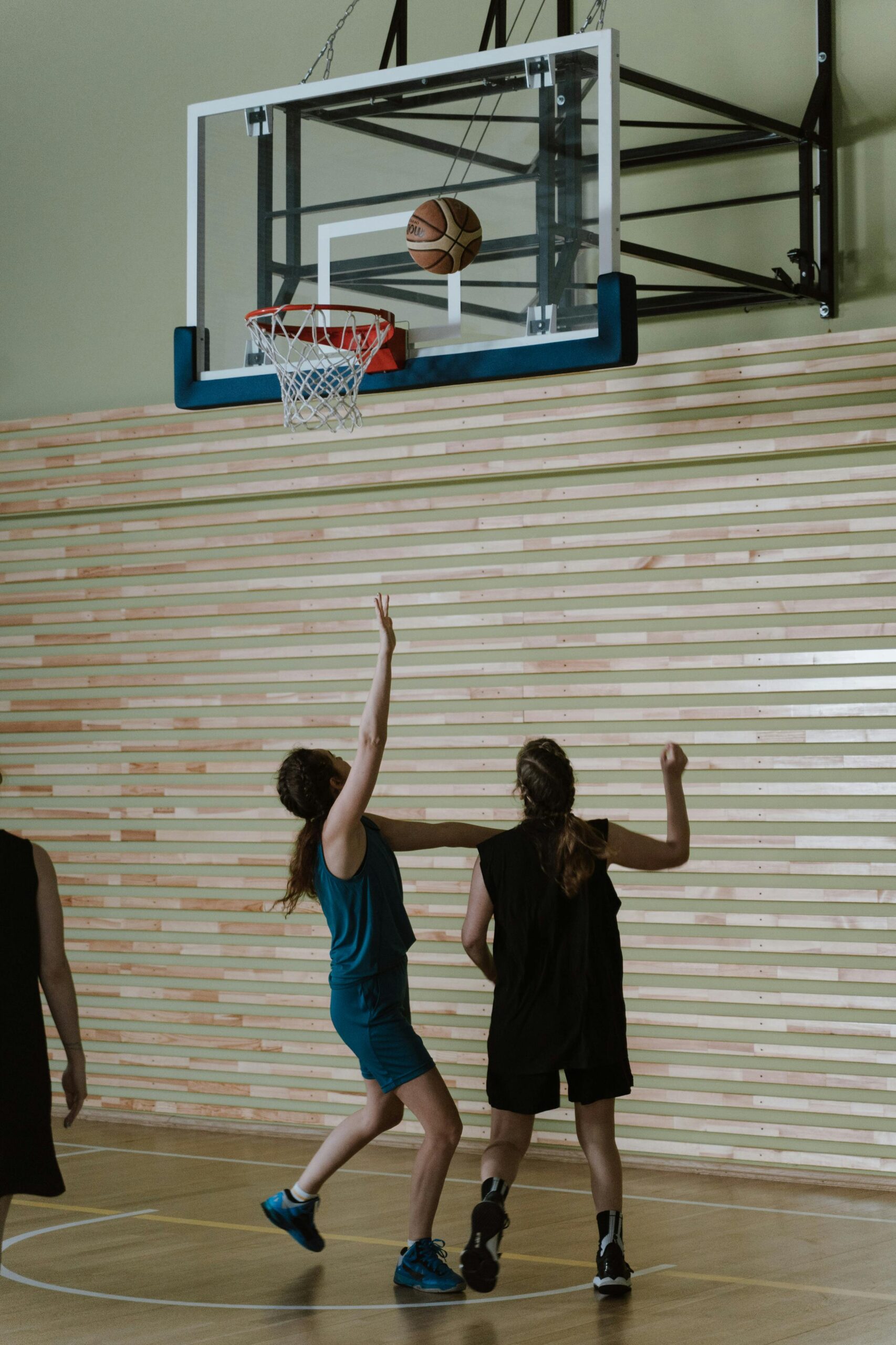
If you’ve recently typed “top basketball coaches near me to improve your game” into a search bar, you are likely hitting a frustration point. Your athlete might be dominating in the driveway or doing well in low-pressure rec leagues, but when they step onto the court for a competitive AAU or high school game, their confidence drops, their ball handling gets sloppy, and their shooting percentage plummets.
As a coach with over 15 years of experience training youth, high school, and college basketball players, I can tell you why this happens: team practices are designed to install plays and team defense, not to build individual mechanics. If your child’s jump shot has a hitch, a high school coach managing 15 kids simply does not have the time to break down their elbow alignment and guide hand placement.
Proper private training fixes this. Elite coaching isolates the exact flaws in an athlete’s kinetic chain, builds unbreakable fundamental habits, and translates those skills directly to game-speed situations. Let’s break down exactly what to look for so you can find a true teacher of the game, rather than just someone who rebounds for your kid.
Why Finding the Right Coach Matters for Athlete Development
Choosing the right private coach dictates an athlete’s long-term trajectory. I’ve seen countless players spend hundreds of hours doing flashy, unhelpful dribbling drills on their own, only to get benched because they don’t know how to execute a simple drop step or read a pick-and-roll.
When you find an elite coach, the impact on performance is undeniable:
- Confidence: A great coach builds a foundation of technical certainty. When an athlete fully trusts their shooting mechanics and footwork, they pull the trigger in games without second-guessing themselves.
- Game Performance: The right coach bridges the gap between stationary practice and live competition. They teach court vision, moving without the ball, and how to create space against an aggressive defender.
- Long-Term Development: Good coaches prioritize biomechanical efficiency. Teaching proper landing mechanics, a balanced triple-threat stance, and correct defensive slides prevents knee and ankle injuries while setting the foundation for college-level play.
Connect with a Private Basketball Coach: https://athletesuntapped.com/browse/basketball/
Best Drills and Techniques to Expect from a Top-Tier Coach
When you evaluate a potential coach, watch what they do in the first 15 minutes. A mediocre trainer will just tell the athlete to go shoot some warm-up jumpers. An elite coach will use targeted isolation drills to build mechanics from the ground up. Here are 5 essential drills a high-quality coach should be running:
1. The “Pound-to-Pocket” Shooting Progression
- How to perform it: The athlete stands in a low, athletic stance. They take one incredibly hard pound dribble, instantly gather the ball directly into their “shooting pocket” (hip/waist level), and rise up for a fluid jump shot without pausing.
- Why it works: Most young players struggle to transition the ball from a dribble to a shot quickly. This drill builds a lightning-fast, seamless release.
- Coaching tips: The gather must be violently fast. Keep the eyes locked on the back of the rim before the ball even returns to the hand.
- Common mistakes: Dipping the ball below the knees after the gather, which drastically slows down the shot release.
2. The 1-2 Step Change of Direction Attack
- How to perform it: The coach places two cones at the top of the key. The athlete attacks downhill, executes a sharp crossover or through-the-legs dribble at the first cone, explodes to the second cone, and pulls up for a one-dribble jumper using a strict 1-2 footwork pattern (inside foot, outside foot).
- Why it works: Basketball is played in straight lines and sharp angles. This drill teaches players how to decelerate, change direction, and explode back into an unbalanced defender.
- Coaching tips: Keep the shoulders low during the crossover. Sell the fake with your eyes and your off-arm.
- Common mistakes: Popping up straight during the change of direction, which causes the player to lose all their forward momentum.
3. The Two-Ball Dribble Overload
- How to perform it: The athlete dribbles two basketballs simultaneously—first pounding them together, then alternating (pistons), then adding in crossovers while walking the length of the court.
- Why it works: This is central nervous system overload. By forcing the brain to process two balls at once, handling a single ball in a live game begins to feel incredibly slow and easy.
- Coaching tips: Keep your eyes up at all times. Pound the basketballs as hard as you physically can—if you aren’t losing the ball occasionally, you aren’t going hard enough.
- Common mistakes: Looking down at the floor and “patting” the ball gently to avoid making a mistake.
4. The Mikan Drill (Touch and Footwork Isolation)
- How to perform it: The athlete stands directly beneath the basket. They shoot continuous rhythmic layups, alternating left side (left hand, jumping off right foot) and right side (right hand, jumping off left foot), catching the ball out of the net without letting it hit the floor.
- Why it works: It is the oldest drill in basketball for a reason. It builds ambidextrous touch around the rim and ingrains the exact footwork required for high-speed layups.
- Coaching tips: Keep the ball high above the shoulders. Do not bring it down to your waist after the rebound.
- Common mistakes: Jumping off the wrong foot, or using the dominant hand on the weak-side side of the rim.
5. The Defensive Closeout to Slide Drill
- How to perform it: The athlete starts under the rim. On the whistle, they sprint out to the three-point line, perform a “choppy-step” closeout with one hand high, and immediately transition into three explosive defensive slides backward at a 45-degree angle.
- Why it works: Defense is about closing space efficiently and reacting. This drill mimics exactly what happens when you close out on a shooter who then decides to drive.
- Coaching tips: Chop your steps early to decelerate. On the slide, push off your trailing foot and never click your heels together.
- Common mistakes: Lunging past the offensive player on the closeout, or crossing the feet during the defensive slide.
Common Mistakes Parents and Athletes Make When Choosing a Coach
Finding the right coach in your area can be tricky. Over my years in the gym, I’ve noticed a few consistent traps that families fall into:
- Prioritizing Flash Over Fundamentals: Instagram is full of “trainers” who have kids doing 14-combo dribbles ending in a step-back three. This looks great on video, but it never happens in a real game. You want a coach who focuses on pivoting, passing out of double teams, and shooting off the catch.
- Assuming Great Players are Great Teachers: Just because someone played overseas or in Division 1 doesn’t mean they know how to communicate biomechanics to a 13-year-old. You need a teacher, not just a former talent.
- Accepting Vague Feedback: If a coach constantly says things like “shoot it higher” or “play harder” without giving actionable, technical advice (e.g., “snap your wrist until your fingers point at the floor”), they aren’t helping you improve.
- Expecting Overnight Miracles: Fixing a broken shooting form takes thousands of reps. Muscle memory doesn’t rewrite itself in a single 60-minute lesson. Jumping from coach to coach out of impatience only creates more confusion for the athlete.
Find a Private Basketball Coach: https://athletesuntapped.com/browse/basketball/
How Private Coaching Accelerates Improvement
AAU and high school practices are fantastic for getting up and down the court, but they cannot replace the value of one-on-one attention. In a massive group clinic, an instructor might only watch your athlete shoot a true game-speed jumper twice in a five-minute span.
Private coaching accelerates improvement because it provides an immediate, highly personalized feedback loop. If your athlete’s guide hand is thumbing the basketball and ruining their rotation, a private coach catches it instantly. We stop the drill, physically adjust their hand placement, and run it again. This focused environment allows us to correct mistakes early before they become ingrained, hard-to-break habits. Furthermore, it builds tremendous confidence. When an athlete steps onto the court knowing they have a dedicated expert mapping out a customized plan for their success, their entire mental approach to the game changes.
Frequently Questions About Top Basketball Coaches Near Me to Improve Your Game
How do I find the best basketball coach for my child?
Look for a coach who prioritizes fundamentals over flashy moves, communicates clearly, and holds the athlete accountable for their footwork. Ask to watch a session before committing, and pay attention to whether the coach is actively correcting mechanics or just feeding passes.
How much should I expect to pay for a private basketball coach?
Depending on your region, facility rental costs, and the coach’s experience level, private basketball training typically ranges from $50 to $120 per hour. Small group training (2-4 players) is often slightly cheaper while still providing great value.
How often should my athlete train with a private coach?
For consistent skill development, once a week is highly recommended, paired with 2 to 3 days of independent practice where the athlete repeats the drills learned in the lesson. Advanced players often increase this to twice a week during the off-season.
What age is best to start private basketball training?
Athletes can begin working on foundational skills like ball handling, basic layups, and hand-eye coordination around ages 7 to 9. More specialized technical training—like reading pick-and-rolls and fixing complex shooting mechanics—usually begins around ages 10 to 12.
Do private coaches help prepare for high school basketball tryouts?
Absolutely. Elite private coaches know exactly what varsity coaches look for. They will prepare athletes for specific tryout conditioning drills, teach them how to communicate defensively, and help them build the mental toughness required to stand out in a crowded gym.
Conclusion
Searching for “top basketball coaches near me to improve your game” is the crucial first step toward taking your athlete’s performance to the next level. Remember, you aren’t just looking for someone to run your kid through a sweaty workout; you are looking for a true educator of the game. Focus on finding an instructor who is deeply invested in your mechanics, footwork, and long-term development. When you commit to consistent practice and find a coach who provides actionable, expert-level guidance, you’ll see confidence soar and game performance transform.
About Athletes Untapped
Athletes Untapped connects athletes of all sports with experienced private coaches who specialize in mental performance, sports psychology concepts, and competitive mindset training. Through personalized instruction and structured training plans, AU coaches help athletes eliminate performance anxiety, master their internal dialogue, and completely dictate their emotional response to adversity.
Find an experienced coach near you: https://athletesuntapped.com
Learn from our very best AU coaches!


