
In football, physical talent like a 4.4 40-yard dash or a 300-pound bench press gets you noticed, but playbook mastery is what actually gets you on the field. You can be the most explosive athlete in your conference, but if you do not know your blocking assignment on a crucial third down or you run the wrong route concept against a blitz, your physical skill is completely wasted. Football is essentially physical chess, and the playbook is the set of rules that governs every single movement on the gridiron.
At Athletes Untapped, our coaches notice that many young players treat the playbook like a history assignment to be crammed the night before a game. They stare at lines on a page but fail to understand the underlying concepts, leading to blown coverages, missed blocks, and a highly frustrating inability to play fast because they are stuck thinking instead of reacting. This lack of cognitive preparation leads to hesitation, and hesitation on a football field usually results in a massive collision or a costly turnover.
The secret to playing at absolute full speed lies in mastering your football playbook. Proper mental training fixes these cognitive lags, allowing players to instantly recognize formations, understand their specific responsibilities, and establish a dynamic, cohesive unit that executes flawlessly under high-pressure situations.
Connect with a Private Football Coach: https://athletesuntapped.com/browse/football/
Why Football Playbook Mastery Matters for Athlete Development
Your playbook IQ dictates your reliability on the field. Without a sound understanding of your assignments, you are essentially a liability, forcing your team to play a man down on every snap.
- Game Performance: Elite playbook mastery directly translates to playing fast. When you fully understand your route conversion against a cover-2 defense or your gap assignment on a run blitz, you eliminate hesitation. You turn a chaotic pre-snap alignment into a clinical, mathematical advantage, resulting in explosive plays and an impenetrable defense because you know exactly where you are supposed to be before the ball is even snapped.
- Confidence: Our coaches have seen athletes improve faster when they master their specific assignments at the start of every practice week. When you know exactly what your job is on a complex play action pass, the fear of making a mental error instantly vanishes. You gain the composure to play aggressively, trusting your instincts because your mental processing is backed by rigorous, repetitive study.
- Long-Term Development: As you progress to high school and collegiate football, playbooks become incredibly thick and conceptually complex. You no longer have the luxury of just running to the open grass or overpowering the guy in front of you. A tactically sound foundation protects you from being benched due to mental busts. It provides the elite football IQ needed to understand the “why” behind a play, ensuring your value scales as collegiate coaches actively recruit players who can rapidly process complex schemes.
Best Drills / Tips / Techniques
You cannot master a playbook by simply staring at a PDF document on your tablet. You need active, scenario-based training that forces you to recall information under pressure and translate diagrams into physical movement. Here are 5 drills AU coaches use with their athletes to build elite playbook retention.
1. The Blank Whiteboard Test
Sit down in front of a blank whiteboard with a marker and attempt to draw out an entire offensive or defensive formation, including every single player’s assignment, from pure memory. This is the absolute foundation of playbook mastery because it exposes the gaps in your knowledge, moving you past simply recognizing a play to actively recreating it. It teaches the athlete that true mastery means knowing not just your job, but what the other ten guys on the field are doing to make the concept work. Focus on drawing the opposing defense or offense as well to understand the spatial relationships and leverage. A frequent error here is only drawing your specific route or blocking assignment, which leaves you completely blind to the larger concept and timing of the play.
2. Pre-Snap Visualization
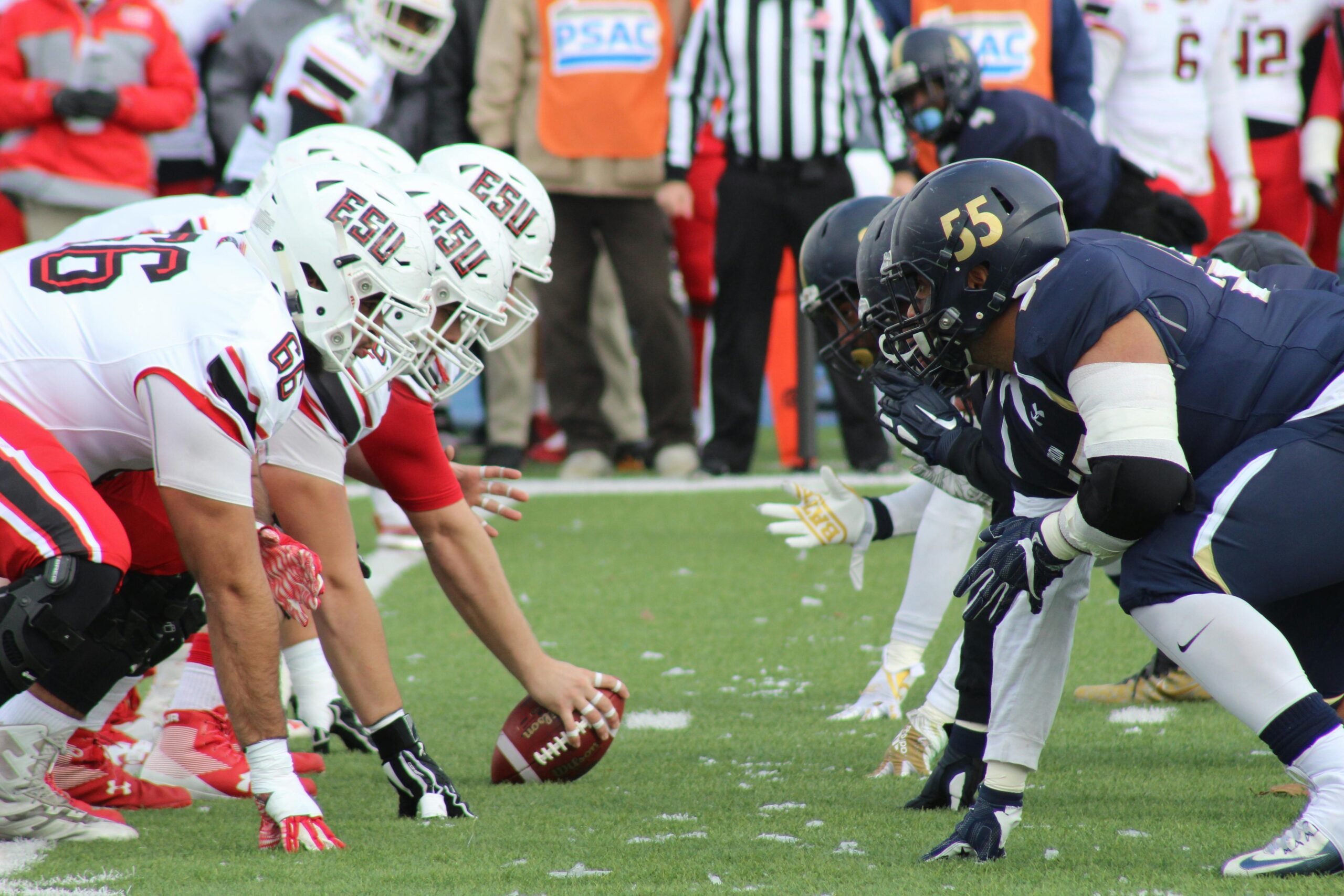
Stand on the practice field or in your backyard, close your eyes, and visualize walking up to the line of scrimmage while a coach or teammate calls out a play. You must instantly visualize your alignment, your first step, and your primary read before opening your eyes. Football is a game of pre-snap anticipation, and this drill trains the cognitive reaction time required to process a play call in the huddle and immediately translate it into physical action. It teaches the brain to pre-load the physical mechanics so your body can play fast on game day. Keep your visualization in real-time game speed, including the cadence of the quarterback. Players frequently make the mistake of visualizing only the perfect, uncontested scenario, rather than visualizing how they will adjust if the defense stems into a different front right before the snap.
3. Film Room Concept Tagging
Watch game film or practice clips and actively pause the video right before the snap to call out the exact play, the coverage shell, and the likely outcome. Memorization requires context, and this drill links the abstract lines in the playbook to actual moving bodies on the screen. It trains athletes to recognize the structural patterns of the game rather than just memorizing a rigid list of rules. Look at the triangle of defenders—the cornerback, safety, and outside linebacker—to identify the coverage shell quickly. A massive trap is passively watching the film like a fan watching television, rather than actively hunting for the specific keys and triggers taught in your playbook.
4. The Walkthrough Repetition
Line up with your unit in a gymnasium or on a practice field without a football and physically walk through the entire play at 25 percent speed. Walking through the play bridges the gap between the classroom and the physical execution, ensuring your first steps, your leverage, and your spatial awareness are perfectly aligned with the diagram in the book. It teaches athletes how to physically communicate with their teammates through checks, points, and audibles. Exaggerate your first step and your eye placement during the walkthrough to build the correct muscle memory. A common instinct is to jog through the walkthrough sloppily because there is no ball or full-speed contact, which builds lazy habits that will absolutely show up and ruin the play on Friday night.
5. Flashcard Positional Quizzing
Create physical or digital flashcards with a play name on one side and your specific alignment, assignment, and key read on the back, testing yourself rapidly during downtime. Repetition is the mother of learning, and this builds the rapid-recall necessary to function in a no-huddle or high-tempo offense. It trains the brain to instantly retrieve complex information under pressure. Shuffle the deck constantly so you are not just memorizing the chronological order of the plays. Advancing forward into a game without knowing the terminology cold is a guaranteed way to bust an assignment, run into your own teammate, and give up a massive negative play.
Common Mistakes Athletes Make
Mental errors are incredibly common in youth and high school football, often because players try to take shortcuts during their film study and playbook review.
- Memorizing Instead of Understanding: Players often try to memorize a route or a blocking assignment by rote without understanding the overall concept of the play, which causes the play to completely fall apart when the defense shows an unexpected look. To correct this, learn the “why.” If you understand that a passing concept is designed to stretch the defense vertically, you will naturally know how to adjust your route depth even if the cornerback plays heavy press coverage.
- Cramming the Night Before: Attempting to read a 100-page playbook the night before training camp or a big game happens because players procrastinate the mental side of the sport. You can fix this by studying in 15-minute chunks every single day. Consistent, spaced repetition is the only way the human brain can convert short-term memorization into long-term, subconscious mastery.
- Ignoring the Opponent’s Alignment: Focusing entirely on what the playbook says and completely ignoring the defensive front or coverage shell standing right in front of you stems from a severe lack of situational awareness. Fix this by scanning the defense before every snap. Your playbook assignment usually has a built-in adjustment based entirely on whether the middle of the field is open or closed, or if the defensive line is shifted.
- Failing to Ask Questions in Meetings: Nodding along in the film room when the coach is explaining a complex blitz pickup, even when entirely confused, happens out of fear of looking foolish in front of teammates. To solve this, you must speak up and ask questions. A busted assignment that gets your quarterback sacked on game day is infinitely more embarrassing than asking for clarification on a Tuesday afternoon.
Find a Private Football Coach: https://athletesuntapped.com/browse/football/
How Private Coaching Accelerates Improvement
Football playbook mastery is a highly cognitive skill that relies on translating abstract diagrams into physical, high-speed execution. Trying to self-diagnose your route conversions, your gap responsibilities, or your coverage drops during a chaotic 11-on-11 scrimmage is practically impossible for most players.
This is where private coaching comes in. We have found that personalized instruction helps athletes build the specific cognitive and physical skills required to process complex schemes, leading to significantly faster skill development.
A private football coach helps accelerate skill development by breaking down your positional responsibilities in a quiet, isolated setting. Our coaches provide personalized feedback on how to read defensive keys and how to translate playbook terminology into immediate physical action. By utilizing whiteboard sessions and video analysis, coaches can correct mistakes early, showing you exactly where you missed an audible or misunderstood a blocking scheme before those mental errors cost you playing time. Ultimately, this 1-on-1 environment focuses on massive confidence building. When you possess elite football IQ, you stop hesitating at the line of scrimmage, allowing you to step onto the gridiron knowing you have the mental tools to execute the offense flawlessly.
Frequently Asked Questions about Football Playbook Mastery
What is football playbook mastery?
It refers to a player’s ability to deeply understand and instantly recall their alignment, assignment, and adjustments for every single play in the team’s offensive, defensive, or special teams scheme.
How long does it take to learn a new playbook?
While you can memorize the basic terminology in a few days, true mastery—knowing the “why” behind the plays and how to adjust to defensive variations—often takes an entire off-season of consistent study, walkthroughs, and live reps.
What is the best way to study a football playbook?
The best method combines active recall, such as drawing plays on a blank whiteboard, with physical walkthroughs on the field to build both cognitive understanding and muscle memory simultaneously.
Do I need to know every position’s assignment?
While you must know your own job perfectly, elite players understand the assignments of the players immediately next to them to ensure cohesive teamwork. A quarterback or a middle linebacker, however, must know every single player’s responsibility on the field.
Do private coaches help with football IQ and film study?
Absolutely. Private football coaches are essential for walking players through advanced conceptual learning. They can provide live whiteboard sessions, correct your pre-snap reads, and run cognitive drills that teach you exactly how to digest complex playbooks.
Conclusion
Mastering your football playbook is the undeniable foundation of a fast, decisive, and dominant football player. Without it, you are just an athlete running around blindly, leaving your on-field success to luck and hoping your physical talent can bail out your mental hesitation.
Improvement is highly achievable with proper mental training. Encourage yourself to practice your whiteboard drawings, maintain your daily study habits, and embrace the conceptual understanding of the game. Consistent practice will inevitably yield a much more dangerous, intelligent, and unshakable presence on the gridiron.
Train With a Private Football Coach
Athletes Untapped connects athletes with vetted private coaches across the country for one-on-one training.
Private coaching helps athletes:
- improve faster
- build confidence
- receive personalized feedback
- reach their full potential
About Athletes Untapped
Athletes Untapped connects football players with experienced private coaches who specialize in playbook comprehension, football IQ, and pre-snap recognition. Through personalized instruction and structured training plans, AU coaches help players eliminate mental busts, master their assignments, and completely dictate the tempo of the game.
Find an experienced coach near you: https://athletesuntapped.com
Learn from our very best AU coaches!


