
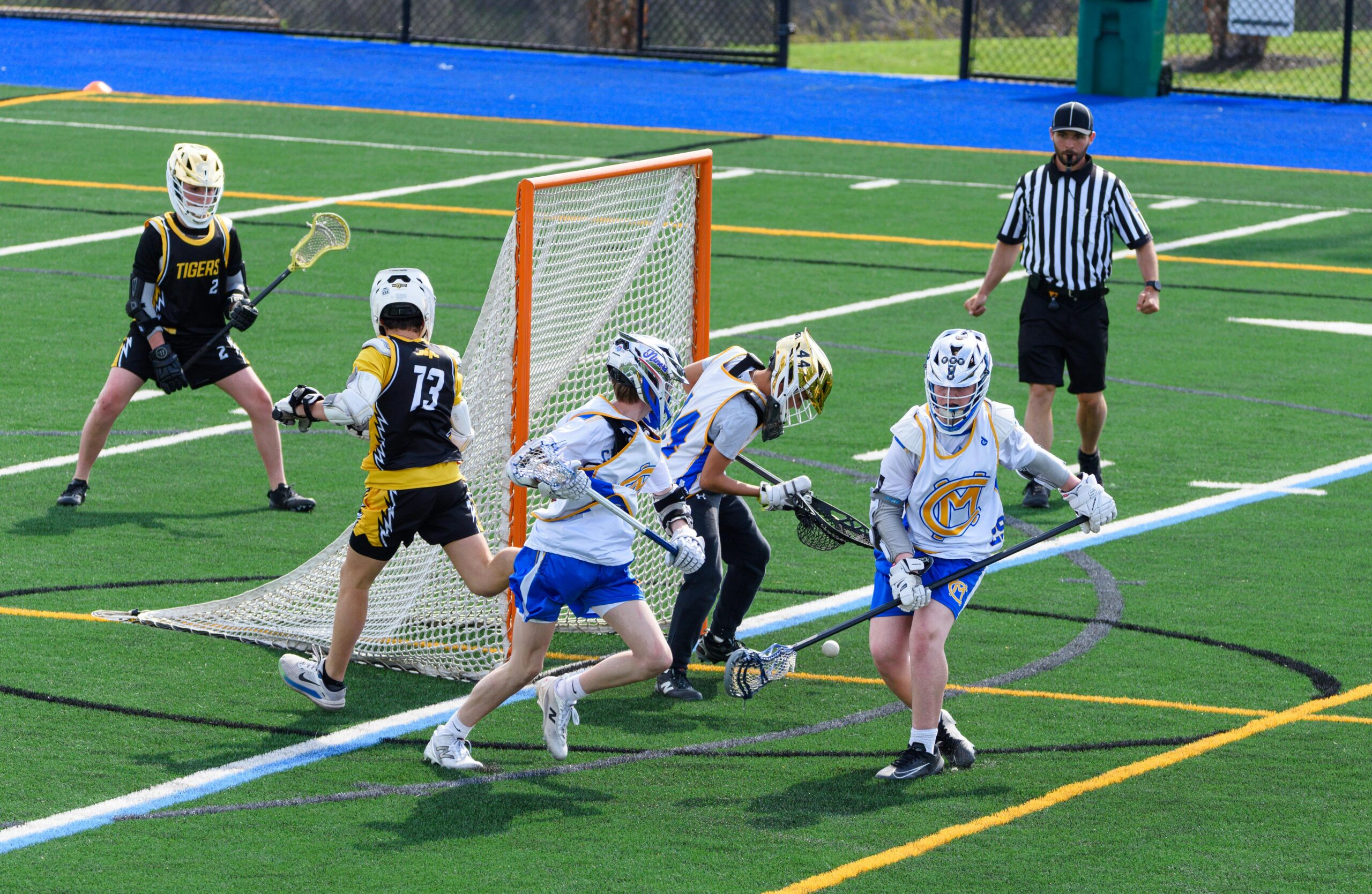
In lacrosse, setting up a settled six-on-six offense is a grinding, physical battle against long poles and tight zone defenses, but the absolute easiest goals your team will ever score come from a flawless lacrosse transition offense. You can have the most accurate step-down shooters on your roster, but if your team slowly jogs the ball over the midfield line after every clear, you are allowing the defense to catch their breath and dictate the tempo. Lacrosse is known as the fastest game on two feet, and the transition game is exactly where that speed breaks the spirit of your opponents.
At Athletes Untapped, AU coaches notice that many young midfielders and attackers panic the moment they cross the midfield line with an odd-man advantage. They force terrible passes into double coverage at the crease, shoot from incredibly low-angle spots while running at full speed, or completely ignore the wide spacing required to stretch a recovering defense. This lack of tactical structure leads to blown fast breaks, immediate turnovers, and a highly frustrating inability to capitalize on amazing defensive stops by your goalie.
The secret to scoring easy goals and creating massive momentum swings lies in mastering lacrosse transition offense. Proper training fixes these spacing and decision-making issues, allowing players to execute the draw and dump perfectly, read the recovering defensive slide, and establish a high-scoring, run-and-gun system that exhausts the opposing team.
Connect with a Private Lacrosse Coach: https://athletesuntapped.com/browse/lacrosse/
Why Lacrosse Transition Offense Matters for Athlete Development
Your transition IQ dictates your ability to generate high-percentage scoring opportunities. Without a sound understanding of how to attack an unsettled defense, you are essentially forcing your team to play the hardest version of the sport on every single possession.
- Game Performance: Elite transition execution directly translates to exploiting odd-man rushes. When you fully understand how to space a 4v3 fast break, you force a single defender to choose between stopping the ball carrier or covering an open man on the crease. You turn a chaotic scramble at the midfield line into a clinical, mathematical advantage, resulting in point-blank shots on the goalie before the defense can even set up their slide packages.
- Confidence: Our coaches have seen athletes improve faster when they master their specific roles in the fast break at the start of every practice. When the point man knows exactly when to pass, and the wings know exactly where to stand, the fear of turning the ball over instantly vanishes. You gain the composure to push the pace aggressively, trusting your teammates to be in the right spots because your transition routes are backed by rigorous, repetitive training.
- Long-Term Development: As you progress to high school and collegiate lacrosse, transition goals become the ultimate differentiator between good and elite teams. College defenses are simply too big and fast to beat in a settled six-on-six every time. A tactically sound foundation protects you from playing directly into the hands of a set defense. It provides the elite lacrosse IQ needed to recognize a slow break versus a fast break instantly, ensuring your value scales as collegiate coaches actively recruit midfielders who can seamlessly connect the defensive and offensive halves of the field.
Best Drills / Tips / Techniques
You cannot master the transition game by simply running wind sprints or practicing stationary passing. You need active, scenario-based training that forces you to read numbers on the fly. Here are 5 drills AU coaches use with their athletes to build a terrifying transition unit.
1. The Classic 4v3 Fast Break Execution
The Setup: Place three defenders in a triangle near the goal. Bring three attackers into an L-shape formation (point, left wing, right wing) and have a midfielder carry the ball down the top center of the field.
The Action: The ball carrier pushes the pace directly at the top defender. The carrier must physically draw the defender to step up and stop the ball. The exact moment the defender commits, the carrier dumps the ball to the open wing, who then quickly moves it to the point for a high-percentage shot.
Why It Works: This is the absolute foundation of lacrosse transition. It trains the draw and dump mechanic. It teaches the ball carrier that their primary job is not to shoot, but to force the defense to commit, creating an open passing lane for their teammates.
Coaching Cue: Attack the front foot of the top defender. Do not pass the ball until their stick is raised to check you.
Common Mistakes: Passing the ball way too early before the defender has actually stepped up, allowing the defender to easily recover and cover the pass.
2. The Slow Break Trailer Read
The Setup: Set up a 5v4 scenario where the offense has a slight numbers advantage, but the defense is retreating in a somewhat organized box.
The Action: The ball carrier pushes down the wing while a trailing midfielder enters the offensive zone late. The carrier must scan the center of the field and hit the trailing midfielder stepping down from the top of the box for an uncontested shot.
Why It Works: Not every transition is a clean 4v3. This drill trains the patience required to execute a slow break. It teaches the offense to use the entire width of the field to stretch the defense, creating a massive gap in the middle for the late-arriving player to step into.
Coaching Cue: Keep your head up on the dodge. The best option is almost always the player trailing right behind the play.
Common Mistakes: The ball carrier putting their head down and forcing a dodge into three defenders simply because they crossed the midfield line fast.
3. The Substitution Box Advantage
The Setup: A midfielder clears the ball over the midfield line right next to the substitution box.
The Action: Instead of passing to an attacker, the ball carrier throws the ball backward to a fresh offensive midfielder stepping directly out of the substitution box, creating an instant 6v5 advantage before the opposing defense can substitute their own players.
Why It Works: The substitution box is a massive tactical weapon in lacrosse. This drill trains spatial awareness and team communication. It teaches players how to generate artificial fast breaks simply by utilizing the rules of the game and exploiting tired defenders trying to get off the field.
Coaching Cue: Attack the box side of the field on your clear to force the defense into an uncomfortable substitution situation.
Common Mistakes: Clearing the ball entirely down the far sideline, completely neutralizing the advantage of your own substitution box.
4. Goalie Outlet Precision
The Setup: The goalie makes a save and immediately looks upfield.
The Action: The breaking midfielders must sprint toward the sidelines, looking back over their inside shoulders. The goalie must deliver a perfectly led outlet pass hitting the midfielder in stride just before the midfield line.
Why It Works: Transition offense actually begins in your own defensive crease. This drill trains the exact timing required to ignite a fast break. It teaches the goalie and the midfielders that a fast, accurate outlet pass eliminates the entire opposing attack unit from playing defense, instantly creating an odd-man rush.
Coaching Cue: Break to the outside, stick to the inside. Always give your goalie a clean target away from the pursuing attackmen.
Common Mistakes: Midfielders jogging slowly out of the defensive zone, allowing the opposing team to easily set up a ten-man ride and trap the ball.
5. Odd-Man Keep Away
The Setup: Play a continuous 3v2 or 4v3 keep away game in a tight grid.
The Action: The offensive players must continuously move the ball without dropping it, forcing the defense to constantly rotate and slide. If the defense touches the ball, the drill resets.
Why It Works: Transition passing requires incredibly fast hands and rapid decision-making. This drill builds the stick skills necessary to move the ball faster than the defense can physically slide. It trains athletes to make the extra pass, finding the player who is completely alone on the backside.
Coaching Cue: Catch the ball loaded and ready to pass. Do not cradle if you do not have to.
Common Mistakes: Cradling the ball three times after every catch, which gives the defense the exact amount of time they need to recover and cover the open man.
Common Mistakes Athletes Make
Transition errors are incredibly common in youth and high school lacrosse, often because players let the adrenaline of a fast break completely override their tactical discipline.
Forcing the Crease Pass: Trying to thread a hero pass through three sticks to the player standing right on the crease. Fix this by utilizing the wings. The safest and most effective transition passes are to the outside edges of the defense, forcing them to turn their heads and spread out before you attack the middle.
Shooting on the Run from Distance: A midfielder carrying the ball over the line and ripping a low-percentage shot from 15 yards out while running at top speed. Fix this by passing to the point man. Unless you have a completely clear lane to the goal, pulling the ball out or hitting a stationary teammate for a step-down shot is always the better option.
Clumping the Spacing: Attackmen running toward the ball carrier because they want to touch the ball, bringing their defenders right into the play. Fix this by staying wide. You must trust the spacing. Standing perfectly still on the far wing is often the most helpful thing you can do on a fast break because it keeps a defender entirely out of the play.
Failing to Recognize the Numbers: Pushing the ball blindly toward the net when the defense has actually recovered and the situation is an even 6v6. Fix this by taking a mental snapshot at the restraining line. If you do not explicitly have an odd-man advantage, pull the ball out, substitute your offensive players, and settle into your half-court offense.
How Private Coaching Accelerates Improvement
Lacrosse transition offense is a highly fluid, situational skill that relies on reading the defense while moving at an absolute sprint. Trying to self-diagnose your draw and dump timing or your fast break spacing during a chaotic team scrimmage is practically impossible for most players. This is where private coaching is a cheat code for development.
A private lacrosse coach can:
- Audit Your Stick Work: We focus heavily on your ability to catch and throw on the run, ensuring you can deliver a crisp, accurate pass without breaking your sprinting stride.
- Teach Defensive Manipulation: We work on your field vision, teaching you exactly how to look off a defender and use your eyes to move the opposing goalie before you make the final pass.
- Video Analysis: Sometimes you need to see yourself forcing a bad shot to truly understand why the fast break failed. Private coaches can break down your game film to show you exactly where the open trailer was standing.
- Build Confidence: When you possess elite transition IQ, you stop letting the speed of the game cause panic. You step onto the field knowing you have the vision and the stick skills to orchestrate a high-scoring fast break every single time you cross the midfield line.
Find a Private Lacrosse Coach: https://athletesuntapped.com/browse/lacrosse/
Frequently Asked Questions about Lacrosse Transition Offense
What is a lacrosse transition offense?
It refers to the phase of the game immediately following a defensive stop, a save, or a faceoff win, where the attacking team attempts to move the ball up the field quickly to score an unsettled goal before the opposing defense can organize their six-on-six formation.
How do you run a 4v3 fast break in lacrosse?
The ball carrier pushes down the center to draw the top point defender. Once the defender commits, the carrier passes to one of the wide wings. The wing then immediately looks to pass to the point attackman positioned near the crease for a quick finish, or shoots if the defense fails to rotate.
When should we settle instead of pushing the break?
You should pull the ball out and settle into your offense if the defense has successfully recovered to create an even-numbers situation, if your team is physically exhausted and needs a substitution, or if you are protecting a late-game lead and want to consume the clock.
At what age should players learn transition tactics?
Basic concepts like running wide and passing ahead to the open man can be taught as early as 8 or 9 years old. By age 12 to 14, players should be heavily involved in learning structured 4v3 fast breaks, slow break reads, and utilizing the substitution box.
Do private coaches help with lacrosse IQ?
Absolutely. Private lacrosse coaches are essential for walking players through scenario-based learning. They can provide live feedback, correct your passing mechanics on the run, and run cognitive drills that teach you exactly how to read a sliding defense in real-time.
Conclusion
Mastering lacrosse transition offense is the undeniable foundation of a high-scoring, entertaining, and dominant lacrosse team. Without it, you are just a team relying entirely on exhausting settled offensive sets, leaving your scoring success to grueling one-on-one matchups against elite defensemen.
The best midfielders and attackers on the field are the ones who make the fast break look incredibly simple because they have already done the hard work, mastering their spacing, understanding the draw and dump, and perfectly timing their trailing runs before the whistle ever blows.
Start applying these transition concepts today. Focus on your wide spacing and your unselfish passing. Be the player your coach completely trusts to lead the charge and break the opponent’s spirit with terrifying, unstoppable speed.
Train With a Private Lacrosse Coach
Athletes Untapped connects athletes with vetted private coaches across the country for one-on-one training.
Private coaching helps athletes:
- improve faster
- build confidence
- receive personalized feedback
- reach their full potential
About Athletes Untapped
Athletes Untapped connects lacrosse players with experienced private coaches who specialize in transition offense, fast break execution, and high-level field vision. Through personalized instruction and structured training plans, AU coaches help midfielders and attackers eliminate forced turnovers, master their passing on the run, and completely dictate the tempo of the game.
Find an experienced coach near you: https://athletesuntapped.com
Learn from our very best AU coaches!


