
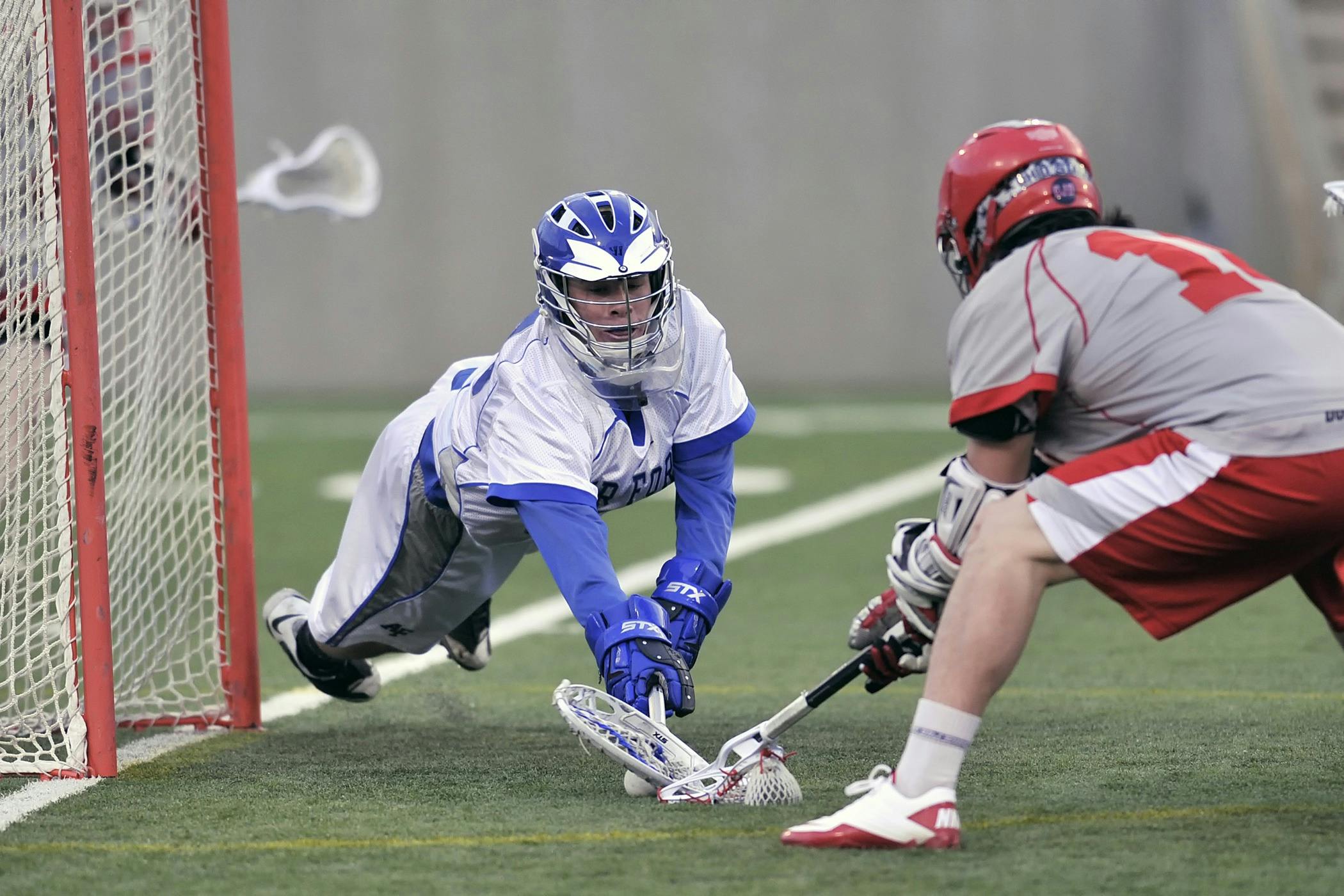
In lacrosse, your defense can play the most suffocating, physical possession of the game, forcing a bad shot and securing a beautiful save from the goalie. But the harsh reality of the sport is that if you cannot successfully transition the ball from your defensive half to your offensive half, that great defensive stand means absolutely nothing. You can have the best long-pole defenders in the league, but if they panic under pressure and throw the ball out of bounds during the clear, they are simply handing the opponent another free possession.
At Athletes Untapped, AU coaches notice that many young defensive units treat the clear as an afterthought. As soon as the goalie makes a save, defenders jog slowly up the field, hide behind opposing attackmen, or run in straight lines up the sideline until they are violently double-teamed. This lack of structural mechanics leads to broken clears, exhausted defensemen, and a highly frustrating inability to generate offensive momentum.
The secret to breaking an aggressive ride and dominating the transition game lies in clearing efficiency. Proper tactical training fixes these spacing and communication issues, allowing players to utilize the goalie as an extra man, execute wide “banana curls,” reverse the field seamlessly, and turn defensive stops into lethal fast breaks.
Connect with a Private Lacrosse Coach: https://athletesuntapped.com/browse/lacrosse/
Why This Skill Matters for Athlete Development
Your team’s clearing efficiency dictates the entire tempo of the game. Without a reliable clearing structure, your defense will be trapped on the field for the entire game, leading to inevitable physical and mental collapse.
- Game Performance: Elite clearing directly translates to offensive advantages. When a team clears the ball efficiently, they often catch the opposing team in the middle of substituting players, creating 5-on-4 or 4-on-3 fast breaks. A successful clear forces the opponent’s attackmen to run full speed backward, draining their energy and neutralizing their offensive bite.
- Confidence: AU coaches have seen defensive units improve faster when they spend dedicated time on transition passing under pressure at the start of every session. When looking back to the goalie for a reset pass becomes an automatic reflex, long-poles stop panicking when they hit a double team. They gain the composure to keep their heads up, trust their stick skills, and execute a confident, high-percentage pass to an open midfielder.
- Long-Term Development: As players progress to high school and collegiate lacrosse, opposing teams utilize highly complex 10-man rides and aggressive zone traps to force turnovers. A biomechanically and tactically sound understanding of spatial geometry protects your team from being suffocated by these traps. It provides the elite lacrosse IQ needed to read the ride, exploit the open grass, and scale your defensive value to the next level.
Best Drills / Tips / Techniques
You cannot master a clearing package by simply telling your defenders to run faster. You need isolated, highly cognitive scenario drills to train spatial awareness and passing accuracy on the run. Here are 5 techniques AU coaches use to build an un-rideable defense.
1. The Banana Curl Breakout
How to perform it: The moment the goalie makes a save and calls “Clear,” the defensemen must sprint toward the sidelines. However, instead of running in a straight line away from the goalie, they must run in a curved “banana” shape. They burst upfield, curl outward toward the sideline, and open their hips back toward the middle of the field to receive the pass.
Why it works: Running in a straight line away from the ball forces the defender to catch an over-the-shoulder pass while running full speed, which is incredibly difficult. The banana curl naturally opens the defender’s hips and shoulders to the goalie, providing a massive, highly visible target for an easy chest-pass.
Coaching tips: The defender’s stick must be up and to the outside (closest to the sideline) to protect the ball from trailing attackmen immediately upon catching it.
Common mistakes: Fading too deep into the corners. If a defender receives the ball perfectly still in the deep corner of the field, they are immediately trapped by the sideline and the end line.
2. The “Over” Pass (Reversing the Field)
How to perform it: A defenseman receives the ball on the right sideline and carries it upfield. An opposing midfielder and attackman converge to trap him. Before the double team arrives, the defenseman rolls back and throws a long, sweeping pass completely across the field to a trailing defenseman or the goalie on the left side.
Why it works: The riding team will always heavily over-commit to the side of the field where the ball is. This drill trains the defense to use the opponent’s momentum against them. By quickly reversing the ball to the weak side, the defense exploits the massive, wide-open grass left behind by the shifting ride.
Coaching tips: The goalie is the most important player in the clear. Because the goalie cannot be legally hit inside the crease, they are the ultimate safety valve for reversing the field.
Common mistakes: Forcing the ball forward into a double team instead of hitting the open man backward. Passing backward is often the fastest way to move the ball forward on the opposite side.
3. Midfield V-Cuts
How to perform it: As the defensemen break the ball out, the midfielders are often covered tightly at the midfield line. The midfielders must sprint hard upfield (toward the offensive zone) for five yards to push the defender back, plant their foot, and violently V-cut back toward the ball carrier to receive a pass.
Why it works: Midfielders cannot simply stand at the 50-yard line and wait for the ball to arrive; the riding team will intercept it easily. This drill teaches the midfielders to actively create their own separation, coming back to the ball to shorten the passing distance and secure possession.
Coaching tips: The pass must be thrown to the “box” (the area next to the ear) exactly as the midfielder completes the cut. Timing is everything.
Common mistakes: Drifting sideways during the cut instead of running directly back to the ball carrier, which leaves the passing lane open for a defender to step into.
4. The 4v3 Fast Break Transition
How to perform it: Set up a half-field clearing drill. Three riding attackmen try to stop four clearing players (three defenders and a goalie). The clearing team must string together three consecutive, rapid passes to cross the midfield line within 10 seconds.
Why it works: Clearing against air is easy; clearing against physical pressure requires composure. This drill simulates the most common numerical advantage in a clear. It forces the clearing team to use quick, sharp passes to move the ball faster than the three attackmen can run, punishing the ride for over-committing.
Coaching tips: Draw the man, move the ball. The ball carrier must run hard enough at an opposing player to force them to commit, and then instantly pass to the teammate that was just left open.
Common mistakes: Holding the ball too long. If a defender takes six seconds to decide where to pass, the riding team will easily recover their defensive shape.
5. The 10-Man Ride Simulation (The Goalie Bomb)
How to perform it: The opposing team pulls their own goalie out of the crease to cover an attackman, allowing them to press the clearing team everywhere on the field (a 10-man ride). The clearing goalie must quickly scan the entire field, step out of the crease, and deliver a perfectly accurate 40-yard pass over the top of the ride to a breaking attackman.
Why it works: A 10-man ride is terrifying because every single player is covered. However, it leaves the opponent’s goal completely empty. This drill trains the goalie’s deep-ball accuracy and decision-making, teaching the team how to completely bypass the pressure and score an easy, open-net goal to break the opponent’s spirit.
Coaching tips: The breaking attackman must release upfield the exact moment they recognize the 10-man ride is deployed.
Common mistakes: The goalie hesitating or throwing a floating, weak pass. A long pass over a 10-man ride must be driven hard on a line to prevent trailing defenders from catching up to it.
Common Mistakes Athletes Make
Clearing errors are incredibly common in youth and high school lacrosse, largely due to panic and a lack of off-ball movement.
Hiding Behind the Ride: Midfielders and attackmen standing perfectly still behind their defenders, making it physically impossible for the defensemen to pass them the ball.
How to fix it: Find the passing lane. If you can see your defenseman’s eyes, he can pass you the ball. You must constantly move your feet to stay in an open, visible passing lane.
The Sideline Trap: A defenseman catching the ball and running in a perfectly straight line up the sideline until two attackers pinch him against the boundary line.
How to fix it: The sideline is the opponent’s best defender. Stay at least five yards off the sideline when carrying the ball, giving yourself the space to roll away from pressure and look back to the middle of the field.
Goalie Panic: The goalie making a save, panicking when an attackman approaches the crease, and blindly throwing the ball into the middle of the field.
How to fix it: The goalie has four seconds of complete invincibility inside the crease. Take a deep breath, survey the field, and wait for the banana curls to develop. Never force a pass up the middle.
Failing to Sub Correctly: Offensive midfielders staying on the field too long during a clear, resulting in tired legs trying to outrun fresh defensive midfielders.
How to fix it: Utilize the substitution box efficiently. Clear the ball to the side of the field where your coaches are, allowing tired players to step off and fresh players to step on without losing momentum.
Find a Private Lacrosse Coach: https://athletesuntapped.com/browse/lacrosse/
How Private Coaching Accelerates Improvement
Clearing the lacrosse ball is a highly complex geometric puzzle that requires elite stick protection, passing accuracy on the run, and spatial awareness. Trying to self-diagnose whether your V-cut lacked the necessary explosion, or if your passing angle was too easily intercepted, is incredibly difficult during the exhaustion of a live game.
This is where private coaching is essential. Private coaching provides faster tactical development by utilizing expert eyes, highly structured pressure simulations, and intensive stick-work drills. A private lacrosse coach offers personalized feedback tailored to your specific position, making it easy to catch habits like throwing off the back foot immediately. This targeted instruction allows athletes to focus on correcting their passing mechanics under pressure before bad habits result in costly turnovers. Ultimately, mastering your clearing efficiency in a 1-on-1 environment provides massive confidence building, allowing you to step onto the field knowing you have the composure and skill to break any ride the opponent throws at you.
FAQ Section
What is a “clear” in lacrosse?
A clear is the process of transitioning the ball safely from the defensive half of the field to the offensive half of the field after a save, a turnover, or a penalty.
What does it mean to “ride” the clear?
The ride is the opposing team’s attempt to stop the clear. Attackmen and midfielders aggressively pressure the clearing defensemen to force a turnover before the ball can cross the midfield line.
Why is the goalie so important in the clear?
Because the goalie cannot be legally checked while inside the crease, and because they are technically an extra player on the field (creating a 7-on-6 advantage in the defensive half), the goalie is the ultimate safe option to pass to when all other players are covered.
What is a 10-man ride?
A highly aggressive defensive strategy where a team pulls their own goalie out of the net to play defense on an opposing attacker. This allows every single player on the clearing team to be guarded man-to-man, but it leaves the riding team’s goal completely undefended.
Do private coaches help with this?
Absolutely. Private lacrosse coaches are essential for breaking down the biomechanics of passing on the run, providing physical pressure to test your stick protection, and isolating specific spatial awareness flaws so you can learn to process the field like an elite transition player.
Conclusion
Mastering clearing efficiency is the undeniable foundation of a composed, dominant, and fast-paced lacrosse team. Without it, you are doing all the grueling work on defense only to willingly hand the ball back to the enemy. Improvement is highly achievable with proper tactical training, but it requires extreme unselfishness, loud communication, and the willingness to move constantly without the ball. Encourage yourself to focus on your banana curls and your field vision before you focus on throwing flashy behind-the-back passes, and consistent practice will inevitably yield effortless transitions and a demoralized opposition.
Train With a Private Lacrosse Coach
- Athletes Untapped connects athletes with vetted private coaches across the country for one-on-one training.
- Private coaching helps athletes:
- improve faster
- build confidence
- receive personalized feedback
- reach their full potential
About Athletes Untapped
Athletes Untapped connects lacrosse players with experienced private coaches who specialize in clearing efficiency, stick protection under pressure, and transition mechanics. Through personalized instruction and structured training plans, AU coaches help goalies, defensemen, and midfielders eliminate turnovers, master their spacing, and completely break down the opponent’s ride.
Find an experienced coach near you: https://athletesuntapped.com
Learn from our very best AU coaches!


