
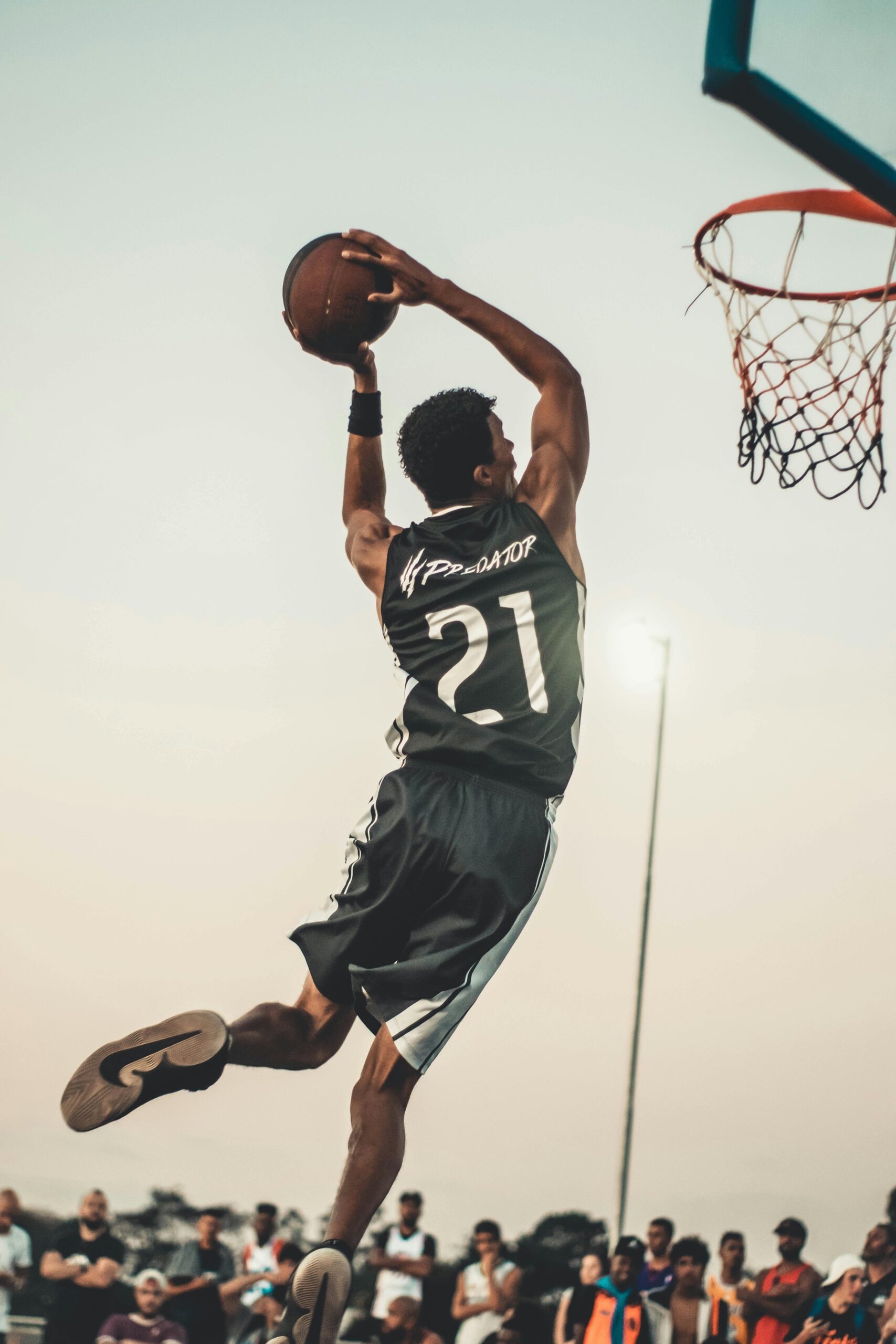
In basketball, having a lightning-fast crossover and the ability to blow past your primary defender is a fantastic skill, but the reality of the game is that the paint is always heavily guarded. You can break your man’s ankles on the perimeter, but if you shy away, contort your body, or panic the moment a help-side defender steps in your path, you will consistently blow wide-open layups.
At Athletes Untapped, AU coaches notice that many young guards and forwards treat contact like an absolute negative. They try to acrobatically adjust their shot in mid-air to avoid the defender’s body, which completely destroys their upward momentum and exposes the ball to getting blocked. This lack of structural mechanics leads to weak, off-balance floaters, low shooting percentages at the rim, and a frustrating inability to get to the free-throw line.
The secret to dominating the paint and generating high-percentage points lies in finishing through contact. Proper training fixes these postural and kinetic issues, allowing players to initiate the bump, drop their center of gravity, protect the basketball, and finish strong at the rim while drawing the foul.
Connect with a Private Basketball Coach: https://athletesuntapped.com/browse/basketball/
Why This Skill Matters for Athlete Development
Your ability to absorb and play through physical contact dictates your efficiency as a scorer. Without it, you are entirely reliant on shooting jump shots or getting perfectly uncontested layups.
- Game Performance: Elite contact finishing directly translates to three-point plays. When you understand how to lower your shoulder into the defender’s chest before you jump, you completely neutralize their ability to block the shot. You force the referee to make a call, turning a standard drive into a high-percentage and-one opportunity.
- Confidence: AU coaches have seen athletes improve faster when they spend just 10 focused minutes on heavy-pad contact drills at the start of every session. When getting bumped becomes a normal, expected part of the drive, players stop fearing the big men inside. They gain the composure to attack the rim violently, trust their footwork, and execute a confident, powerful finish regardless of who is standing in the paint.
- Long-Term Development: As you progress to high school and collegiate basketball, the athletes in the paint get significantly larger, faster, and more physical. A biomechanically sound understanding of leverage protects you from getting thrown off balance in the air. It provides the elite kinetic efficiency needed to safely absorb a hit and maintain your focus on the rim, ensuring your offensive game scales as you face elite rim protectors.
Best Drills / Tips / Techniques
You cannot master finishing through contact by simply doing uncontested layups in an empty gym. You need isolated, highly physical drills to train your balance and your reaction to external force. Here are 5 techniques AU coaches use to build an unstoppable slasher.
1. The Heavy Pad Bump Drill
How to perform it: Drive from the wing toward the basket. A coach or partner stands in the paint holding a heavy football blocking pad. Right before you gather the ball to jump, the coach hits you aggressively in the shoulder or chest with the pad. You must absorb the hit, maintain your balance, and finish the layup off the glass.
Why it works: The body naturally flinches when it expects to be hit. This drill forces the nervous system to internalize physical contact as a normal part of the shooting motion. It trains the athlete to keep their eyes locked on the backboard target instead of bracing for the impact.
Coaching tips: Do not run away from the pad. You must lean your body weight slightly into the contact to absorb it, rather than letting the pad push you backward.
Common mistakes: Exposing the ball to the pad. Keep the basketball tucked tightly like a football running back until the absolute last second of your upward jump.
2. The Two-Foot Jump Stop
How to perform it: Attack the rim at full speed. Instead of taking a traditional one-two running layup step, aggressively plant both feet onto the floor at the exact same time just outside the restricted area. Explode straight up off both feet to finish the shot.
Why it works: Jumping off one foot is great for speed, but terrible for power and balance. The two-foot jump stop gives you a massive, wide power base. It allows you to absorb contact from any angle without getting knocked over, and it gives you the option to pump fake if the defender leaves their feet.
Coaching tips: Land with your hips already dropped in a low squat. If you land with straight legs, you have no explosive power left to jump.
Common mistakes: Drifting forward on the jump. The forward momentum stops when your feet hit the floor; the jump must go perfectly straight up vertically.
3. Initiating the Contact
How to perform it: Drive alongside a defender. Before you go up for the shot, actively drop your inside shoulder and bump the defender’s chest or hip. Use that exact moment of separation to instantly explode upward for the finish.
Why it works: The player who initiates the contact usually wins the interaction. If you wait for the defender to hit you in the air, you will lose your balance. By bumping them while you are still on the ground, you knock them off balance, create a crucial inch of space, and clear the runway for your shot.
Coaching tips: Hit first, jump second. The contact must happen while your feet are still generating power from the floor.
Common mistakes: Extending the arm to push off. This will result in an offensive foul. The bump must come entirely from the shoulder and core.
4. The Mikan Drill with Resistance
How to perform it: Stand directly under the basket. Perform the classic Mikan drill with continuous alternating right-hand and left-hand layups off one foot. However, a partner wraps a heavy resistance band around your waist and pulls you gently away from the hoop, or lightly swats at your arms with padded sticks as you shoot.
Why it works: Finishing inside requires incredible core stability and hand-eye coordination under distress. This drill marries the rhythmic repetition of the Mikan drill with the chaotic interference of a live game, forcing the athlete to power through resistance on every single repetition.
Coaching tips: Keep the ball high. Do not bring the ball down to your waist between shots, as that is exactly where guards will strip it from you in a real game.
Common mistakes: Rushing the footwork due to the resistance. Maintain your rhythm and focus entirely on kissing the ball softly off the top corner of the white square on the backboard.
5. The Off-Hand Swipe
How to perform it: Drive to the basket holding the ball securely with two hands. As you go up for a one-handed finish, keep your non-shooting arm actively flexed between the ball and the defender. Use the forearm of your off-hand to absorb their body pressure or swipe away their reaching arm.
Why it works: Your off-hand is your shield. If you leave it resting by your side, the defender has a direct, unobstructed path to block the ball. This drill trains the athlete to utilize their entire body frame to wall off the defender, ensuring the basketball remains completely hidden until the release.
Coaching tips: Your off-hand should resemble a boxer blocking a punch. Keep it strong and rigid, but do not fully extend it or grab the defender, which will draw a foul.
Common mistakes: Swiping the off-hand so hard that it rotates your shoulders away from the basket, completely ruining your shooting alignment.
Common Mistakes Athletes Make
Finishing errors in the paint are incredibly common in youth and high school basketball, and they almost always stem from a lack of kinetic balance or fear of the defender.
Fading Away from the Rim: Jumping away from the defender in mid-air to avoid the hit. This kills all your momentum, makes the shot exponentially harder, and almost guarantees you will not get a foul call from the referee.
How to fix it: Jump into the defender’s chest. Force them to prove they have established legal guarding position. By jumping into their body, you neutralize their jumping ability and often draw the foul.
Exposing the Ball Early: Holding the basketball out in front of you like a platter while you take your final two steps, giving every defender in the paint ample time to slap it away.
How to fix it: Keep the basketball tucked tightly under your chin with your elbows out wide until you are physically in the air and ready to extend for the layup.
Looking at the Defender: Staring directly at the shot blocker coming toward you, which naturally causes your brain to alter your body mechanics in a panic.
How to fix it: Lock your eyes onto the top corner of the white square on the backboard. Where the eyes look, the body follows. Ignore the distraction and focus entirely on the target.
Find a Private Basketball Coach: https://athletesuntapped.com/browse/basketball/
How Private Coaching Accelerates Improvement
Finishing through contact is a highly physical skill that requires an elite understanding of leverage, footwork, and core stability. Trying to self-diagnose whether your jump stop was too narrow, or if you failed to drop your shoulder on the bump, is incredibly difficult during the exhaustion of a live 5-on-5 game.
This is where private coaching is essential. Private coaching provides faster physical development by utilizing expert eyes, controlled physical contact simulations, and highly structured footwork drills. A private basketball coach offers personalized feedback tailored to your specific size and athleticism, making it easy to catch habits like jumping off one foot immediately. This targeted instruction allows athletes to focus on correcting their balance safely before they become ingrained, timid habits. Ultimately, mastering your contact finishing in a 1-on-1 environment provides massive confidence building, allowing you to step onto the hardwood knowing you have the physical toughness to score on any rim protector in your league.
Frequently Asked Questions about Finishing Through Contact in Basketball
Why do I always miss the layup when I get bumped?
You are likely losing your core stability in the air, or you are taking your eyes off the backboard target to brace for the hit. You must stay flexed through the core and keep your eyes locked on the glass.
Should I always use a two-foot jump stop?
Not always, but it is the safest and most powerful option when there is a defender waiting for you in the paint. A one-foot running finish is better for fast breaks when you have a clear path and need maximum speed to outrun a trailing defender.
How do I get more foul calls when I drive?
Referees reward the aggressor. If you fade away from the contact, they will not blow the whistle. If you lower your shoulder, initiate the bump, and go strong through the defender’s body, you will see your free-throw attempts skyrocket.
How can smaller guards finish against tall centers?
Smaller guards must use their body as a shield. Initiate contact early while the center is still on the ground, use the rim to protect the ball on reverse layups, and perfect the high-arching floater to shoot the ball before the center can react.
Do private coaches help with this?
Absolutely. Private basketball coaches are essential for breaking down the biomechanics of your power base, providing safe, heavy-pad resistance to simulate game contact, and isolating specific finishing flaws so you can become a vastly more physical scorer.
Conclusion
Mastering the ability to finish through contact is the undeniable foundation of a fearless, high-scoring basketball slasher. Without it, you are leaving your offensive potential entirely up to the hope that the paint will magically part for you. Improvement is highly achievable with proper physical training, but it requires extreme balance, core strength, and a willingness to embrace the hit. Encourage yourself to focus on your two-foot jump stop and your shoulder leverage before you focus on flashy reverse layups, and consistent practice will inevitably yield an unstoppable drive and massive amounts of and-one opportunities.
Train With a Private Basketball Coach
- Athletes Untapped connects athletes with vetted private coaches across the country for one-on-one training.
- Private coaching helps athletes:
- improve faster
- build confidence
- receive personalized feedback
- reach their full potential
About Athletes Untapped
Athletes Untapped connects basketball players with experienced private coaches who specialize in finishing mechanics, contact absorption, and explosive footwork. Through personalized instruction and structured training plans, AU coaches help guards, forwards, and centers eliminate fear, master their power base, and completely dominate the paint.
Find an experienced coach near you: https://athletesuntapped.com
Learn from our very best AU coaches!


