
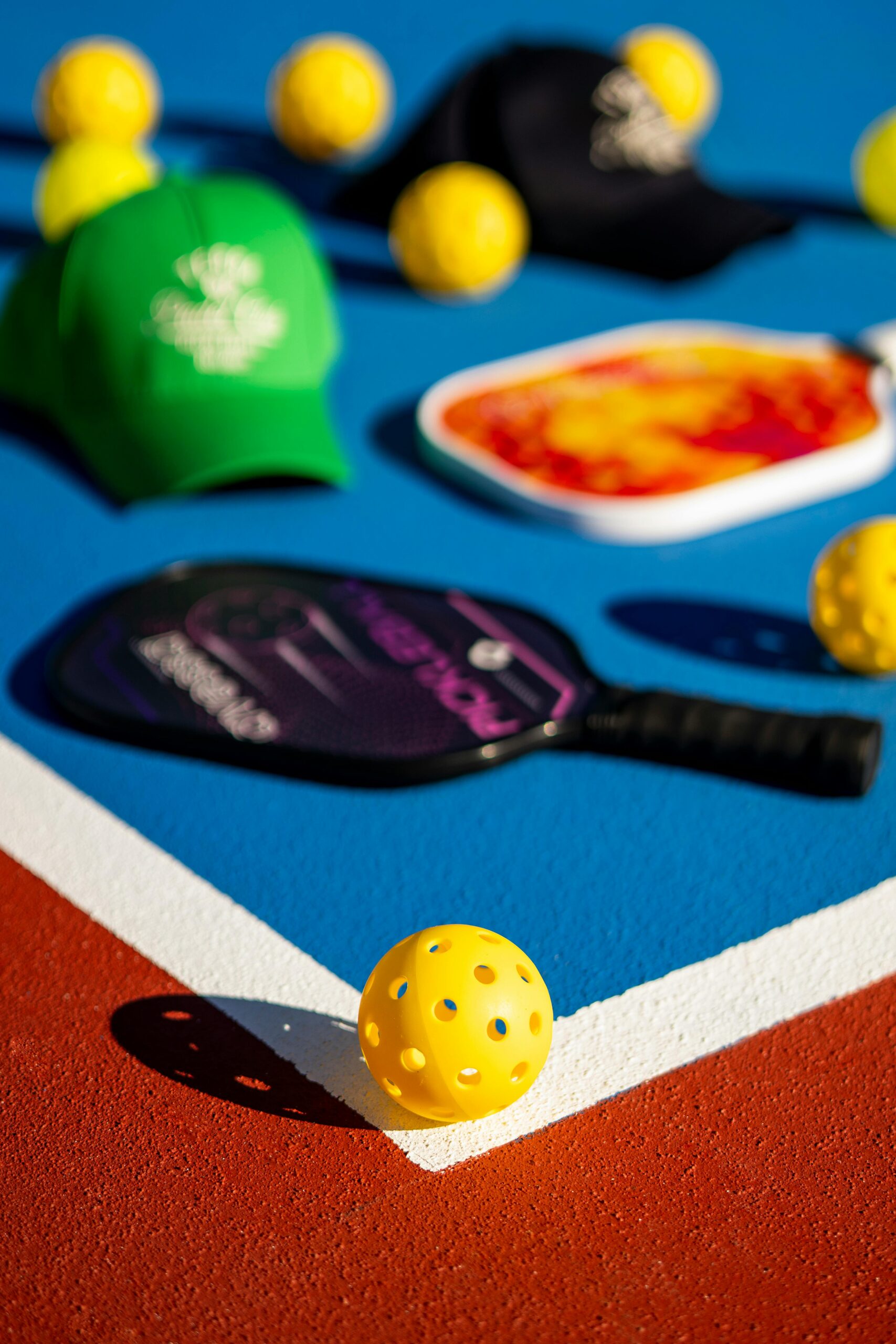
In pickleball, it is incredibly fun to smash the ball as hard as you can, but the game is ultimately won by the team that controls the kitchen line. When you are stuck in the transition zone (no man’s land) and your opponents are hammering 60 mph drives at your feet, trying to hit the ball hard right back at them is a mathematical disaster.
At Athletes Untapped, AU coaches notice that many amateur players panic when they are under fire. They grip their paddles like a vice, swing wildly at the ball, or continuously backpedal toward the baseline. This lack of structural mechanics leads to popped-up balls, easy put-aways for the opponent, and a highly frustrating inability to ever reach the non-volley zone safely.
The secret to neutralizing aggressive “bangers” and taking back control of the point lies in the reset shot. Proper training fixes these grip and paddle angle issues, allowing players to absorb massive pace, drop the ball harmlessly into the kitchen, and safely advance forward to join their partner at the net.
Connect with a Private Pickleball Coach: https://athletesuntapped.com/browse/pickleball/
Why This Skill Matters for Athlete Development
Your reset shot dictates your defensive survival. Without it, you are completely at the mercy of any team that can hit the ball hard.
- Game Performance: Elite reset technique directly translates to neutralizing offense. When you can take a chest-high drive and softly block it so it bounces below the net cord, you force the opponents to hit upward on their next shot. This completely diffuses their attack and turns a defensive scramble into a neutral, unattackable dink rally.
- Confidence: AU coaches have seen athletes improve faster when they spend just 10 focused minutes on transition zone blocking at the start of every session. When absorbing pace becomes muscle memory, players stop fearing hard hitters. They gain the composure to hold their ground, loosen their grip, and execute a confident, soft reset that completely demoralizes aggressive opponents.
- Long-Term Development: As you progress to 4.0 and 4.5+ levels of pickleball, every single team will test your transition zone defense. A biomechanically sound reset protects you from being targeted and pinned at the baseline. It provides the elite touch needed to survive fast-hands battles, ensuring your defensive value scales as you face opponents with superior power.
Best Drills / Tips / Techniques
You cannot master the reset by simply standing at the baseline and taking full swings. You need isolated, high-repetition drills to train your grip pressure and paddle stability. Here are 5 drills AU coaches use to build an unbreakable defensive wall.
1. The 3-out-of-10 Grip Drill
How to perform it: Stand in the transition zone. Have a partner smash balls directly at you from the kitchen line. Focus entirely on holding the paddle as loosely as humanly possible without dropping it (a 3 out of 10 on the pressure scale). Block the ball back over the net without swinging your arm.
Why it works: A tight grip acts like a trampoline, launching the ball fast and high right back at the opponent. This drill forces the brain to internalize the feeling of a “dead” paddle, teaching the athlete that soft hands are the absolute only way to absorb kinetic energy and keep the ball low.
Coaching tips: If your knuckles are white, you are gripping too tight. Your fingers should barely be wrapped around the handle.
Common mistakes: Squeezing the paddle tightly at the exact moment of impact out of fear. You must maintain the 3-out-of-10 pressure entirely through the contact point.
2. The Wall Absorption Block
How to perform it: Stand 10 feet away from a flat, concrete wall. Hit the ball hard against the wall to simulate a heavy drive. When the ball rebounds, strictly block it back to the wall, trying to make the ball land as softly and as close to the base of the wall as possible.
Why it works: The wall never misses. This drill isolates the angle of the paddle face, training the athlete to maintain a perfectly neutral (or slightly open) angle to absorb the pace without popping the ball straight up in the air.
Coaching tips: Let the ball come to you. Do not reach out to meet the ball; keep your paddle close to your body to maintain leverage.
Common mistakes: Swinging at the rebound. A reset is a block, not a stroke. Your paddle should move forward no more than one or two inches.
3. The Target Hoop Drop
How to perform it: Place a hula hoop or draw a chalk circle directly in the middle of your opponent’s kitchen. Stand in your transition zone and have a coach feed you hard drives. Your only goal is to reset the ball so it lands and bounces inside that specific circle.
Why it works: A reset is useless if it lands deep in the court where the opponent can smash it again. This drill trains visual depth perception, teaching the player the exact trajectory required to clear the net but land safely in the unattackable non-volley zone.
Coaching tips: The apex (highest point) of your reset shot should be on your side of the net, so the ball is already descending as it crosses over to the opponent’s side.
Common mistakes: Staring directly at the incoming ball. You must track the ball, but your mind’s eye must be locked onto the hula hoop target.
4. The “Block and Step” Advance
How to perform it: Start at the baseline. Your partner feeds you a drive. You must hit a soft reset shot and instantly take exactly one or two steps forward, stopping completely before your partner hits the next shot. Repeat this sequence (reset, step, stop) until you reach the kitchen line.
Why it works: The entire purpose of the reset is to buy yourself time to move forward. This drill marries the soft touch of the block with the essential footwork required to escape no man’s land and establish an offensive position.
Coaching tips: You must be completely stopped with your feet set before your opponent makes contact with the next ball. Moving while they hit guarantees you will pop the ball up.
Common mistakes: Trying to run all the way to the kitchen line after one reset. It often takes two or three resets to safely close the distance. Be patient.
5. The Fast-Hands Kitchen Reset
How to perform it: Both players stand right at the kitchen line. Engage in a rapid-fire volley battle (a firefight), hitting the ball hard at each other. At any random moment, one player must decide to completely diffuse the firefight by suddenly loosening their grip and dropping the ball softly into the kitchen.
Why it works: Not all resets happen from the transition zone; sometimes you need to reset the point during a chaotic net exchange. This drill trains supreme emotional control, teaching the athlete how to break the rhythm of a fast-paced battle and force the opponents back into a slow, unattackable dink game.
Coaching tips: Use the opponent’s pace against them. You do not need to generate any power to execute this; just angle your paddle down into their kitchen.
Common mistakes: Panicking and backing off the kitchen line during the firefight. Hold your ground, keep your paddle up, and trust your soft hands.
Common Mistakes Athletes Make
Reset errors are incredibly common as players transition from beginner to intermediate pickleball, but they are easy to fix once you build awareness of your paddle movement.
The “Frying Pan” Swing: Panicking when a fast ball approaches and taking a massive, upward swing at the ball to try and get it over the net. This guarantees the ball will fly out of bounds or pop up for an overhead smash.
How to fix it: Freeze your shoulder. The reset is a gentle push from the legs and a stable paddle face. If your arm is swinging, you are doing it wrong.
Backpedaling Under Fire: Trying to run backward toward the baseline while simultaneously trying to hit a reset shot.
How to fix it: Stand your ground. If you are moving backward, your weight is on your heels, making it physically impossible to control the trajectory of the ball. Plant your feet, drop your hips, and absorb the shot.
Reaching Too Far Forward: Extending your arm completely straight to try and catch the ball early, resulting in a stiff, rigid paddle that rebounds the ball aggressively.
How to fix it: Keep your elbows comfortably bent and close to your ribs. This allows your arm to act like a shock absorber, cushioning the blow of the drive.
Popping Up Out of Your Stance: Starting in a low, athletic crouch, but standing straight up at the exact moment the ball hits the paddle.
How to fix it: Stay down through contact. If your body goes up, the ball will go up. Your head level should remain exactly the same before, during, and after the reset.
Find a Private Pickleball Coach: https://athletesuntapped.com/browse/pickleball/
How Private Coaching Accelerates Improvement
Resetting the pickleball requires incredibly precise grip pressure and microscopic paddle angle adjustments. Trying to self-diagnose whether your grip was a 4 out of 10 instead of a 3 out of 10, or if you swung your arm two inches too far forward, is practically impossible during a rapid-fire volley exchange.
This is where private coaching is essential. Private coaching provides faster technical development by utilizing expert eyes, repetitive and exact ball feeding, and slow-motion video analysis. A private pickleball coach offers personalized feedback tailored to your specific stance, making it easy to catch habits like reaching too far forward immediately. This targeted instruction allows athletes to focus on correcting mechanical flaws early before they become ingrained, frustrating habits. Ultimately, mastering your reset in a 1-on-1 environment provides massive confidence building, allowing you to step onto the court knowing you have the defensive shield to neutralize the hardest hitters in the game.
Frequently Asked Questions About Pickleball Reset Shots
How often should athletes practice the reset shot?
Every single practice session should include transition zone resets. It is the most difficult shot in pickleball to master because it requires suppressing your natural instinct to swing hard. Daily repetition is required to build the necessary “soft touch.”
Where should I aim my reset shot?
Your primary target should be the middle of the opponent’s kitchen (non-volley zone). Dropping the ball in the middle eliminates sharp angles and causes confusion between the two opposing players over who should take the shot.
What is the difference between a reset and a drop shot?
A third-shot drop is usually an offensive or neutral shot hit from the baseline off a bouncing ball. A reset is a defensive block hit from the transition zone, usually taken out of the air, designed to absorb a fast-moving drive.
Why do my resets keep hitting the net?
You are either gripping the paddle too loosely (a 1 out of 10), causing the paddle to collapse upon impact, or your paddle face is angled too far downward. Open the face slightly to give the ball a safe arc over the tape.
Do private coaches help with this?
Absolutely. Private pickleball coaches are essential for breaking down the biomechanics of the block, providing high-velocity feeds to test your grip pressure, and isolating specific footwork flaws so you can learn to advance to the kitchen safely.
Conclusion
Mastering the reset shot is the undeniable foundation of an elite, unshakeable pickleball defender. Without it, you are leaving your transition game entirely up to chance and playing directly into the hands of aggressive bangers who want you to pop the ball up. Improvement is highly achievable with proper training, but it requires extreme patience, a loose grip, and a willingness to absorb pace rather than fight it. Encourage yourself to focus on your 3-out-of-10 grip pressure and your quiet paddle before you focus on hitting winners, and consistent practice will inevitably yield an impenetrable defense and total control of the kitchen line.
Train With a Private Pickleball Coach
- Athletes Untapped connects athletes with vetted private coaches across the country for one-on-one training.
- Private coaching helps athletes:
- improve faster
- build confidence
- receive personalized feedback
- reach their full potential
About Athletes Untapped
Athletes Untapped connects pickleball players with experienced private coaches who specialize in reset techniques, transition zone defense, and soft-game mechanics. Through personalized instruction and structured training plans, Athletes Untapped helps players eliminate pop-ups, master their grip pressure, and safely navigate their way to the non-volley zone.
Find an experienced coach near you: https://athletesuntapped.com
Learn from our very best AU coaches!


