
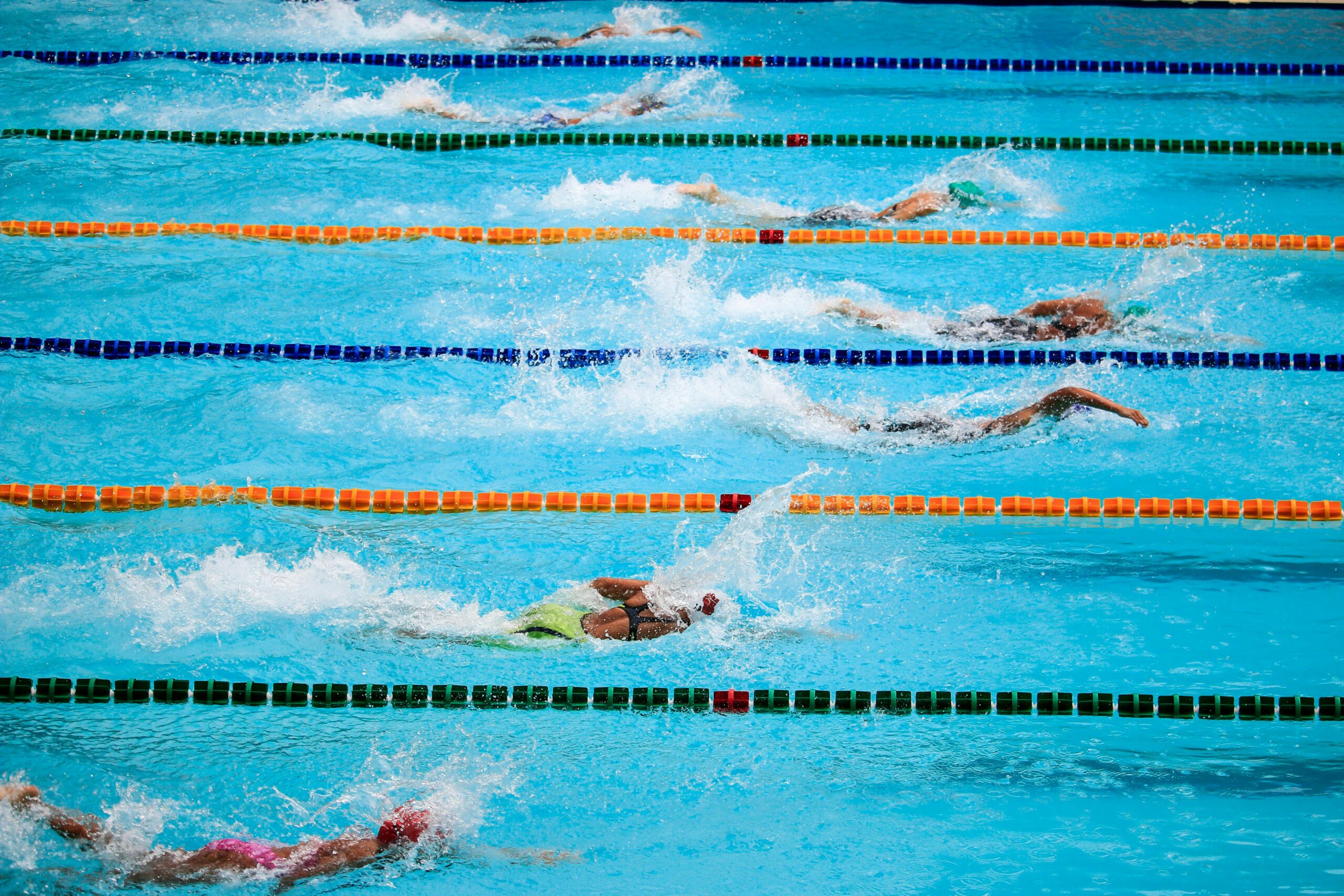
In competitive swimming, races—especially sprints like the 50 and 100-meter events—are routinely won and lost by hundredths of a second. You can have the most flawless stroke technique and elite cardiovascular endurance, but if you are the last person off the starting blocks, you are instantly swimming from behind.
At Athletes Untapped, we notice that many young swimmers struggle tremendously with the starting gun. They rock backward before they go forward, keep their weight completely centered, or try to guess when the starter will press the button, resulting in devastating false starts or sluggish reactions. This lack of structural block mechanics leads to entering the water behind the competition, forcing the swimmer to fight through the wake of the other athletes.
The secret to dominating the first 15 meters of a race lies in start reaction time and block posture. Proper training fixes these kinetic delays, allowing swimmers to load their weight properly, clear their minds, and transfer explosive horizontal force the absolute millisecond the buzzer sounds.
Connect with a Private Swimming Coach: https://athletesuntapped.com/browse/swimming/
Why This Skill Matters for Athlete Development
Your start reaction time is the only portion of the race where you are moving through the air instead of fighting the resistance of the water. Without an elite reaction time, you are wasting the fastest you will ever travel during the event.
- Game Performance: Elite start reaction time directly translates to free, effortless speed. When your hands pull against the block and your legs drive forward the exact moment the tone sounds, you hit the water with massive momentum. This allows you to carry speed deeper into your underwater dolphin kicks, putting immediate psychological pressure on the swimmers next to you.
- Confidence: I have seen athletes improve faster when they spend just 10 focused minutes on auditory reaction drills at the start of every session. When exploding off the block becomes muscle memory, swimmers stop overthinking the “Take your mark” command. They gain the composure to quiet their mind, trust their fast-twitch muscles, and execute a confident, aggressive dive without fearing a disqualification.
- Long-Term Development: As you progress to high school and collegiate swimming, everyone in the heat is fast. A biomechanically sound track start protects you from losing races before you even hit the water. It provides the explosive leverage needed to maximize the modern wedge block, ensuring your starts scale as you face elite-level sprinters who capitalize on every fraction of a second.
Best Drills / Tips / Techniques
You cannot master reaction time by simply doing full dives over and over; the climb back up to the block is too exhausting to maintain high-quality neural focus. You need isolated, high-repetition reaction drills. Here are 5 drills AU coaches use to build a lightning-fast start.
1. The Auditory Chaos Drill
How to perform it: The swimmer takes their mark on the block. The coach stands behind them and makes a series of random, loud noises—clapping, shouting “Go,” blowing a whistle, or banging a kickboard. The swimmer must only react and dive when they hear the specific, pre-determined electronic beep of the starting system.
Why it works: At large championship meets, the pool deck is incredibly loud and chaotic. This drill trains the athlete’s auditory processing, teaching the brain to filter out irrelevant crowd noise and lock onto the singular sound that actually matters.
Coaching tips: If the swimmer flinches at the wrong sound, make them reset completely. The goal is absolute stillness until the correct cue.
Common mistakes: Trying to guess the starter’s cadence. The cadence will change from race to race depending on the official; you must react to the sound, not the rhythm.
2. The Tennis Ball Drop (Dryland)
How to perform it: Have the swimmer get into a sprint start position on the pool deck or gym floor. The coach stands a few feet in front of them with a tennis ball held at shoulder height. The coach drops the ball without warning. The swimmer must instantly explode out of their stance and catch the ball before it bounces twice.
Why it works: It breaks the start down to pure, unadulterated reaction speed. It forces the nervous system to connect visual or auditory cues directly to an explosive fast-twitch muscle response without the distraction of entering the water.
Coaching tips: As the swimmer’s reaction time improves, challenge them to catch the ball before it even bounces once.
Common mistakes: Standing up before moving forward. The swimmer’s body must shoot horizontally across the floor to catch the ball, mirroring a low, piercing dive.
3. The Front-Loaded Balance Drill
How to perform it: The swimmer gets onto the block and takes their mark. They must slowly shift their weight forward until their shoulders are physically past their fingertips, hanging over the water. They should be balancing so precariously that if they lifted their hands, they would immediately fall into the pool. The coach then signals the start.
Why it works: A slow reaction time is almost always caused by the hips being too far back on the block. This drill teaches the athlete how to properly front-load their center of gravity, meaning gravity actually helps them fall forward the millisecond they let go of the block.
Coaching tips: Your fingers should be white from gripping the front of the block. You are using your hands to actively hold yourself back from falling.
Common mistakes: Keeping the weight evenly distributed between the front and back foot. If your weight is centered, you have to physically move your weight forward before you can jump, which wastes crucial time.
4. The Pull-and-Throw Med Ball Dive
How to perform it: The swimmer stands on the edge of the pool deck holding a light medicine ball (4 to 6 pounds) at their chest. On the starter’s beep, the swimmer must explosively push the medicine ball straight out over the water and follow it into a dive.
Why it works: A fast start requires pulling against the block with the arms to generate forward momentum. This drill mimics the violent upper-body contraction required to throw the body’s mass forward, heavily engaging the core and lats.
Coaching tips: The medicine ball should travel horizontally, not in a high rainbow arc.
Common mistakes: Tossing the ball weakly. The throw must be an aggressive, explosive chest pass that forces the body to extend fully.
5. The Tap Release
How to perform it: The swimmer gets into their starting position on the block and closes their eyes. The coach stands behind them and gently rests a hand on the swimmer’s back. The exact millisecond the coach lifts their hand off the swimmer’s back, the swimmer must dive.
Why it works: Reaction time is not just auditory. This drill utilizes tactile (touch) reaction, which is actually processed by the brain faster than sound. It strips away all visual and auditory distractions, forcing the swimmer to hyper-focus their central nervous system on a single sensation.
Coaching tips: The swimmer must not anticipate the release. They must remain completely relaxed but coiled like a spring.
Common mistakes: Flinching or tensing up while waiting for the touch to leave. Tension slows down muscle reaction; remain loose but engaged.
Common Mistakes Athletes Make
Sluggish starts are incredibly common in youth and high school swimming, but they are easy to fix once you understand the physics of the starting block.
The “Wind-Up” (Rocking Backward): This happens when a swimmer’s first movement upon hearing the buzzer is to rock their hips backward to load up power before jumping forward. This creates a massive kinetic delay.
How to fix it: Front-load your weight heavily. Your first movement must be pulling your body forward with your hands. You should never move backward on a starting block.
Lifting the Head: Jerking the chin up to look at the water the moment the buzzer goes off. The human head weighs about 10-12 pounds; lifting it drops the hips, acts as a parachute, and ruins the horizontal trajectory of the dive.
How to fix it: Keep your chin tucked to your chest. Your eyes should be looking at your own back toe on the block wedge, not at the water in front of you.
Pulling Up Instead of Forward: When grabbing the front of the block, many swimmers yank their chest straight up into the air when the beep goes off, resulting in a high, looping dive that enters the water incredibly deep.
How to fix it: Think about pulling the starting block horizontally toward your waist. You want to skim just above the surface of the water to maximize horizontal distance.
Anticipating the Starter: Trying to guess exactly when the official will say “Go” or press the button, leading to a disastrous false start (which is an automatic disqualification in modern swimming).
How to fix it: Surrender the timing to the official. You cannot control the cadence. Focus entirely on your breath and react only to the stimulus of the sound.
How Private Coaching Accelerates Improvement
Start reaction time happens in less than a quarter of a second. Trying to self-diagnose whether your hips dropped slightly, your back leg didn’t engage the wedge, or your arms pulled upward instead of forward is practically impossible without high-speed video.
This is where private coaching is essential. Private coaching provides faster skill development by utilizing expert eyes and frame-by-frame video analysis. A private swim coach offers personalized feedback tailored to your specific height, power output, and block setup, making it easy to catch habits like the “wind-up” immediately. This targeted instruction allows athletes to focus on correcting biomechanical delays early before they become ingrained muscle memory. Ultimately, mastering your block starts in a 1-on-1 environment provides massive confidence building, allowing you to step up behind the block knowing you will be the first one to slice into the water.
Find a Private Swimming Coach: https://athletesuntapped.com/browse/swimming/
Frequently Asked Questions about Swimming Start Reaction Time
How often should athletes practice this skill?
Athletes should limit full-effort dives off the block to 10-15 repetitions per session, perhaps twice a week. It is a highly explosive movement that quickly fatigues the nervous system. However, dryland reaction drills can be done daily.
What age should athletes start working on this?
Swimmers should learn the safety mechanics of diving as soon as they start competing. Track start specific mechanics (using a wedge and pulling the block) are usually introduced around ages 10 to 12 as they develop more explosive power.
How long does it take to improve?
With focused, intentional practice and high-speed video feedback, swimmers can see a dramatic improvement in their reaction times and breakout distances in just 3 to 4 weeks. Breaking the habit of rocking backward may take slightly longer.
Is the track start (one foot back) better than the grab start (both feet forward)?
Yes. The track start is universally used in modern competitive swimming. It provides vastly superior stability on the block, allows for a faster reaction time, and utilizes the modern starting block wedge to generate maximum forward power.
Do private coaches help with this?
Absolutely. Private swimming coaches are essential for breaking down the biomechanics of the track start, providing high-speed video analysis, and isolating specific weight-distribution flaws so the athlete can practice effectively.
Conclusion
Start reaction time is the undeniable foundation of a dominant, explosive sprinter. Without it, you are giving your competitors a free head start and playing directly into their race strategy by forcing yourself to catch up. Improvement is highly achievable with proper training, but it requires extreme neurological discipline. Encourage yourself to focus on your front-loaded weight and your horizontal pull before you focus on hitting the water, and consistent practice will inevitably yield blazing fast starts and lower race times.
Train With a Private Swimming Coach
- Athletes Untapped connects athletes with vetted private coaches across the country for one-on-one training.
- Private coaching helps athletes:
- improve faster
- build confidence
- receive personalized feedback
- reach their full potential
About Athletes Untapped
Athletes Untapped connects competitive swimmers with experienced private coaches who specialize in start reaction time, stroke mechanics, and explosive power. Through personalized instruction and structured training plans, Athletes Untapped helps sprinters and distance swimmers improve their block mechanics, underwater breakouts, and overall race execution.
Find an experienced coach near you: https://athletesuntapped.com
Learn from our very best Coach!


