
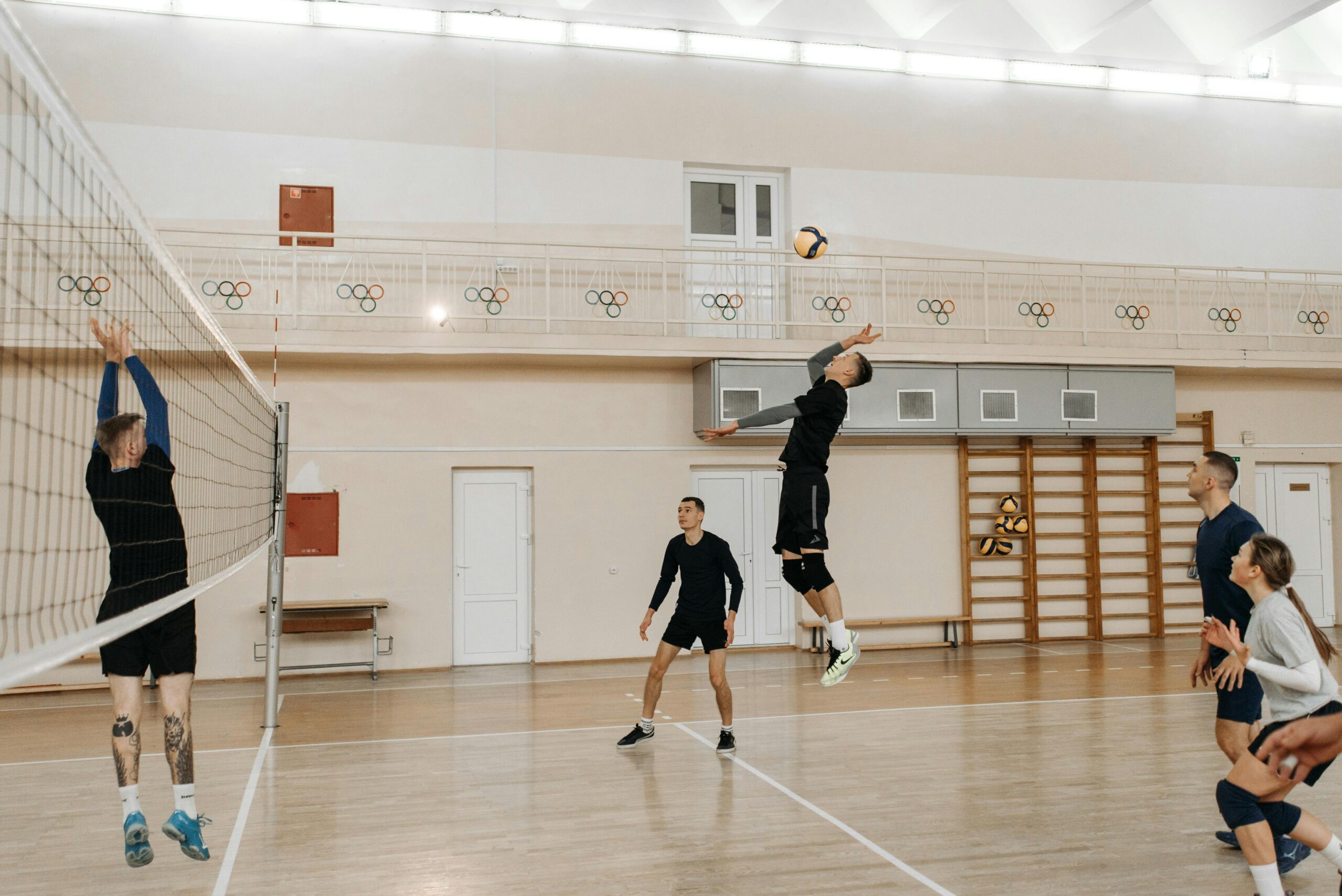
In volleyball, a massive vertical jump might get your hands above the net, but if you do not know exactly when to leave the ground, you are essentially jumping at shadows. A poorly timed block is often worse than no block at all, as it blinds your own back-row defenders and provides the opposing hitter with an easy target to tool the ball off your hands.
At Athletes Untapped, we notice that many young players struggle immensely with blocking at the net. They jump the exact moment the setter releases the ball, they stare exclusively at the volleyball flying through the air, or they float sideways while jumping. This lack of visual discipline and structural mechanics leads to descending on the block while the hitter is just swinging, resulting in balls blown past the block, broken fingers, and a highly inconsistent first line of defense.
The secret to becoming a brick wall at the net lies in block timing. Proper training fixes these visual sequence issues, allowing players to read the attacker’s approach, perfectly match their elevation, and press across the net at the exact millisecond the ball is struck.
Connect with a Private Volleyball Coach: https://athletesuntapped.com/browse/volleyball/
Why This Skill Matters for Athlete Development
Your block is the foundation of your team’s entire defensive system. Without a consistently timed block, your liberos and defensive specialists are left totally exposed to raw, full-power attacks.
- Game Performance: Elite block timing directly translates to shutting down the opponent’s best hitters. When you time your jump perfectly and press your hands over the net, you either stuff the ball straight down for an instant point or channel the attack to your exact defensive setup. This frustrates opposing hitters and forces them to make high-risk, low-percentage shots.
- Confidence: I have seen athletes improve faster when they spend just 10 focused minutes on eye-sequencing drills at the start of every session. When reading the hitter becomes automatic, players stop guessing at the net. They gain the composure to wait patiently on the ground, trust their explosive vertical, and execute a confident, aggressive block that intimidates the other team.
- Long-Term Development: As you progress to higher levels of volleyball, offensive systems become incredibly fast and deceptive. A biomechanically sound blocking sequence protects you from biting on fakes and being late to the pins. It provides the tactical discipline needed to defend quick tempos and high-flying opposites, ensuring your defensive impact scales as you face collegiate-level offenses.
Best Drills / Tips / Techniques
You cannot master block timing by simply jumping aimlessly every time the ball comes near the net. You need isolated, high-repetition visual drills to train your brain. Here are 5 drills AU coaches use to build an impenetrable block.
1. The Ball-Setter-Ball-Hitter Eye Sequence
How to perform it: Stand at the net. A coach will toss a ball to a setter, who sets a live hitter. Do not jump. Your only goal is to track the sequence with your eyes out loud: say “Ball” (as it goes to the setter), “Setter” (look at the setter’s hands), “Ball” (track the set trajectory briefly), and “Hitter” (lock eyes entirely on the hitter’s body).
Why it works: The most common blocking mistake is staring at the ball the entire time. This drill forces the brain to internalize the correct visual progression, ensuring your eyes are locked on the attacker’s shoulder and arm swing right when it matters most.
Coaching tips: The final transition from “Ball” to “Hitter” must happen before the hitter leaves the ground. You cannot block the ball; you block the hitter.
Common mistakes: Tracking the set all the way to the hitter’s hand. If you look at the ball, you will always jump too early.
2. The Hitter’s Shoulder Read
How to perform it: Pair up with a hitter at the net. The hitter will approach and jump, mimicking a swing without a ball. The blocker must watch the hitter’s attacking shoulder. The exact millisecond the hitter’s hitting shoulder drops to initiate their forward arm swing, the blocker jumps.
Why it works: Different hitters have different approach speeds and hang times. Relying on a generic “1-2-jump” count fails against varying tempos. This drill teaches the athlete to use the opponent’s biomechanics as the ultimate trigger for their own jump.
Coaching tips: If it is a tight set (close to the net), jump with the hitter. If it is a perfect or off-net set, jump a split second after the hitter.
Common mistakes: Jumping when the hitter plants their feet. You will almost always peak too early and be on your way down when they finally swing.
3. Box Blocking (Press and Penetration)
How to perform it: Stand on a stable plyometric box at the net, elevating your waist to the tape. Have a coach hit balls into your hands from the other side. Focus entirely on pressing your shoulders forward and shrugging your hands deep into the opponent’s airspace exactly as the ball is struck.
Why it works: It completely removes the complex footwork and jump timing from the equation. It forces the brain to internalize the feeling of aggressive net penetration and stiff wrists, ensuring that when you do time the jump correctly, the ball does not blow through your hands.
Coaching tips: Do not swat at the ball. Your hands should be rigid, creating a solid roof that angles down into the middle of the opponent’s court.
Common mistakes: Leaving a gap between the arms and the net, which allows the ball to easily slide straight down the blocker’s chest.
4. Mirror the Approach
How to perform it: Stand opposite a live hitter. The hitter purposely varies their approach—sometimes fast, sometimes slow, sometimes broad-jumping forward, sometimes jumping straight up. The blocker must dynamically adjust their own footwork and timing to perfectly mirror the hitter’s momentum and peak height.
Why it works: In a real match, passes are rarely perfect, and hitters must adjust. This drill marries lateral footwork with dynamic timing, teaching the blocker to stay patient and adjust their jump to match the chaos of a broken play.
Coaching tips: Establish your base. You must finish your lateral footwork and be perfectly balanced on two feet before you elevate.
Common mistakes: “Drifting” or jumping sideways. If you jump while still moving laterally, you lose vertical height and create massive gaps in the block for the hitter to exploit.
5. The Off-Net Delay Drill
How to perform it: A coach intentionally sets the ball 5 to 10 feet off the net. The blocker must recognize the distance, stay grounded significantly longer than usual, and time their jump to reach their absolute peak precisely as the ball crosses the plane of the net.
Why it works: Off-net sets are the hardest to time because human nature screams at you to jump when the hitter jumps. This drill trains supreme patience, forcing the athlete to wait out the hitter’s approach and the ball’s longer travel time.
Coaching tips: The further the ball is from the net, the later you must jump, and the higher your hands need to be pressed back to avoid getting tooled.
Common mistakes: Reaching over the net on an off-net set. If the set is far back, you must block straight up; reaching over allows the hitter to easily bounce the ball off your fingertips.
Common Mistakes Athletes Make
Blocking errors are incredibly common in club and high school volleyball, but they are easy to fix once you train your eyes to look at the right cues.
Watching the Ball: This happens when a player stares at the set trajectory all the way to the point of contact. Because the ball travels faster than human reaction time, the blocker is always late to press or jumps too early out of panic. How to fix it: Implement a strict “eyes on the hitter” rule. You must train yourself to abandon the ball visually and focus entirely on the hitter’s approach angle and hitting shoulder.
Jumping on the Setter’s Release: Middle blockers often panic on quick tempo sets (like 1s or shoots) and jump the moment the setter touches the ball. If the set goes outside, the middle is stuck in the air and completely out of the play. How to fix it: Stay loaded in your athletic stance. Only commit your jump when you physically see the ball traveling to your specific hitter or when the quick hitter is actively swinging.
Soft Hands and Broken Wrists: Timing the jump perfectly but leaving the fingers loose and wrists bent backward. A hard-driven swing will simply blast through the hands or roll off the fingers for a tool. How to fix it: Flex your hands as wide as possible and lock your wrists. Imagine pushing your palms against a concrete wall.
Floating (Drifting): Trying to combine the lateral movement with the vertical jump, resulting in a sideways leap. This destroys vertical height and makes it impossible to press across the net cleanly without committing a net violation. How to fix it: Plant your feet. Close your block by establishing a firm, two-footed base before you ever swing your arms to elevate.
How Private Coaching Accelerates Improvement
Block timing is a game of fractions of a second. Trying to self-diagnose whether your eyes lingered on the ball too long or your lateral step was too slow is incredibly difficult while you are intensely focused on a hitter attacking you.
This is where private coaching is essential. Private coaching provides faster skill development by utilizing expert eyes, slow-motion video analysis, and controlled repetitions. A private coach offers personalized feedback tailored to your specific vertical leap and reaction time, making it easy to catch habits like jumping early immediately. This targeted instruction allows athletes to focus on correcting visual mistakes early before they become ingrained muscle memory. Ultimately, mastering your block timing in a 1-on-1 environment provides massive confidence building, allowing you to step up to the net knowing you have the discipline to shut down any attacker.
Find a Private Volleyball Coach: https://athletesuntapped.com/browse/volleyball/
Frequently Asked Questions about Volleyball Block Timing
How often should athletes practice this skill?
Athletes should practice their eye sequencing (Ball-Setter-Ball-Hitter) and footwork every single practice. Because blocking is highly taxing on the joints, full-jump blocking practice should be limited to 15-20 minutes a few times a week.
What age should athletes start working on this?
Players usually begin learning strict blocking footwork and timing around ages 12 to 14, once the net height and their vertical jump allow them to actually penetrate the plane of the net.
How long does it take to improve?
With focused, intentional practice, players can see a dramatic improvement in their eye discipline and timing in just 3 to 4 weeks. Breaking the habit of drifting sideways may take slightly longer and requires extensive footwork drills.
Do I jump at the same time as the hitter?
It depends entirely on the set. For a tight set, jump right after the hitter. For a perfect set, jump when the hitter’s arm drops to swing. For an off-net set, wait and jump a full count after the hitter.
Should I block if the set is terrible?
If the set is so bad that the hitter cannot take a full aggressive swing (e.g., an underhand bump set or an off-balance desperation swing), do not jump. Stay on the ground, drop off the net, and prepare to play defense.
Do private coaches help with this?
Absolutely. Private volleyball coaches are essential for breaking down the biomechanics of the block, providing controlled live hitting, and isolating specific visual flaws so the athlete can practice effectively.
Conclusion
Block timing is the undeniable foundation of a dominant, intimidating front-row defender. Without it, you are leaving your back-row defense out to dry and playing directly into the opposing setter’s hands. Improvement is highly achievable with proper training, but it requires extreme visual discipline. Encourage yourself to focus on your eye sequencing and your patience before you focus on jumping out of the gym, and consistent practice will inevitably yield massive stuff blocks and momentum-shifting plays.
Train With a Private Volleyball Coach
- Athletes Untapped connects athletes with vetted private coaches across the country for one-on-one training.
- Private coaching helps athletes:
- improve faster
- build confidence
- receive personalized feedback
- reach their full potential
About Athletes Untapped
Athletes Untapped connects volleyball players with experienced private coaches who specialize in block timing, footwork, and front-row defensive strategy. Through personalized instruction and structured training plans, Athletes Untapped helps middle blockers and pin hitters improve visual discipline, net penetration, and overall blocking efficiency.
Find an experienced coach near you: https://athletesuntapped.com
Learn from our very best Coach!


