
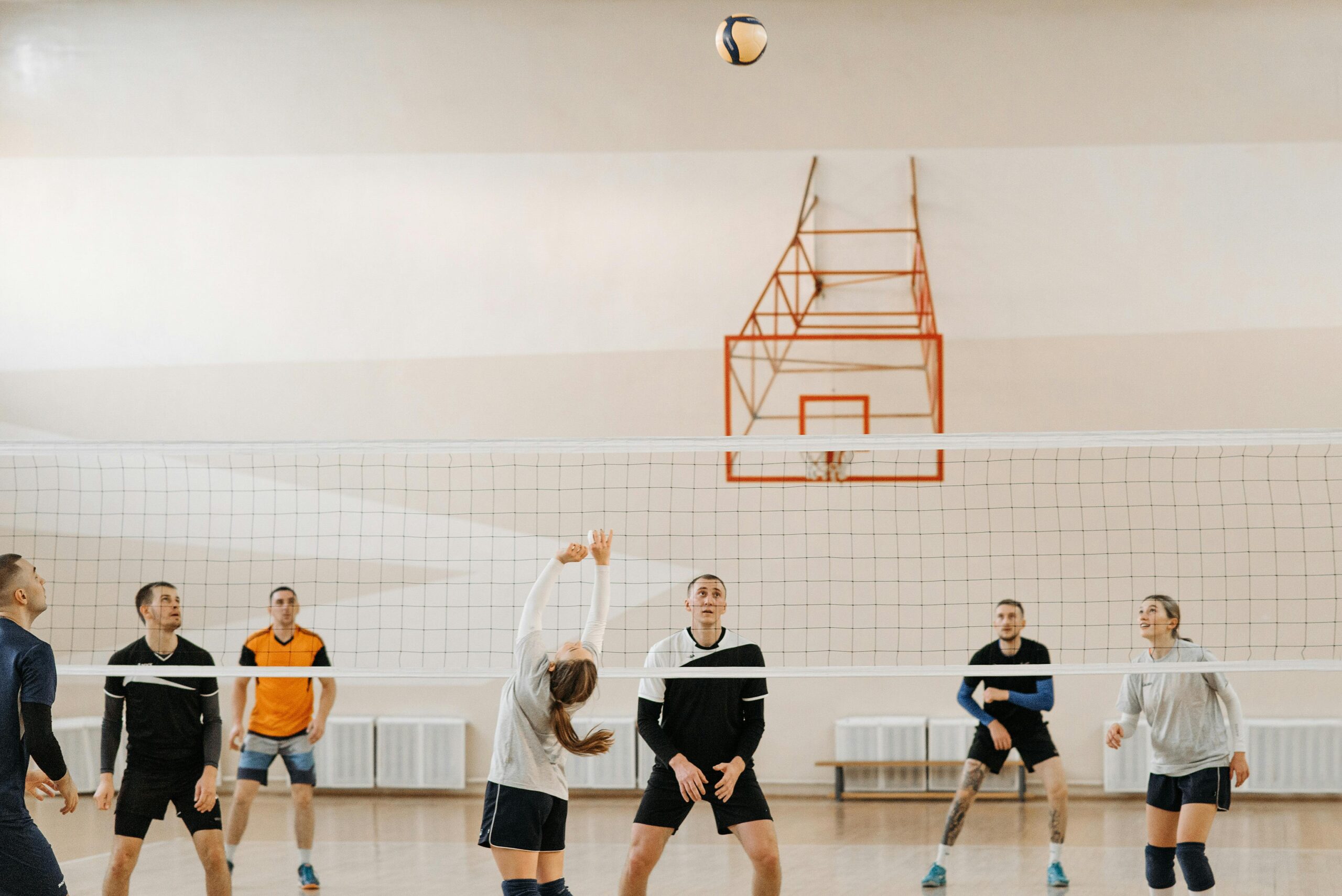
Jumping high and hitting hard in volleyball is not just about raw leg strength; it is about rhythm, timing, and biomechanical efficiency.
At Athletes Untapped, we notice that many young players struggle to generate power on their attacks. They run frantically at the net with choppy, unpredictable steps, ultimately jumping underneath the ball and losing all their forward momentum. This lack of structure leads to weak swings, frequent net violations, and highly inconsistent offensive production.
The secret to an explosive attack lies in your approach footwork sequencing. Proper training fixes these timing issues, allowing players to transfer horizontal speed into a maximum vertical leap effortlessly.
Connect with a Private Volleyball Coach: https://athletesuntapped.com/browse/volleyball/
Why This Skill Matters for Athlete Development
Your approach footwork is the engine that drives your entire offensive game. Without a consistent sequence, your arm swing and court vision will always suffer.
Game Performance: Elite approach footwork sequencing directly translates to a higher contact point. When you convert forward momentum into upward explosion perfectly, you jump higher and hit harder, making it significantly harder for the defense to dig your attacks.
Confidence: We have seen athletes improve faster when they spend just 10 focused minutes on this drill at the start of every session. When steps become muscle memory, players stop staring at their feet and confidently keep their eyes up to read the opposing block.
Long-Term Development: Proper footwork prevents injuries. If you approach with poor mechanics, you put immense stress on your knees and lower back. A biomechanically sound sequence ensures your joints absorb force correctly, keeping you healthy.
Best Drills / Tips / Techniques
You need isolated, high-repetition drills to build rhythm. Here are 5 drills AU coaches use to build flawless footwork.
1. The 4-Step Walk-Through
How to perform it: Without a ball, start behind the 10-foot line. For a right-handed hitter, take a small step with the right foot, a slightly larger step with the left, a long explosive step with the right, and a closing step with the left. Speak the words “Small, bigger, biggest, close” out loud.
Why it works: It forces the brain to internalize the slow-to-fast rhythm required for a great jump. It breaks the approach down to its simplest components.
Coaching tips: Do not jump at the end. Focus entirely on the length and speed of the steps.
Common mistakes: Taking a massive first step. The first step should be short and purely for directional timing.
2. Line Jumps (Rhythm Training)
How to perform it: Find a straight line on the court. Perform your last two steps (the right-left block step) rapidly over the line, transitioning immediately into a maximal vertical jump. Repeat 10 times.
Why it works: The final two steps are the most critical part of the sequence. This drill isolates the explosive transition from horizontal speed to vertical lift.
Coaching tips: Your feet should strike the ground almost simultaneously, sounding like a quick “ba-bam!” on the court.
Common mistakes: Landing with stiff knees. Always absorb your landing softly before resetting.
3. The Tennis Ball Toss & Catch
How to perform it: A coach tosses a tennis ball high into the air at the net. The athlete completes their full footwork sequence, jumps, and catches the tennis ball at the absolute peak of their leap with their hitting arm fully extended.
Why it works: It trains the athlete to time their footwork to an external moving object without the pressure of having to execute a perfect swing.
Coaching tips: Keep your eyes on the tennis ball the entire time. Let your feet do the work automatically.
Common mistakes: Drifting under the ball instead of keeping it out in front of the hitting shoulder.
4. Box Drop to Explosive Finish
How to perform it: Stand on a low plyometric box (12 inches). Step off with your left foot, immediately plant your right foot aggressively into the ground, bring your left foot around to close, and jump straight up.
Why it works: This overloads the eccentric phase of the final two steps. Your body has to absorb more kinetic energy, which trains the muscles to brake harder and launch higher.
Coaching tips: Throw your arms violently backward as you plant the first foot, then rip them upward as you jump.
Common mistakes: Letting your chest fall forward over your knees upon impact, which ruins vertical trajectory.
5. Transition Approach Sprints
How to perform it: Start at the net. Backpedal quickly to the 10-foot line, open your hips to the setter, and instantly launch into your 4-step approach sequence.
Why it works: In a real game, you rarely get to stand still before attacking. This drill marries transition footwork with approach footwork sequencing, making the movement game-realistic.
Coaching tips: Stay low during the backpedal. Do not stand up straight until exploding off the ground.
Common mistakes: Rounding out the approach path. Backpedal in a straight line so you can attack on a sharp angle.
Common Mistakes Athletes Make
Footwork errors are incredibly common, but they are easy to fix once identified.
The Goofy Foot Approach: This happens when a right-handed hitter steps with their left foot first, leaving the right foot forward when they jump. This cuts off rotational power from the hips. How to fix it: Strip the jump away and walk through the proper Right-Left-Right-Left sequence 50 times a day until it overwrites the bad habit.
Slowing Down at the End: Players decelerate on their last two steps trying to perfectly time a bad set. How to fix it: Teach the slow-to-fast rhythm. Wait patiently for the set, and then aggressively accelerate into the final steps.
Broad Jumping: Instead of jumping straight up, the athlete jumps forward into the net because the final block foot is not planted at an angle. How to fix it: Emphasize a hard heel strike on the final plant step, leaning slightly backward to convert forward speed into vertical lift.
T-Rex Arms: Forgetting to use the arms during the footwork sequence loses a massive amount of vertical potential. How to fix it: Exaggerate a massive double-arm backswing on the second-to-last step to naturally propel the body upward.
How Private Coaching Accelerates Improvement
Approach footwork sequencing happens in the blink of an eye. Trying to self-diagnose whether your penultimate step was long enough is incredibly difficult while you are in the air.
This is where private coaching is essential. Private coaching provides faster skill development by utilizing expert eyes and slow-motion video analysis. A private coach offers personalized feedback tailored to your specific mechanics, making it easy to catch habits like the goofy-foot approach immediately. This targeted instruction allows athletes to focus on correcting mistakes early before they become ingrained. Ultimately, mastering your footwork in a 1-on-1 environment provides massive confidence building, allowing you to step into team practices knowing your foundation is rock solid.
Find a Private Volleyball Coach: https://athletesuntapped.com/browse/volleyball/
Frequently Asked Questions About Volleyball Approach Footwork
How often should athletes practice this skill?
Athletes should practice their footwork without a ball for at least 5 to 10 minutes before every session. Daily repetition is required to build permanent muscle memory.
What age should athletes start working on this?
Players as young as 9 or 10 can begin learning the basic 3-step or 4-step rhythm. The earlier the mechanics are introduced, the less un-teaching has to happen later.
How long does it take to improve?
With focused, intentional practice, players can see a dramatic improvement in their rhythm and vertical leap in just 3 to 4 weeks. Breaking deeply ingrained habits may take longer.
Can beginners learn this?
Yes. In fact, it is often easier for true beginners to learn because they do not have any pre-existing bad habits to unlearn.
Do private coaches help with this?
Absolutely. Private coaches are essential for breaking down the biomechanics of the approach, providing video feedback, and feeding perfectly timed tosses so the athlete can focus entirely on their steps.
Conclusion
Approach footwork sequencing is the undeniable foundation of a powerful, dominant volleyball attacker. Without it, you are leaving your vertical leap and hitting power on the floor. Improvement is highly achievable with proper training, but it requires discipline. Encourage yourself to focus on the steps before you focus on the swing, and consistent practice will inevitably yield explosive results.
Train With a Private Volleyball Coach
Athletes Untapped connects athletes with vetted private coaches across the country for one-on-one training.
Private coaching helps athletes:
- improve faster
- build confidence
- receive personalized feedback
- reach their full potential
About Athletes Untapped
Athletes Untapped connects volleyball players with experienced private coaches who specialize in approach footwork, jump mechanics, and hitting power. Through personalized instruction and structured training plans, Athletes Untapped helps hitters improve timing, explosiveness, and offensive consistency.
Find an experienced coach near you: https://athletesuntapped.com
Learn from our very best Coach!


