
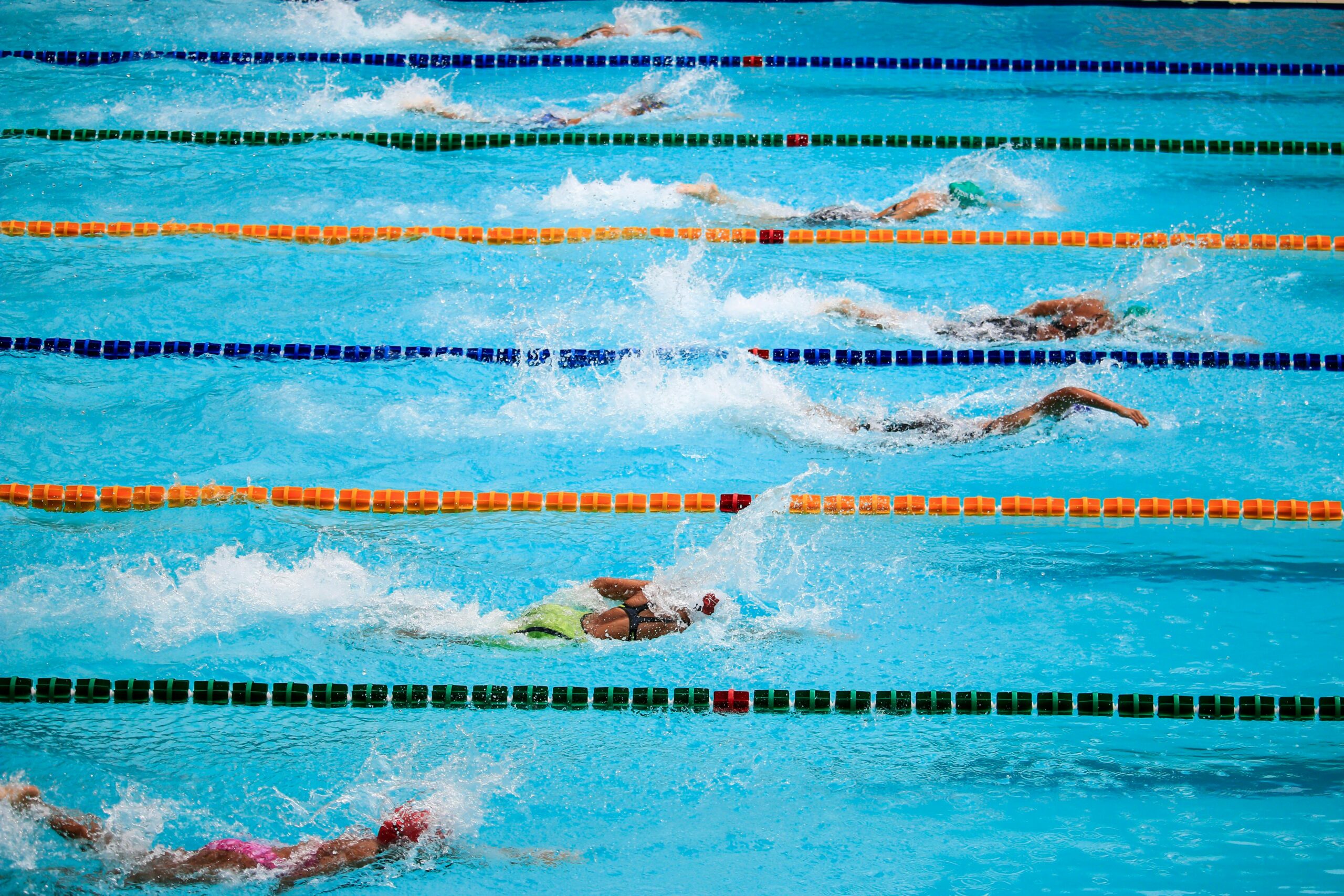
Swimming a race is not about going as fast as you can from the starting beep until you hit the wall. It is about energy distribution.
At Athletes Untapped, we constantly see swimmers fly off the blocks, swim a blistering first 50 meters, and then completely fall apart in the second half of the race. This is the “fly and die” approach, and it ruins personal bests.
Elite swimmers are mathematicians in the water. They know exactly how much energy to expend on each lap, ensuring they have enough fuel left for a devastating final sprint. This is called race pacing strategy. Here is how to train your internal clock, manage your lactic acid, and swim the smartest race of your life.
Connect with a Private Swimming Coach: https://athletesuntapped.com/browse/swimming/
Why Race Pacing Strategy Matters
Going out too fast creates an oxygen debt that your body cannot repay while you are still swimming. Pacing keeps you out of the red zone for as long as possible.
Negative Splitting: The hallmark of a perfectly paced race is the negative split, where the second half of your race is faster than the first half. It requires immense discipline but ensures you are passing competitors at the end when they are fading.
Energy Conservation: Different strokes and distances require different energy systems. A 50-meter sprint is pure anaerobic power, while a 500-meter race requires aerobic management. Pacing prevents you from burning anaerobic fuel during an aerobic event.
Mental Control: When you have a pacing strategy, you do not panic if someone is slightly ahead of you at the halfway mark. You trust your training, knowing they are likely overexerting themselves while you are right on schedule.
Best Drills to Master Race Pacing
You cannot learn to pace during a meet. You have to build an internal speedometer during practice. Here are 4 drills AU coaches use with their athletes.
1. Broken Swims
How to perform it: Instead of swimming a straight 200-meter race in practice, break it up. Swim 4×50 meters with exactly 10 seconds of rest between each 50. Add up your times (minus the rest) to see your “broken” 200 time.
Why it works: It allows you to feel the exact speed and stroke rate required for your goal time without accumulating the debilitating fatigue of a continuous swim.
Coaching Tip: Your goal is consistency. If your first 50 is three seconds faster than your last 50, your pacing is flawed. Aim for identical splits.
2. The Build-Up Drill
How to perform it: Swim a 100-meter distance. Swim the first 25 meters at a moderate, smooth pace. Increase your speed on the second 25, push harder on the third, and sprint the final 25 meters at absolute maximum effort.
Why it works: This physically trains the concept of negative splitting. It teaches your body how to find a higher gear even when your muscles are beginning to tire.
Coaching Tip: Do not start too fast. If you are already sprinting by the 50-meter mark, you have no room left to “build” the speed.
3. Pace Clock Targeting
How to perform it: The coach assigns a specific target time for a 50-meter repeat (e.g., 35 seconds). The swimmer must look at the pace clock, push off, and try to touch the wall at exactly 35.0 seconds.
Why it works: This calibrates the swimmer’s internal clock. Elite swimmers can usually guess their split time within a few tenths of a second just by how the water felt.
Coaching Tip: Check your stroke count. If you normally take 15 strokes to hit 35 seconds, and suddenly you are taking 18 strokes, you are slipping water and losing efficiency.
4. Heart Rate Descending Sets
How to perform it: Swim a set of 4x100s. On the first 100, keep your heart rate relatively low (aerobic). On each subsequent 100, increase your effort level and heart rate, ending with a threshold-level sprint on the final repetition.
Why it works: Pacing is essentially heart rate management. This drill teaches you what different zones feel like, so you do not accidentally spike your heart rate in the first lap of a distance event.
Coaching Tip: Take your pulse immediately after each 100 (for 10 seconds, multiply by 6) to verify that you are actually escalating your effort correctly.
Common Mistakes Swimmers Make
Pacing requires discipline, and adrenaline often destroys discipline. Our coaches constantly watch for these pacing errors.
- Racing the Person Next to You: This is the most common mistake. If the swimmer in the next lane takes off at a ridiculous speed, letting your ego chase them will ruin your own race plan. Stick to your splits.
- Breathing Too Late: Swimmers often hold their breath or skip breaths on the first lap because they feel fresh. This creates an immediate oxygen deficit that hits you like a brick wall on the third lap. Breathe early and often.
- Chopping the Stroke: As swimmers get tired, they tend to shorten their stroke and spin their arms faster to maintain speed. This burns massive amounts of energy. You must focus on maximizing distance per stroke as you fatigue.
- Ignoring the Turns: Swimmers often use the wall as a place to rest during a long race. A slow, lazy turn kills your momentum. You must attack the walls to maintain your average speed without taking extra arm strokes.
Find a Private Swimming Coach: https://athletesuntapped.com/browse/swimming/
How Private Coaching Accelerates Improvement
It is incredibly difficult to calculate your own splits and monitor your own stroke rate while you are physically exhausted in the water. This is where private coaching is essential.
A private swim coach can:
- Calculate Target Splits: We analyze your past race data and map out the exact times you need to hit on every single lap to achieve your goal time.
- Monitor Stroke Rate: We use a stopwatch to count your tempo (strokes per minute). If your tempo drops off on the third lap, we intervene to fix your endurance mechanics.
- Provide Real-Time Feedback: We walk the pool deck with you, giving hand signals or using underwater headsets to let you know if you are ahead of pace, behind pace, or right on target.
- Simulate Race Conditions: We create high-pressure, lactic-acid-inducing sets that mimic the exact physical pain of the third lap of a 200-meter race, teaching you how to push through it.
Frequently Asked Questions About Swimming Race Pacing Strategy
What is a negative split?
A negative split is a pacing strategy where the second half of a race is swum in a faster time than the first half. It is highly efficient and is the preferred strategy for most distance and middle-distance events.
How do I pace a 50-meter freestyle?
You don’t. A 50-meter race is a pure, anaerobic sprint. You take zero to one breath, hold nothing back, and spin your arms at maximum tempo from the buzzer to the wall.
Why does the third lap of a 200 always hurt the most?
The third 50 (laps 5 and 6 in a short course pool) is where your initial adrenaline wears off and lactic acid peaks in your muscles, but you still do not have the psychological boost of seeing the finish line. It requires the most mental toughness.
Should I change my pacing strategy for finals?
Usually, no. If a specific pacing strategy got you a personal best in the morning preliminaries, you should trust it in the finals. The only exception is if you are swimming purely for placement or medals rather than time, where you might need to stay with the pack.
Conclusion
Swimming is a sport of physics, biology, and time management. The fastest swimmer is not always the one with the most power; it is the one who spends their energy the wisest.
By practicing broken swims, mastering your stroke count, and learning to ignore the distractions in the next lane, you will take control of your race and finish stronger than ever before.
About Athletes Untapped
Athletes Untapped connects swimmers with experienced private coaches who specialize in race strategy, stroke efficiency, and pacing mechanics. Through personalized instruction and structured training plans, Athletes Untapped helps swimmers hit their target splits and drop major time.
Find an experienced coach near you: https://athletesuntapped.com
Learn from our very best Coach!


