
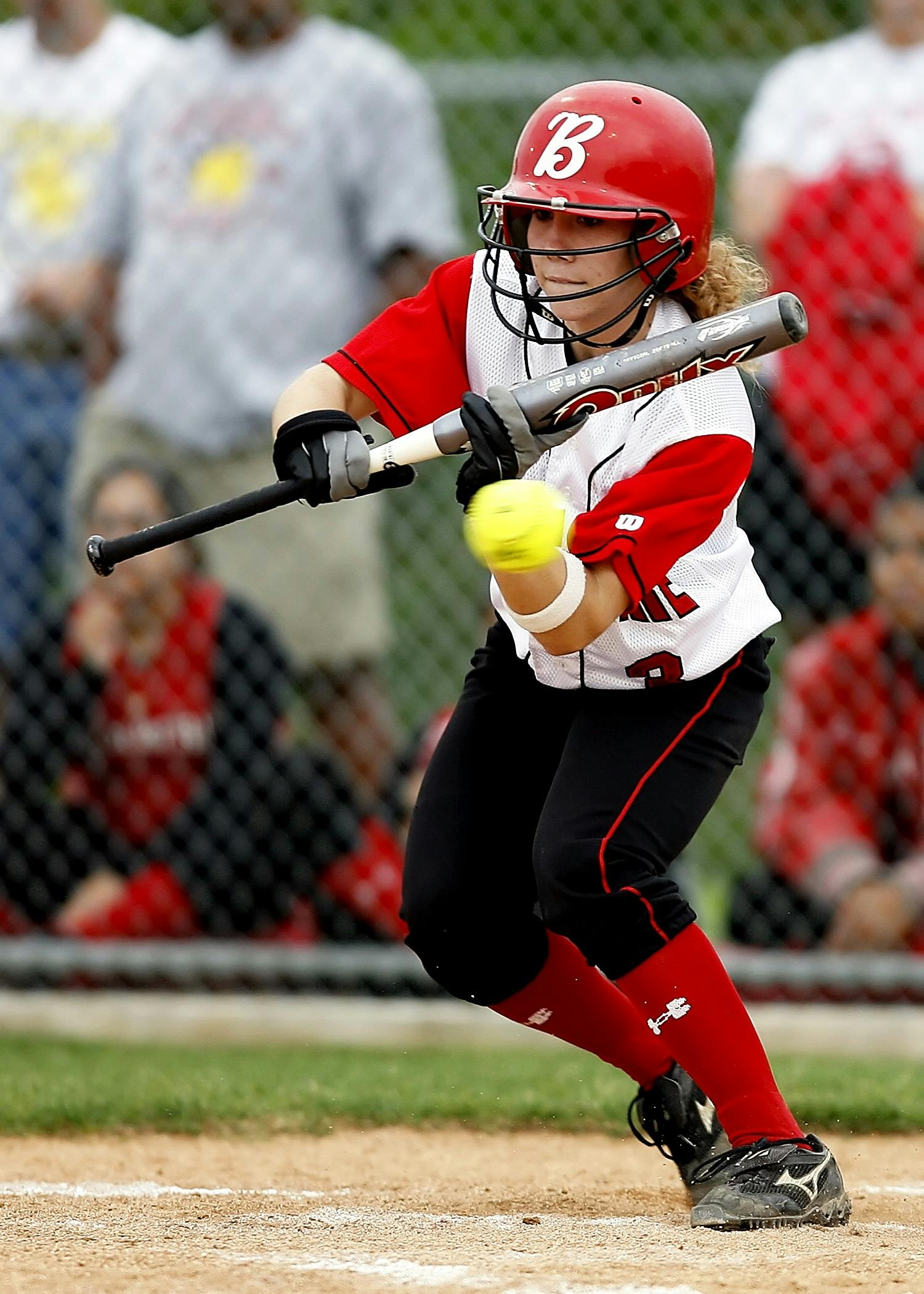
In softball, hitting a rise ball or a nasty drop curve isn’t just about swinging as hard as you can; it is about keeping your bat in the hitting zone for as long as possible.
At Athletes Untapped, we notice that many young players struggle to make consistent contact. They chop down at the ball, cast their hands away from their body, and swing with a steep, unpredictable trajectory. This lack of structural mechanics leads to weak pop-ups, easy groundouts, and highly inconsistent offensive production.
The secret to becoming a high-average, high-power hitter lies in bat path efficiency. Proper training fixes these mechanical issues, allowing players to transfer rotational energy into a smooth, level swing that drives the ball into the gaps effortlessly.
Connect with a Private Softball Coach: https://athletesuntapped.com/browse/softball/
Why This Skill Matters for Athlete Development
Your bat path efficiency is the engine that drives your entire offensive game. Without a consistent sequence, your timing and plate vision will always suffer.
Game Performance: Elite bat path efficiency directly translates to a larger margin for error. When you keep your barrel on plane with the pitch, you can be slightly early or slightly late and still hit a line drive, making it significantly harder for pitchers to strike you out.
Confidence: I’ve seen athletes improve faster when they spend just 10 focused minutes on this drill at the start of every session. When a clean bat path becomes muscle memory, players stop guessing at the plate. They gain the composure to track the ball, trust their hands, and make a confident, calculated swing.
Long-Term Development: As you progress to higher levels of softball, pitchers throw faster and with more spin. A biomechanically sound bat path protects against chasing bad pitches and provides the leverage needed to drive the ball deep, ensuring your offensive game scales as you grow.
Best Drills / Tips / Techniques
You cannot master bat path efficiency by just taking mindless swings in the batting cage. You need isolated, high-repetition drills. Here are 5 drills AU coaches use to build an unbreakable swing plane.
1. The High Tee Drill
- How to perform it: Set the batting tee at the very top of the strike zone, level with your letters. Take your normal stance and swing, focusing on hitting a hard line drive straight back up the middle.
- Why it works: It simulates adjusting to a high rise ball. It forces the brain to internalize the feeling of keeping the hands above the ball, preventing the dreaded upper-cut swing.
- Coaching tips: Do not drop your back shoulder. Your shoulders should remain relatively level to drive the high pitch.
- Common mistakes: Chopping down aggressively, which creates backspin pop-ups. You must swing through the ball, not down on it.
2. The Fence Drill
- How to perform it: Stand facing a chain-link fence, exactly one bat length away from the fence. Take your normal swing. The goal is to swing the bat cleanly through the zone without the barrel scraping or hitting the fence.
- Why it works: This drill is the ultimate cure for casting. It forces you to keep your hands tight to your body and leads with the knob of the bat to stay inside the softball.
- Coaching tips: Start slowly with half-swings to build the spatial awareness before swinging at full game speed.
- Common mistakes: Extending the arms too early in the swing sequence, which causes the barrel to immediately smash into the fence.
3. The Two-Tee Extension Drill
- How to perform it: Place one tee in the normal hitting position and a second tee about 12 inches directly in front of it, set slightly lower. Place a ball on the back tee. Swing and hit the ball, attempting to drive it directly over the front tee without your bat hitting the front tee.
- Why it works: It trains the athlete to achieve full extension through the hitting zone. It prevents rolling the wrists over too early after contact.
- Coaching tips: Think about pointing the barrel of your bat directly at the pitcher after you strike the ball.
- Common mistakes: Pulling the front shoulder out early, which causes the bat path to cut across the zone and slice the ball.
4. The Stop Swing Drill
- How to perform it: Set up a ball on the tee. Take a full-speed, aggressive swing, but physically stop the bat the exact millisecond it makes contact with the softball. Freeze in that position.
- Why it works: It isolates the point of contact and builds elite core strength. It allows the hitter to visually check if their palm is facing up and their other palm is facing down at contact.
- Coaching tips: Your head must be completely still and looking directly at the point of contact when you freeze.
- Common mistakes: Allowing the wrists to roll over at contact. The wrists should not roll until well after the ball has left the bat.
5. The Outside Pitch Deep Tee Drill
- How to perform it: Place the tee on the outside corner of the plate, set deep in the stance (even with your back hip). Focus on letting the ball travel and driving it to the opposite field gap.
- Why it works: In a real game, you rarely get pitches right down the middle. This drill marries plate coverage with bat path efficiency, teaching you to stay on the plane of an outside pitch longer.
- Coaching tips: Let the ball get deep. If you try to hit the outside pitch out in front of your front foot, you will roll over it.
- Common mistakes: Stepping away from the plate (stepping in the bucket) to try and reach the ball. Keep your stride straight toward the pitcher.
Common Mistakes Athletes Make
Swing errors are incredibly common in youth softball, but they are easy to fix once identified.
- Dropping the Hands: This happens when a player begins their swing by lowering their hands to their waist before moving forward. This creates a long, looping, upper-cut bat path that misses high pitches entirely.
- How to fix it: Implement a mandatory “hands to the ball” rule. Focus on taking the knob of the bat directly in a straight line to the incoming softball.
- Casting the Barrel: Players often disconnect their arms from their body early in the swing, sweeping the bat in a wide, slow arc around the plate.
- How to fix it: Constantly remind yourself to play with tight hands. The Fence Drill is the absolute best way to physically prevent casting.
- Rolling the Wrists Early: Turning the top hand over before or exactly at the point of contact, resulting in weak ground balls to the pull side.
- How to fix it: Drill the Two-Tee Extension heavily. Learn to keep the barrel flat and push through the zone before the natural wrist roll occurs.
- Squishing the Bug Incorrectly: Over-rotating the back foot without transferring weight forward, leaving all the power stuck on the back leg and causing the bat path to drag.
- How to fix it: Drive the back knee forward toward the pitcher to initiate the hip rotation, shifting the weight dynamically into a firm front side.
Find a Private Softball Coach: https://athletesuntapped.com/browse/softball/
How Private Coaching Accelerates Improvement
Bat path efficiency is a game of subtle angles and leverage. Trying to self-diagnose whether your hands are dropping or your extension is cut short is incredibly difficult in a team setting.
This is where private coaching is essential. Private coaching provides faster skill development by utilizing expert eyes and real-time adjustments. A private coach offers personalized feedback tailored to your specific biomechanics, making it easy to catch habits like early wrist rolling immediately. This targeted instruction allows athletes to focus on correcting mistakes early before they become ingrained. Ultimately, mastering your swing in a 1-on-1 environment provides massive confidence building, allowing you to step into the batter’s box knowing you can handle intense pitching speeds.
Frequently Asked Questions About Bat Path Efficiency in Softball
How often should athletes practice this skill?
Athletes should practice their bat path drills with a tee for at least 10 to 15 minutes before every session. Daily repetition is required to make the swing plane automatic.
What age should athletes start working on this?
Players as young as 7 or 8 can begin learning the basic concepts of keeping their hands inside the ball. The earlier the mechanics are introduced, the less un-teaching has to happen later.
How long does it take to improve?
With focused, intentional practice, players can see a dramatic improvement in their contact consistency in just 3 to 4 weeks. Breaking the habit of a deep upper-cut may take longer.
Can beginners learn this?
Yes. In fact, it is often easier for true beginners to learn because they do not have any pre-existing bad habits to unlearn.
Do private coaches help with this?
Absolutely. Private coaches are essential for breaking down the biomechanics of the swing, providing live front toss, and isolating specific mechanical flaws so the athlete can practice effectively.
Conclusion
Bat path efficiency is the undeniable foundation of a versatile, dominant softball hitter. Without it, you are limiting your power and playing directly into the pitcher’s hands. Improvement is highly achievable with proper training, but it requires discipline. Encourage yourself to focus on your hands and your extension before you focus on hitting home runs, and consistent practice will inevitably yield explosive results.
Train With a Private Softball Coach
Athletes Untapped connects athletes with vetted private coaches across the country for one-on-one training.
Private coaching helps athletes:
- improve faster
- build confidence
- receive personalized feedback
- reach their full potential
About Athletes Untapped
Athletes Untapped connects softball players with experienced private coaches who specialize in bat path efficiency, swing mechanics, and plate discipline. Through personalized instruction and structured training plans, Athletes Untapped helps hitters improve contact rate, power distribution, and offensive consistency.
Find an experienced coach near you: https://athletesuntapped.com
Learn from our very best Coach!