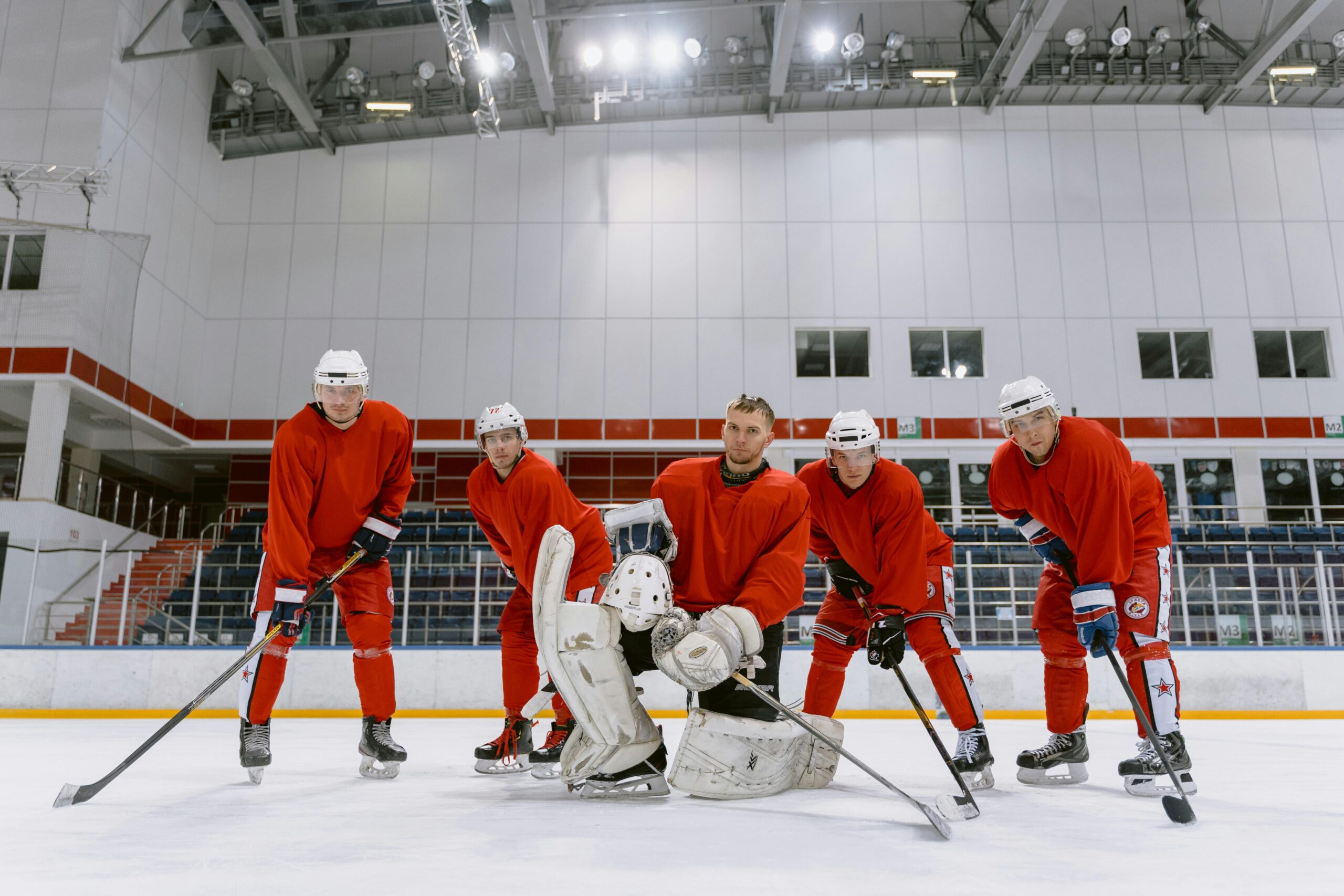
In ice hockey, having explosive skating speed is a phenomenal physical asset, but your hands ultimately dictate how far you will go in the sport. You can be the fastest player on the ice, but if the puck constantly bounces off your blade like a trampoline or you have to stare straight down at your skates to control it, your speed is completely wasted. Hockey is a game played in incredibly tight, highly contested spaces. The player who can manipulate the puck through a maze of opposing sticks is the one who controls the offense.
At Athletes Untapped, our coaches notice that many young hockey players treat stickhandling as a rigid, full-arm motion. They grip the stick incredibly tight with both hands, aggressively chop at the puck, and play with their heads buried in their chests. This lack of biomechanical control leads to immediate turnovers the moment they face defensive pressure, an inability to see open passing lanes, and a highly frustrating tendency to lose the puck without anyone even checking them.
The secret to keeping the puck on a string and playing with your head up lies in mastering the top stickhandling drills used in hockey training. Proper mechanical repetition fixes these stiff habits. It allows players to utilize a rolling top wrist, a loose bottom guiding hand, and peripheral vision to establish a fluid, deceptive offensive game that completely paralyzes defenders.
Connect with a Private Ice Hockey Coach: https://athletesuntapped.com/browse/ice-hockey/
Why Top Stickhandling Drills Used in Hockey Training Matter for Athlete Development
Your puck control dictates your overall offensive threat level. Without a sound understanding of how to manipulate the puck around your body, you are essentially just playing a game of ping-pong, blindly batting the puck forward and hoping you can skate fast enough to catch it.
- Game Performance: Elite stickhandling execution directly translates to beating defenders one-on-one. When you fully understand how to execute a wide reach or a quick toe drag, you force the defenseman to commit their body weight in the wrong direction. You turn a crowded corner battle into a clean breakaway simply by having the soft hands necessary to slip the puck under a sweeping stick.
- Confidence: Our coaches have seen athletes improve faster when they master their puck control mechanics in their garage or basement before they ever step on the ice. When you know exactly how the puck reacts to the roll of your wrists, the fear of turning the puck over at the blue line instantly vanishes. You gain the composure to hold onto the puck an extra second, trusting your hands because your muscle memory is backed by rigorous, repetitive training.
- Long-Term Development: As you progress to high school, junior, and collegiate hockey, the time and space you have to make a decision shrink drastically. You no longer have the luxury of taking three seconds to settle a bouncing pass. A tactically sound foundation built through consistent drill work protects you from being easily stripped of the puck. It provides the elite hockey IQ needed to scan the ice while simultaneously stickhandling, ensuring your value scales as coaches actively recruit playmakers who can process the game at high speeds.
Best Drills / Tips / Techniques
You cannot master soft hands by simply skating in a straight line and pushing the puck forward. You need active, isolated training that forces you to use your entire range of motion and rotate your wrists. Here are 5 drills AU coaches use with their athletes to build an unbreakable possession game.
1. The Figure-Eight Puck Control
Place two pucks or small cones on the ice (or a dryland shooting pad) about shoulder-width apart. Actively weave your puck around them in a continuous figure-eight pattern, ensuring you bring the puck entirely around the outside of each obstacle.
This is the absolute foundation of puck control because it forces you to use both the forehand and backhand sides of your blade in equal measure. It teaches the athlete that they must cup the puck by continuously rolling their wrists over to prevent the puck from sliding off the heel or toe.
Focus entirely on rolling your top hand while keeping your bottom hand loose, allowing the shaft to slide freely through your palm. A frequent error here is squeezing the bottom hand incredibly tight, which locks the shoulders and forces the player to use a rigid, sweeping arm motion rather than the quick, fluid snap of the wrists.
2. The Soft-Touch Quick Dribble
Stand in an athletic hockey posture and practice rapidly stickhandling the puck back and forth in a very narrow, two-to-three-inch window directly in front of your body.
Fast hands require fast-twitch muscle activation, and this drill builds the lightning-quick micro-movements needed to settle a bad pass or freeze a goaltender in tight. It teaches the player to rely solely on the top hand for rotational speed while keeping the upper body and head perfectly still.
Ensure your stick blade is barely tapping the puck, creating a quiet, rhythmic sound rather than loud, violent chops. Athletes frequently make the mistake of using their bottom arm to aggressively push and pull the stick back and forth, which is entirely too slow and physically exhausting for a live game.
3. The Wide Reach and Pull
Plant your feet firmly in a wide stance. Slowly drag the puck as far away from your body on your forehand side as your arms will physically allow, then pull it all the way across your body to maximum extension on your backhand side.
Playing in a phone booth gets you checked; this drill trains the extended range of motion required to protect the puck from a defender with a long reach. It teaches the athlete how to properly shift their body weight from leg to leg to support their extended arms without falling off balance.
Lunge slightly with your legs as you reach, keeping the blade cupped over the puck to maintain control at the extreme edges of your wingspan. A massive trap is keeping your feet completely straight and static, forcing you to bend over at the waist to reach, which instantly destroys your balance and leaves you highly vulnerable to a body check.
4. The Obstacle Course Weave
Randomly scatter five to ten pucks or small obstacles across a training zone. Stickhandle through them in a completely randomized pattern without any predetermined route, keeping your eyes completely off the puck.
Game situations are chaotic, and this drill forces the brain to read the environment while relying purely on tactile feel and peripheral vision to control the puck. It teaches the player that the hands must operate independently from the eyes to process the game effectively.
Scan the horizon or look at a specific point on the wall while you weave through the obstacles. A common instinct is to immediately drop the chin and stare straight down at the blade the moment the puck hits an obstacle, entirely defeating the purpose of building “heads-up” hockey IQ.
5. The Toe Drag Execution
Push the puck slightly out in front of your body on the forehand side. Aggressively roll your top wrist over so the toe of the blade points down to the ice, pull the puck straight back toward your skates, and then push it out to the other side.
The toe drag is the ultimate deceptive weapon in hockey. Practicing it in isolation builds the precise wrist dexterity required to change the angle of the puck instantly. It teaches the attacker how to show the puck to a defender to bait a poke check, only to rip it away under their stick.
Snap the top wrist over with authority and pull the puck smoothly. Many players attempt to pull the puck back using the flat middle of the blade or the heel rather than the actual toe, completely losing control and leaving the puck sitting directly in front of the defender.
Common Mistakes Athletes Make
Stickhandling errors are incredibly common in youth and amateur hockey, often because players fundamentally misunderstand the mechanics of how the stick should be held and manipulated.
- The Death Grip on the Bottom Hand: Squeezing the shaft of the stick with maximum pressure on the lower hand happens because players believe a tighter grip equals more control. To correct this, you must loosen the bottom hand until the stick can slide freely up and down through your palm. The bottom hand is merely a guide ring; 90 percent of the rotational control and finesse must come from the top hand.
- Staring Down at the Puck: Skating with your chin buried in your chest to watch the puck occurs when a player lacks the tactile feel and confidence to know where the puck is on their blade. You can fix this by forcing your head up during all practice drills. Rely on your peripheral vision to track the black blur of the puck at the bottom of your sightline while keeping your primary focus on the defense.
- Stickhandling in the “Comfort Zone” Only: Keeping the puck perfectly centered exactly two feet in front of your body at all times happens out of laziness and a fear of losing the puck. To solve this, you must constantly practice the wide reach. If you only stickhandle in a tight, comfortable box in front of your chest, a defenseman will easily poke the puck away the moment you step onto the ice.
- Stiff Upper Body Movement: Moving the entire upper body, shoulders, and head side-to-side along with the stick happens when an athlete fails to isolate their wrists. Fix this by quieting your core. Your upper body should remain square and still, acting as a stable platform while only your forearms and wrists rapidly rotate to manipulate the blade.
Find a Private Ice Hockey Coach: https://athletesuntapped.com/browse/ice-hockey/
How Private Coaching Accelerates Improvement
Ice hockey stickhandling is a highly biomechanical skill that relies on translating top-hand wrist rotation and bottom-hand slide into seamless, on-ice manipulation. Trying to self-diagnose your wrist roll, your hand positioning, or your blade cupping angle while skating at 15 miles per hour is practically impossible for most players.
This is where private coaching comes in. We have found that personalized instruction helps athletes build the specific cognitive and physical skills required to handle the puck smoothly, leading to significantly faster skill development and on-ice confidence.
A private hockey coach helps accelerate skill development by breaking down your grip and wrist mobility in a controlled setting. Our coaches provide personalized feedback on how to properly cup the puck on the backhand and how to use eye deception to freeze a defender. By utilizing video analysis, coaches can correct mistakes early, showing you exactly where your bottom hand was too tight or where you dropped your head before those bad habits become permanent.
Ultimately, this 1-on-1 environment focuses on massive confidence building. When you possess elite stickhandling mechanics, you stop panicking under pressure, allowing you to step onto the ice knowing you have the soft hands to completely dictate the flow of the offense.
Frequently asked questions about Top Stickhandling Drills Used in Hockey Training
How often should I practice stickhandling?
To see massive improvements in your puck control, you should practice stickhandling off the ice for 10 to 15 minutes every single day. Consistent, daily repetition builds the complex neuromuscular pathways required to make rolling your wrists an automatic, subconscious reflex.
Can I practice stickhandling off the ice?
Absolutely. Off-ice (dryland) training is actually the best place to develop raw hand speed and mechanics. You can use a smooth shooting pad, a piece of whiteboard, or a slick garage floor with a specialized stickhandling ball or a Green Biscuit to simulate the feel of the ice.
Why do I lose the puck when I look up?
You lose the puck when you look up because your hands lack the muscle memory to cup the blade correctly without visual confirmation. When you look up, the blade often flattens out, allowing the puck to slide off the heel or toe. Consistent practice rolling the top wrist will fix this tactile disconnect.
What kind of stickhandling ball should I use at home?
A wooden stickhandling ball or a heavy golf ball is excellent for developing incredibly fast, quick-twitch hands because they move much faster than a standard puck. Conversely, using a heavy, weighted puck builds the forearm strength required to win gritty stick battles on the boards.
Do private coaches help with stickhandling technique?
Yes. Private hockey coaches are essential for fixing fundamental grip flaws that are often overlooked in crowded team practices. They provide live, isolated feedback, correct your posture, and run specific agility and stickhandling combination drills that teach you exactly how to translate soft hands into game-speed dominance.
Conclusion
Mastering the top stickhandling drills used in hockey training is the undeniable foundation of a creative, highly elusive, and dominant hockey player. Without it, you are just an athlete chasing the play, leaving your offensive success entirely to luck and allowing the opposing defense to easily strip the puck away from your rigid, unyielding blade.
Improvement is highly achievable with proper mechanical training. Encourage yourself to practice your figure-eights, maintain a loose bottom hand, and embrace the discipline of keeping your head up while you train. Consistent practice will inevitably yield a much more dangerous, smooth, and unshakable presence with the puck on your stick.
Train With a Private Ice Hockey Coach
Athletes Untapped connects athletes with vetted private coaches across the country for one-on-one training.
Private coaching helps athletes:
- improve faster
- build confidence
- receive personalized feedback
- reach their full potential
About Athletes Untapped
Athletes Untapped connects ice hockey players with experienced private coaches who specialize in stickhandling mechanics, puck protection, and advanced offensive skills. Through personalized instruction and structured training plans, AU coaches help forwards and defensemen eliminate stiff hands, master their puck control, and completely dictate the tempo of the game.
Find an experienced coach near you: https://athletesuntapped.com
Learn from our very best AU coaches!