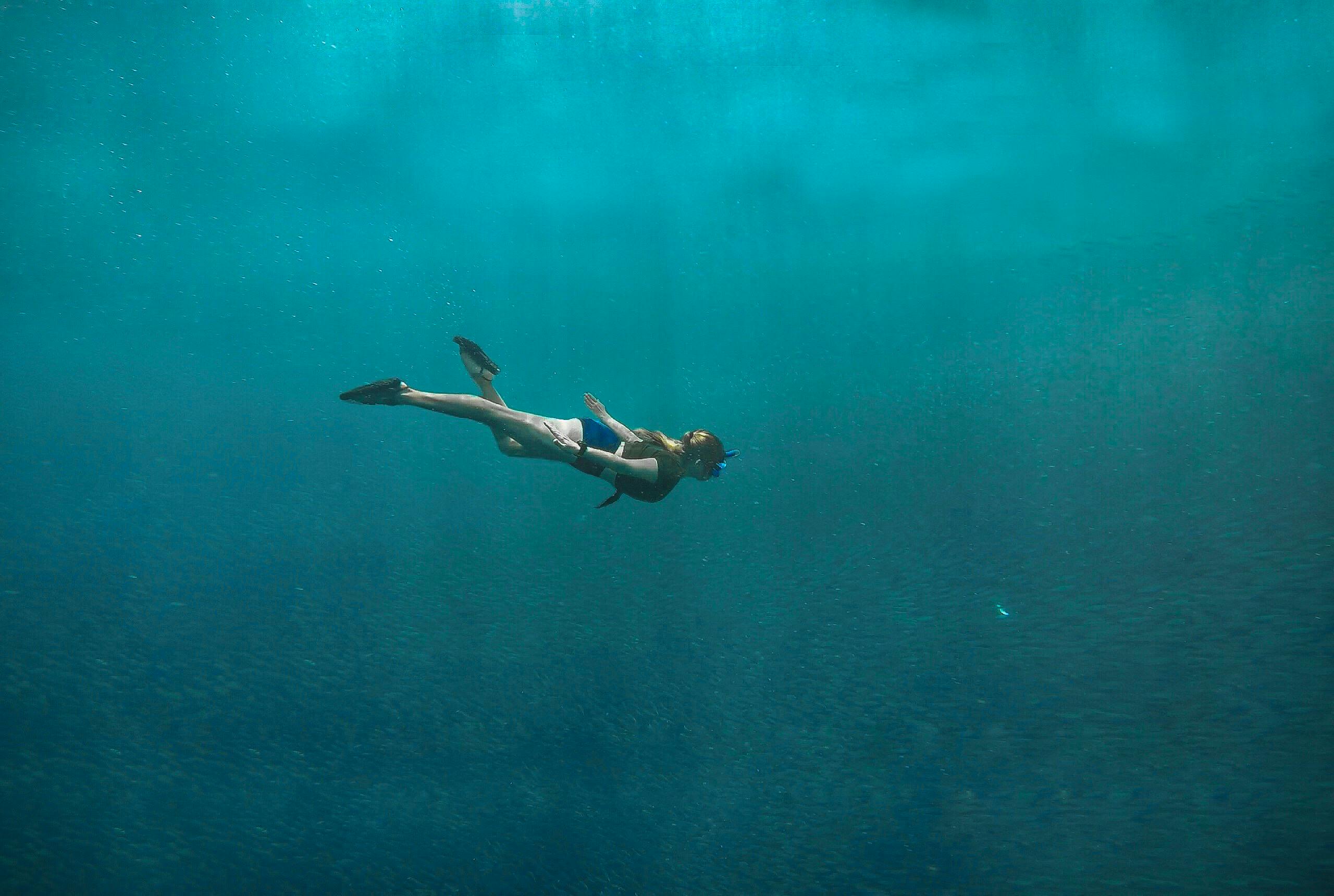
In modern competitive swimming, the fastest part of any race does not happen on the surface of the pool. It happens completely submerged.
At Athletes Untapped, we tell swimmers that if they are only focusing on their surface strokes, they are ignoring the most crucial element of speed. The underwater dolphin kick is now universally recognized as the fifth stroke of swimming. It is the great equalizer, allowing technically sound swimmers to outpace stronger, taller competitors off the walls.
When a swimmer pushes off the wall, they are traveling faster than at any other point in the race. The goal of the underwater phase is to maintain that incredible velocity for as long as legally possible before breaking the surface. Here is how to optimize your underwater phase, reduce drag, and carry blinding speed into your breakout.
Connect with a Private Swimming Coach: https://athletesuntapped.com/browse/swimming/
Why the Underwater Phase Matters
Water creates massive resistance. When you swim on the surface, you are fighting surface tension and creating waves, both of which slow you down.
Hydrodynamics: When you are entirely submerged in a tight streamline, you eliminate surface wave drag. Physics dictates that you move faster underwater than on top of it, assuming your form is perfect.
Free Speed: The push-off generates free momentum. A powerful underwater phase harnesses that momentum, whereas a weak underwater phase acts like a parachute, killing your speed instantly.
Race Strategy: In short course racing (25-yard pools), the underwater phase can account for up to 60 percent of the total race distance. If your underwaters are better than your opponent’s, you will literally spend less time actually swimming the stroke, saving energy for the final sprint.
Best Drills to Optimize Your Underwater Phase
Building an elite underwater kick takes immense core strength, ankle flexibility, and breath control. Here are 4 drills AU coaches use to develop explosive underwater speed.
1. The Perfect Streamline Push
How to perform it: Push off the wall entirely submerged. Stack your hands, lock your elbows behind your ears, and squeeze your core. Do not kick. Simply glide as far as you can until you completely stop moving.
Why it works: Before you can kick fast, you must learn how to eliminate drag. This drill provides instant feedback on your body position. If your hips drop or your head is lifted, you will stop gliding very quickly.
Coaching Tip: Lock your chin to your chest. Your body follows your head. If you look up at your destination, your chest acts as a plow against the water.
2. Vertical Dolphin Kicking
How to perform it: Go to the deep end of the pool. Cross your arms over your chest and keep your head above water. Use only a dolphin kick to keep yourself afloat for 30 to 60 seconds.
Why it works: This isolates the core and forces the kick to originate from the chest and hips, not just the knees. It builds incredible endurance for the underwater phase.
Coaching Tip: To increase the difficulty, transition your arms from your chest to a locked streamline position pointing straight up at the ceiling.
3. The Shooter Drill
How to perform it: Push off the wall and stay underwater on your back or stomach. Execute fast, tight dolphin kicks until you reach the 15-meter mark (the legal limit), then break out into a sprint for the rest of the lap.
Why it works: It trains breath control under severe physical stress. It also teaches you to count your kicks so you know exactly how many it takes to hit maximum distance.
Coaching Tip: The amplitude of the kick should be small and fast. Big, sweeping kicks create too much drag. Think of the motion as a whip cracking.
4. Parachute or Resistance Kicking
How to perform it: Attach a swimming parachute or a resistance band to your waist. Push off the wall and execute your underwater dolphin kicks against the added resistance.
Why it works: This builds pure power in the hips, glutes, and quadriceps. When you take the resistance off, your normal underwater kicks will feel incredibly light and explosive.
Coaching Tip: Do not let the resistance pull your body out of a tight streamline. Posture is more important than power.
Common Mistakes Swimmers Make
Our coaches constantly see swimmers throwing away their wall speed because of poor mechanics. Here are the biggest underwater killers.
Kicking from the Knees: A dolphin kick is a full-body wave. If you only bend your knees, you are essentially pedaling a bicycle underwater. The movement must start from the sternum, ripple down through the hips, and snap at the ankles.
Looking Forward: Swimmers naturally want to see where they are going. Lifting the head to look forward immediately drops the hips and creates a massive wall of drag. Look straight down at the bottom of the pool.
Breaking Out Too Early or Too Late: If you break the surface while you are still moving faster than your surface swimming speed, you lose momentum. If you wait until you have completely slowed down to break out, you have to work twice as hard to get back up to speed.
Loose Arms: Failing to squeeze the ears with the biceps. If there is a gap between your arms and your head, water rushes in and slows you down.
Find a Private Swimming Coach: https://athletesuntapped.com/browse/swimming/
How Private Coaching Accelerates Improvement
The underwater phase is the hardest part of swimming to self-correct because you cannot see your own body alignment or measure your own drag.
This is where private coaching is essential.
A private swim coach can:
Provide Underwater Video Analysis: We use waterproof cameras to show you exactly what your streamline looks like beneath the surface. We can pinpoint exactly where your energy is leaking.
Improve Ankle Flexibility: Elite kicking requires hyper-flexible ankles. We provide dryland stretching routines specifically designed to increase your ankle range of motion, allowing your feet to act like true flippers.
Calculate Your Kick Count: We help you find the mathematical sweet spot for your body. We determine exactly how many kicks you should take off every wall to maximize speed without running out of oxygen.
Refine the Breakout: The transition from underwater to surface swimming is delicate. We teach you how to time your first stroke perfectly so you do not lose a fraction of a second.
Frequently Asked Questions About the Underwater Phase in Swimming
How long am I legally allowed to stay underwater?
In freestyle, backstroke, and butterfly, you are permitted to stay completely submerged for up to 15 meters after the start and after every turn. Your head must break the surface before the 15-meter mark.
Does the underwater phase apply to breaststroke?
Yes, but the rules are different. Breaststrokers are allowed one full arm pull down to the legs, one dolphin kick, and one breaststroke kick while completely submerged before they must break the surface.
How do I hold my breath longer off the wall?
Breath control is a combination of lung capacity and relaxation. The more you panic, the faster you burn oxygen. Drilling vertical kicking and shooter drills will train your body to tolerate higher levels of carbon dioxide comfortably.
Should I kick on my back or stomach?
It depends on the stroke, but mechanically, kicking on your back or your side is often slightly faster because it pushes the water away from the surface, reducing wave drag even further.
Conclusion
Races are not just won between the flags; they are won off the walls. The underwater phase is your opportunity to manipulate physics to your advantage.
By committing to a tight streamline, developing a core-driven dolphin kick, and mastering your breath control, you will surface ahead of the competition and hold that lead to the finish line.
About Athletes Untapped
Athletes Untapped connects swimmers with experienced private coaches who specialize in stroke technique, underwater optimization, and race strategy. Through personalized instruction and structured training plans, Athletes Untapped helps swimmers improve efficiency, drop times, and dominate off the walls.
Find an experienced coach near you: https://athletesuntapped.com
Learn from our very best Coach!