
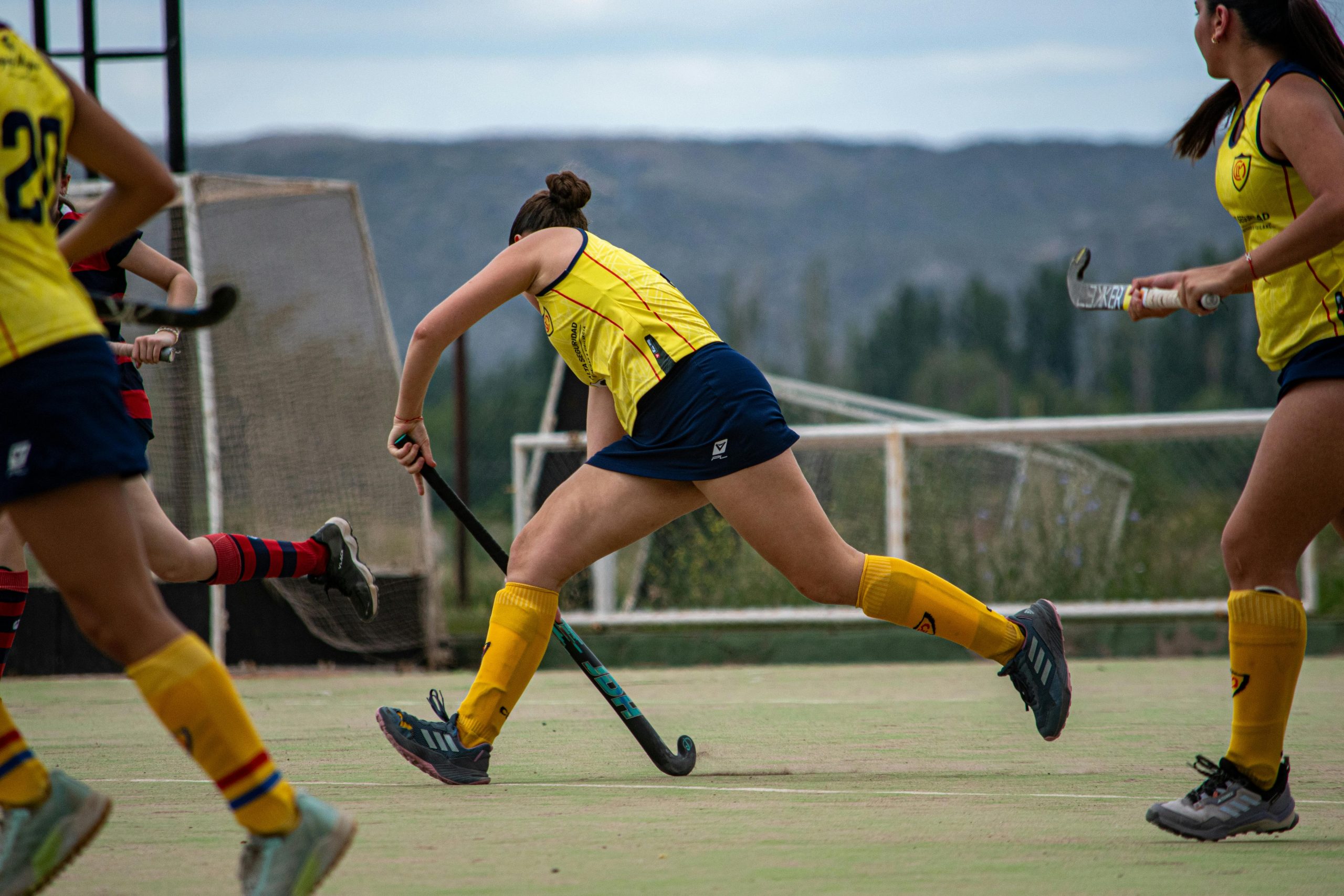
In field hockey, transitioning from the sprawling outdoor turf to the enclosed, lightning-fast hardwood of the indoor game is a massive physical and mental shock. You can be an incredibly dominant outdoor player with a booming hit, but if your close-quarter stick skills are sloppy or you take a massive backswing on the indoor court, you will be constantly penalized and stripped of the ball. Indoor field hockey is a completely different sport played in a phone booth, requiring flawless flat-stick control, rapid decision-making, and the ability to use the sideboards to your tactical advantage.
At Athletes Untapped, our coaches notice that many players struggle with the indoor transition because they try to force their outdoor habits into a confined space. They step onto the court standing completely upright, attempting to aggressively chop at the ball or hit long, sweeping passes through heavy traffic. This lack of indoor-specific tactical control leads to dangerous lifted balls, immediate turnovers, and a highly frustrating inability to adapt to the sheer speed of the hardwood surface.
The secret to dominating the winter season and dramatically improving your overall stick skills lies in mastering essential indoor field hockey drills. Proper repetition fixes these outdoor habits. It allows players to utilize perfectly flat push passes, embrace the geometry of the sideboards, and establish a fluid, low-posture game that completely paralyzes defenders before they can even react.
Connect with a Private Field Hockey Coach: https://athletesuntapped.com/browse/field-hockey/
Why Indoor Field Hockey Drills Matter for Athlete Development
Your indoor tactical IQ dictates your ability to survive and thrive in incredibly tight spaces. Without a sound understanding of how the indoor rules and surface change the game, you are essentially a liability, constantly turning the ball over and giving up fast breaks.
- Game Performance: Elite indoor execution directly translates to lightning-fast ball movement. When you fully understand how to execute a crisp push pass off the sideboards to bypass a defender, you instantly create a 2-on-1 advantage without ever having to dribble. You turn a clogged, claustrophobic corner into a brilliant offensive breakout simply by letting the geometry of the court do the running for you.
- Confidence: Our coaches have seen athletes improve faster when they master their low defensive posture at the start of every indoor practice. When you know exactly how to lay your stick perfectly flat on the hardwood to execute a block tackle, the fear of an attacker slipping the ball through your legs instantly vanishes. You gain the composure to play aggressive defense, trusting your mechanics because your body positioning is backed by rigorous, repetitive drill work.
- Long-Term Development: As you transition back to the outdoor season in the spring, the skills you develop indoors pay massive dividends. You no longer have the luxury of relying purely on speed; indoor forces you to develop elite, quick-twitch hand speed and spatial awareness. A tactically sound foundation built through indoor drills provides the elite field hockey IQ needed to maneuver out of double-teams on the outdoor turf, ensuring your overall value as a highly technical player scales tremendously.
Best Drills / Tips / Techniques
You cannot master the indoor game by simply running standard outdoor passing lines on a gym floor. You need active, scenario-based training that enforces indoor rules (no hitting, no lifting) and utilizes the physical boundaries of the court. Here are 5 drills AU coaches use to build an elite indoor field hockey player.
1. The Sideboard Wall-Pass Relay
Set up a line of players near the center of the court. One by one, players must aggressively dribble toward the right sideboard, execute a sharp, angled push pass directly into the boards, sprint past a dummy defender (cone), and receive their own rebounding pass in stride.
This is the absolute foundation of indoor spatial awareness because it trains the body to use the physical boundaries as an extra teammate. It teaches the athlete the complex physics of angles, showing them exactly how hard they need to push the ball to get a perfectly weighted return.
Push the ball firmly and accelerate instantly the moment the ball leaves your stick to meet the rebound. A frequent error here is passing the ball into the boards too softly or at a completely flat angle, which causes the ball to slowly roll along the wall rather than bouncing back out into the open court.
2. The Figure-Eight Flat Stick Weave
Place two cones very close together on the hardwood. Get into a deep, lunging athletic stance and rapidly weave the ball through and around the cones in a continuous figure-eight pattern without ever taking the stick off the ball.
Indoor hockey outlaws hitting, meaning possession relies entirely on drag skills and constant stick-to-ball contact. This drill heavily reinforces the lightning-quick micro-movements needed to pull the ball away from a defender’s block tackle. It teaches the player to rely solely on their wrist rotation rather than arm swings.
Keep the ball glued to the face of your stick and drop your hips incredibly low to the floor. Athletes frequently make the mistake of standing up tall and tapping or slapping at the ball, which is entirely too slow and causes the ball to bounce uncontrollably on the hard surface.
3. The 3v3 Tight-Space Transition Grid
Create a small, narrow rectangular grid using cones, specifically utilizing one of the sideboards as a boundary. Play a continuous 3v3 game where teams must complete three consecutive push passes before they are allowed to shoot on a mini-goal, enforcing a strict rule that the ball must never lift off the floor.
Game situations indoors are chaotic and highly congested. This drill forces the brain to process spatial awareness and rapid communication in a phone booth. It teaches the player that forcing a dribble through triple coverage is impossible, and quick, one-touch passing is the only way to survive.
Keep your stick on the floor at all times to instantly receive and redirect passes. A massive trap is receiving the ball and immediately putting your head down to dribble, which allows the defense to easily collapse and trap you against the boards.
4. The Block Tackle Chute
Set up a narrow channel using cones. An attacker dribbles down the channel while the defender must time their approach, drop into a deep lunge, and lay their stick completely flat on the floor to execute a flawless, stationary block tackle without swinging.
Defending indoors requires entirely different mechanics because you cannot dangerously hack or chop at the ball. This drill builds the precise timing and elite core strength required to build a physical wall with your stick. It teaches the defender how to channel the attacker and cleanly strip the ball.
Drop your left knee low to the hardwood and lay the stick flat across the attacker’s path. Many players attempt to tackle by jabbing aggressively with the toe of the stick, which easily misses the ball and usually results in a foul for a dangerous stick tackle.
5. The Goalie Deflection Box
Position a forward inside the shooting circle with their back to the goal. A midfielder fires rapid, hard push passes from the top of the D. The forward must not stop the ball; they must quickly angle their stick to cleanly deflect the incoming pace of the ball past the goalie.
Indoor goals are rarely scored off massive, clean shots; they are scored via gritty, perfectly timed deflections. This drill trains the elite hand-eye coordination required to change the angle of a fast-moving ball at the last possible second.
Hold your stick firmly and simply angle the face to let the ball’s own momentum carry it into the net. A common instinct is to take a swing at the incoming pass, which is illegal indoors, completely ruins the accuracy of the deflection, and puts the goalie in physical danger.
Common Mistakes Athletes Make
Indoor field hockey errors are incredibly common for players transitioning from the fall season, often because they simply forget that the rules and the physics of the game have completely changed.
- Taking a Backswing: Lifting the stick past your knees to hit or sweep the ball is strictly illegal in indoor hockey and will result in an immediate penalty. To correct this, you must exclusively use the push pass. The ball must start in direct contact with your stick, relying entirely on a low posture and a strong weight transfer to generate power.
- Lifting the Ball: Popping the ball into the air during a pass or a dribble is considered highly dangerous indoors and is an instant turnover. You can fix this by keeping your hands forward and your stick face hooded (tilted slightly downward) over the ball, ensuring it stays glued to the hardwood.
- Ignoring the Boards: Trying to force a pass directly through the center of the court when a defender is in the way happens because players are used to playing without walls. To solve this, you must embrace the sideboards. Passing the ball off the wall at a sharp angle to bypass a defender should become your default offensive breakout strategy.
- Defending Upright: Standing tall while playing defense allows attackers to easily slip the ball right under your stick or through your legs. Fix this by completely burning out your quads. You must defend in a deep, lunging squat with your stick constantly dragging on the floor to block the passing lanes.
How Private Coaching Accelerates Improvement
Indoor field hockey is a highly specialized game that relies on translating low body posture, precise grip rotation, and lightning-fast tactical processing into a confined space. Trying to self-diagnose your block tackle angle, your push pass weight, or your sideboard geometry during a fast-paced 5v5 indoor match is practically impossible for most players.
This is where private coaching comes in. We have found that personalized instruction helps athletes build the specific cognitive and physical skills required to dominate the hardwood, leading to significantly faster skill development and a seamless transition between seasons.
A private field hockey coach helps accelerate skill development by breaking down your indoor-specific mechanics in a controlled, isolated setting. Our coaches provide personalized feedback on how to properly drop your hips for a flat tackle and how to execute a legal, powerful push pass without taking a dangerous backswing. By utilizing video analysis, coaches can correct mistakes early, showing you exactly where you lifted the ball or where your posture was too tall before those bad habits result in constant penalties.
Ultimately, this 1-on-1 environment focuses on massive confidence building. When you possess elite indoor mechanics, you stop fighting the speed of the hardwood, allowing you to step onto the court knowing you have the precise stick skills to surgically dismantle the opposing team.
Find a Private Field Hockey Coach: https://athletesuntapped.com/browse/field-hockey/
Frequently asked questions about Indoor Field Hockey Drills
What is the main difference between indoor and outdoor field hockey?
The biggest differences are the surface, the boundaries, and the rules. Indoor is played on a hard, fast gym floor surrounded by sideboards that keep the ball in play. Additionally, players are not allowed to hit the ball (no backswings) and the ball must remain flat on the floor at all times, except for a direct shot on goal.
Can you hit or sweep the ball in indoor field hockey?
No. Hitting and sweeping (taking a backswing) are strictly forbidden for safety reasons. You must use a push pass, where the stick starts in contact with the ball, or a deflection to move the ball around the court and shoot.
How do I use the sideboards effectively?
The sideboards act as an extra teammate. You can use them to execute a “wall pass” to yourself to bypass a defender, or you can angle a pass off the boards to a teammate who is heavily marked, completely avoiding the direct passing lane that the defense is blocking.
Why is posture so much more important indoors?
Because the ball travels significantly faster on a hard floor and you cannot use a backswing, power and control must come entirely from your legs and core. If you stand up straight, you will not have the leverage to push the ball hard, and your stick will not be flat enough to stop incoming passes.
Do private coaches train specifically for indoor field hockey?
Yes. Elite private field hockey coaches tailor their sessions based on the season. During the winter, they transition to indoor-specific drills, focusing heavily on flat-stick tackling, tight-space stickhandling, and mastering the push pass to ensure you are completely prepared for the indoor game.
Conclusion
Mastering essential indoor field hockey drills is the undeniable foundation of an adaptable, highly technical, and completely dominant player. Without it, you are just an outdoor athlete struggling to survive on the hardwood, leaving your success entirely to luck and allowing the speed and rules of the indoor game to constantly frustrate you.
Improvement is highly achievable with proper indoor-specific training. Encourage yourself to practice your sideboard wall passes, maintain a burning, low posture on your defensive tackles, and embrace the discipline of the flat push pass. Consistent practice will inevitably yield a much more dangerous, sharp, and unshakable presence on the indoor court.
Train With a Private Field Hockey Coach
Athletes Untapped connects athletes with vetted private coaches across the country for one-on-one training.
Private coaching helps athletes:
- improve faster
- build confidence
- receive personalized feedback
- reach their full potential
About Athletes Untapped
Athletes Untapped connects field hockey players with experienced private coaches who specialize in indoor tactics, tight-space stick skills, and advanced passing mechanics. Through personalized instruction and structured training plans, AU coaches help players eliminate illegal hits, master their low defensive posture, and completely dictate the fast-paced tempo of the indoor game.
Find an experienced coach near you: https://athletesuntapped.com
Learn from our very best AU coaches!


