
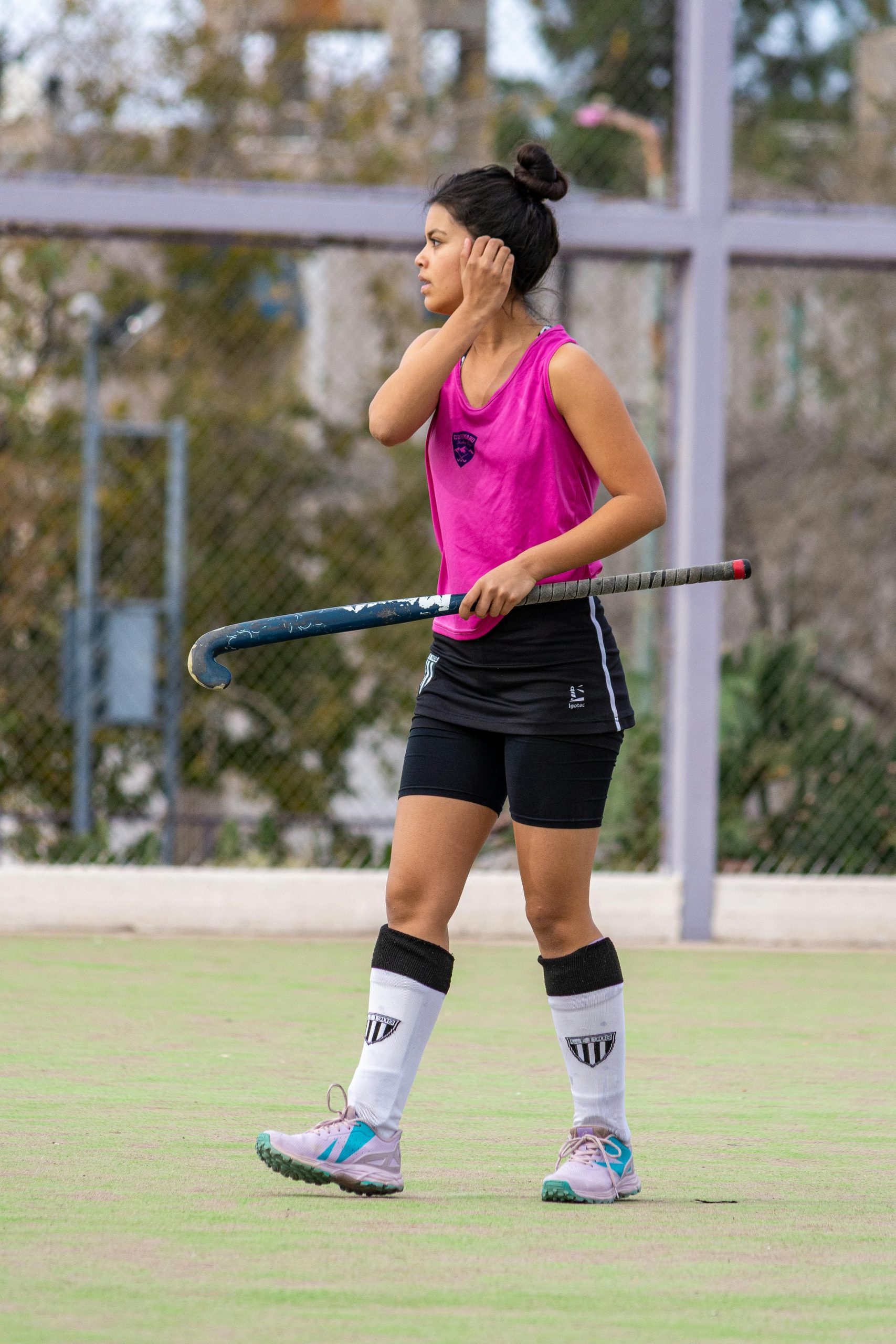
In field hockey, stepping onto the turf with raw speed and athletic endurance is a fantastic starting point, but heart and hustle alone cannot control a heavy, fast-moving plastic ball. You can be the most conditioned athlete in your league, but if you cannot cleanly trap a pass, execute a crisp push, or carry the ball without staring at your feet, your athleticism is completely neutralized. Field hockey requires highly unnatural body mechanics, an asymmetrical grip, and immense wrist dexterity. The player who dominates the game is the one who has painstakingly mastered the fundamental movements until they become second nature.
At Athletes Untapped, our coaches notice that many beginners and young players treat the sport like a track meet with sticks. They rush through the foundational mechanics, preferring to scrimmage immediately rather than spending the necessary time perfecting their grip and posture. This lack of structural discipline leads to wild, dangerous swings, an inability to string two passes together, and a highly frustrating tendency to lose possession the moment they face defensive pressure.
The secret to building a reliable, dangerous, and confident presence on the pitch lies in mastering basic field hockey skills drills. Proper, slow-paced repetition fixes these chaotic habits. It allows players to utilize a soft touch, establish a low athletic center of gravity, and build the deeply ingrained muscle memory that makes the game feel effortless.
Connect with a Private Field Hockey Coach: https://athletesuntapped.com/browse/field-hockey/
Why Basic Field Hockey Skills Drills Matter for Athlete Development
Your fundamental mechanics dictate your absolute ceiling in the sport. Without a sound, structured understanding of the basic skills, you are essentially trying to run a marathon before you have learned how to tie your shoes.
- Game Performance: Elite basic training directly translates to minimizing unforced errors. When you fully understand how to execute a controlled push pass without a backswing, you stop turning the ball over to the opposing midfield. You turn a frantic, chaotic scramble into a calm, methodical possession simply because you have the technical foundation to keep the ball on your stick.
- Confidence: Our coaches have seen athletes improve faster when they master the absolute basics in a low-pressure environment. When you know you can reliably trap a hard pass without it bouncing over your blade, the fear of making a mistake instantly vanishes. You gain the composure to keep your head up and survey the field, trusting your hands because your muscle memory is backed by rigorous, repetitive drill work.
- Long-Term Development: As you progress to higher levels of field hockey, complex maneuvers like 3D aerial lifts, reverse-stick tomahawks, and drag flicks are completely impossible if your basic grip is flawed. You no longer have the luxury of taking bad touches. A tactically sound foundation built through basic drills protects you from developing permanent bad habits, providing the elite technical baseline needed to safely learn advanced skills later.
Best Drills / Tips / Techniques
You cannot master basic stickwork by just randomly hitting a ball against a fence. You need active, structured drills that force your brain to connect with your hands, isolating each fundamental skill—receiving, passing, dribbling, and tackling. Here are 5 of the absolute best basic field hockey skills drills AU coaches use to build a flawless foundation.
1. The Cushion Trap (Receiving)
Pair up with a partner about ten yards apart. Have your partner hit a firm, flat pass directly at you. You must receive the ball cleanly on your forehand, ensuring the ball stops dead on your stick without rebounding more than a few inches away from your feet.
Receiving is the most important skill in the sport; if you cannot trap the ball, you cannot play the game. This drill heavily reinforces the concept of “soft hands” and postural leverage. It teaches the beginner how to absorb the kinetic energy of a fast-moving ball safely.
Angle the stick face slightly forward over the ball to physically trap it against the turf. A frequent error here is holding the stick with a rigid, stiff grip, which turns the blade into a brick wall and causes the ball to aggressively bounce away to the opposing team.
2. The Push-Pass Channel (Passing)
Set up a narrow channel using two parallel lines of cones about two feet apart, and place a target or a partner ten yards away. You must step into the pass and push the ball perfectly through the channel without the ball ever touching the cones or lifting off the turf.
The push pass is the safest, most accurate distribution method in field hockey because it requires zero backswing. This drill trains the critical weight transfer required to generate power using your legs rather than your arms. It teaches the athlete that the ball must stay in constant contact with the stick until the moment of release.
Step aggressively forward with your left foot as you push the ball, driving your momentum through the stick. Athletes frequently make the mistake of standing completely flat-footed and just swatting at the ball with their wrists, which results in a weak, inaccurate pass.
3. The Stationary Indian Dribble (Stickhandling)
Stand completely still with your feet shoulder-width apart. Practice dragging the ball from the outside of your right foot across your body to the outside of your left foot, actively rolling your left wrist over to use the reverse side of the stick to stop the ball, then drag it back.
The Indian dribble (left-to-right dragging) is the absolute core of field hockey dribbling. Practicing it while standing still builds necessary wrist flexibility without the complication of running. It teaches the athlete the complex mechanics of turning the toe of the stick over to protect the ball on the weak side.
Focus entirely on rotating your top left wrist while keeping your bottom right hand loose enough that the stick can spin freely. A massive trap is keeping your wrists locked tight and trying to awkwardly step your entire body around the ball, completely defeating the purpose of the drill.
4. The Shadow Block Tackle (Defending)
Pair up with an attacker. The attacker dribbles forward at a slow, walking pace. As the defender, you must mirror their movements by pedaling backward, maintaining an arm’s length of distance. On the coach’s whistle, you must drop into a deep lunge and lay your stick completely flat on the turf to block the ball.
Defensive structure for beginners is built on patience and leverage, not wild swinging. This drill builds the elite jockeying footwork required to dictate the attacker’s path and the core strength needed to establish a physical wall. It teaches the defender how to cleanly strip the ball without committing a foul.
Drop your left knee incredibly low to the turf and lay the stick horizontally across the attacker’s path. Many players attempt to tackle by jabbing aggressively with the toe of the stick while standing upright, which easily misses the ball and usually results in a dangerous stick tackle.
5. The Pull-Back Escape (Agility)
Place a single cone in front of you. Dribble toward the cone at a moderate pace, abruptly stop your forward momentum, pull the ball straight backward toward your right foot, and immediately accelerate out to the right side at a 90-degree angle.
Creating space is essential for beginners who often feel claustrophobic under pressure. Practicing the pull-back builds the precise deceleration mechanics and ball control required to safely escape a defender who is stepping in to make a tackle.
Pull the ball firmly backward with the toe of the stick and explode instantly into the open space. A common instinct is to just turn your back to the defender and try to shield the ball with your body, which usually results in an obstruction foul or a messy turnover.
Common Mistakes Athletes Make
Even when running the most basic skills drills, technical errors are incredibly common because beginners naturally try to use the stick like a golf club or a baseball bat.
- The Death Grip: Squeezing the bottom of the stick with maximum pressure happens because beginners mistakenly believe a tighter grip equals more control. To correct this, you must loosen your right hand. Your bottom hand is merely a guide ring; 90% of the stick’s rotation and finesse must come from your top left hand.
- Playing Upright: Standing completely tall with straight legs while dribbling or passing completely destroys your center of gravity and gives you zero leverage over the ball. Fix this by dropping your hips. You must stay in a deep, burning athletic lunge during every single drill.
- Staring Down at the Turf: Running with your chin buried in your chest to watch the ball occurs when a beginner lacks tactile feel. To solve this, you must force your eyes up. Look at the horizon or your passing target; if you stare exclusively at the ball, you will miss open teammates and run directly into defenders.
- Taking a Backswing: Lifting the stick past your waist to hit the ball when you are only five yards away from a teammate is dangerous and inefficient. Fix this by mastering the push pass. Power in short distances should come entirely from your legs and core, keeping the stick safely on the turf.
Find a Private Field Hockey Coach: https://athletesuntapped.com/browse/field-hockey/
How Private Coaching Accelerates Improvement
Basic field hockey skills are the building blocks of the sport, but practicing a flawed grip or a poor trap 1,000 times will only permanently ingrain bad habits into your muscle memory. Trying to self-diagnose your wrist roll, your block tackle angle, or your passing posture without an expert eye is practically impossible for a beginner.
This is where private coaching comes in. We have found that personalized instruction helps athletes take these fundamental drills and apply the specific cognitive and physical corrections required to master them, leading to significantly faster skill development from day one.
A private field hockey coach acts as your technical foundation builder. They help accelerate development by breaking down your grip in a controlled setting, providing personalized feedback on how to properly drop your hips and soften your receiving hands. By utilizing immediate, live feedback, coaches can correct mistakes early, showing you exactly where you locked your wrists or stood up too tall before those bad habits permanently limit your growth.
Ultimately, this 1-on-1 environment focuses on massive confidence building. When you possess an elite, coach-verified technical foundation, you stop feeling awkward on the turf, allowing you to step into your team practices knowing you have the precise, fundamental skills to succeed.
Frequently asked questions about Basic Field Hockey Skills Drills
What are the three most basic skills in field hockey?
The absolute core triad of field hockey consists of dribbling (moving the ball under control), push passing (distributing the ball accurately without a backswing), and receiving/trapping (stopping a moving ball cleanly on your stick).
How do I stop the ball from bouncing over my stick when I trap it?
Bouncing usually occurs because the face of your stick is open (leaning backward) or your grip is too rigid. You must tilt the top of your stick slightly forward to trap the ball against the turf, and you must relax your grip slightly to cushion the impact.
How do I properly hold a field hockey stick?
Your left hand should grip the very top of the stick like you are shaking hands with it (the “V” of your thumb and index finger lines up with the toe of the stick). Your right hand should grip lower down the shaft, but it must remain loose enough to let the stick rotate freely.
Can I practice basic field hockey skills at home?
Yes! Basic stickwork is incredibly easy to practice off the pitch. You can practice your Indian dribble, V-drags, and push passes on a smooth driveway, a garage floor, or even on short-pile carpet. Using a bouncy tennis ball indoors is a great way to develop “soft hands.”
Do private coaches work with absolute beginners?
Yes. Elite private field hockey coaches love working with beginners because they are a completely blank slate. It is significantly easier for a private coach to teach you flawless mechanics from day one than it is to fix years of deeply ingrained bad habits in an older, experienced player.
Conclusion
Mastering basic field hockey skills drills is the undeniable foundation of a confident, reliable, and constantly improving player. Without a structured focus on the fundamentals, you are just an athlete chasing the ball around the pitch, leaving your technical development to chance and allowing frustration to quickly ruin your love for the game.
Improvement is highly achievable with proper, focused foundational training. Encourage yourself to practice your stationary wrist-rolls, maintain a strict, low posture during your push passes, and embrace the discipline of perfecting the basics. Consistent practice will inevitably yield a much more dangerous, sharp, and confident presence on the field.
Train With a Private Field Hockey Coach
Athletes Untapped connects athletes with vetted private coaches across the country for one-on-one training.
Private coaching helps athletes:
- improve faster
- build confidence
- receive personalized feedback
- reach their full potential
About Athletes Untapped
Athletes Untapped connects field hockey players with experienced private coaches who specialize in foundational stickwork, proper grip mechanics, and building highly efficient, elite-level practice plans for beginners. Through personalized instruction and customized drill progressions, AU coaches help players eliminate bad habits before they start, master the basics, and completely dictate the tempo of their careers.
Find an experienced coach near you: https://athletesuntapped.com
Learn from our very best AU coaches!


