
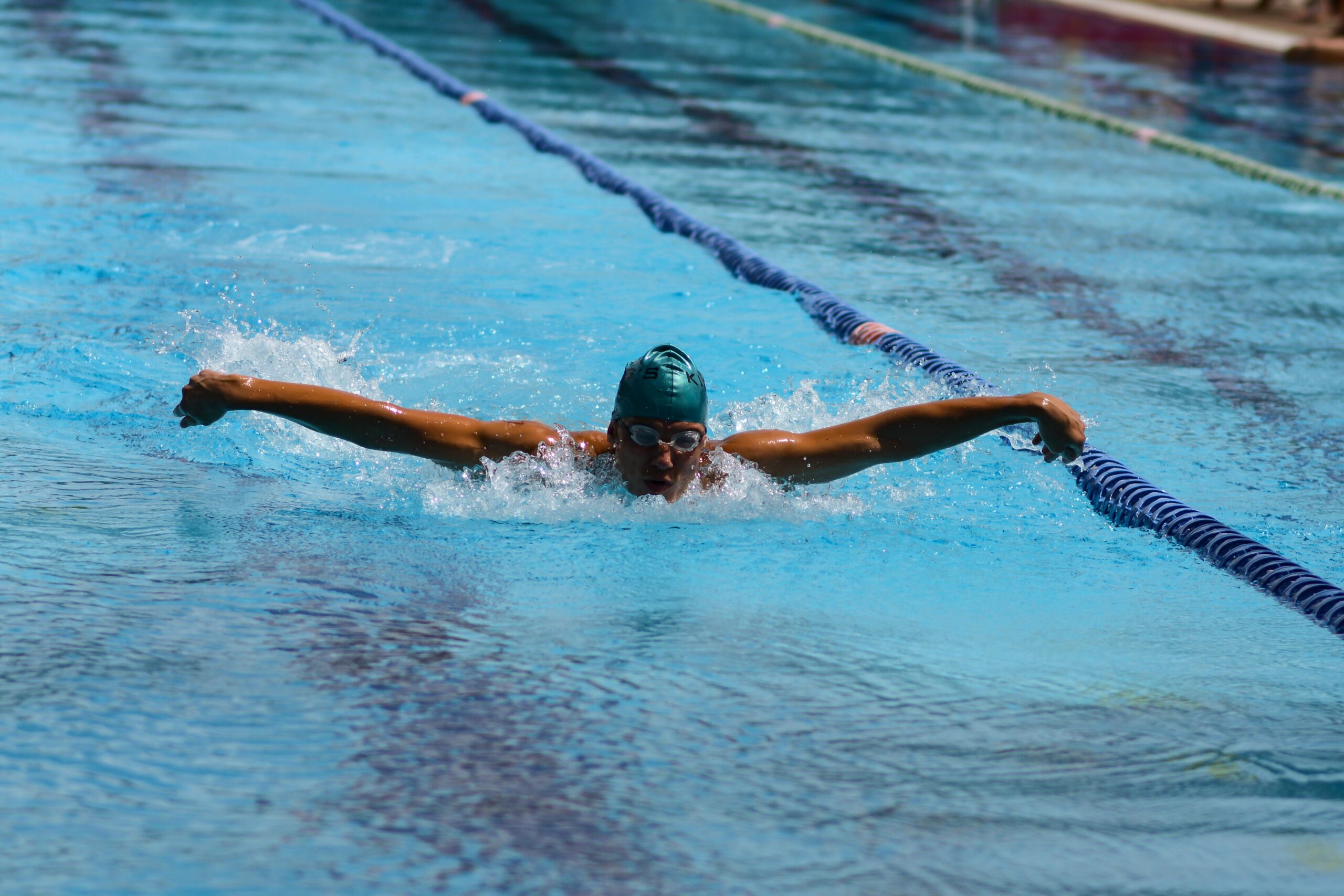
In competitive swimming, having a flawless stroke technique and explosive starts will win you the first 25 yards of a race, but the reality of the sport is that water is an incredibly dense, unforgiving medium. You can have the most beautiful freestyle in your heat, but if your cardiovascular system cannot efficiently process oxygen to fuel your muscles, your technique will rapidly deteriorate, your hips will sink, and you will inevitably hit a physical wall.
At Athletes Untapped, AU coaches notice that many young swimmers treat aerobic training as a race. They jump into the pool for a long endurance set and immediately swim at 90 percent effort, letting their heart rates spike into the anaerobic zone on the very first interval. This lack of physiological understanding leads to “junk miles”—training that is too slow to build top-end sprint speed, but too exhausting to actually build the aerobic base.
The secret to finishing a grueling 500-yard freestyle with a devastating kick, or recovering quickly between multiple events at a weekend meet, lies in aerobic capacity development. Proper training fixes these pacing and heart-rate issues, allowing athletes to build a massive cardiovascular foundation, increase their oxygen uptake, and delay the onset of lactic acid buildup.
Connect with a Private Swimming Coach: https://athletesuntapped.com/browse/swimming/
Why This Skill Matters for Athlete Development
Your aerobic capacity is the foundation of your entire athletic house. Without a massive aerobic base, your body cannot recover fast enough to sustain high-intensity sprint training later in the season.
- Game Performance: Elite aerobic capacity directly translates to back-half dominance. When you possess a highly developed cardiovascular engine, your body uses oxygen so efficiently that you do not start building fatiguing lactic acid until much later in the race. This allows you to hold your goal pace effortlessly through the middle laps and completely out-touch competitors who are dying in the final yards.
- Confidence: AU coaches have seen athletes improve faster when they spend dedicated weeks focusing strictly on low-intensity, high-volume base building at the start of a season. When swimming 3,000 yards without stopping feels effortless, swimmers stop fearing distance events. They gain the composure to trust their endurance, execute their race plan without panicking about fatigue, and step onto the blocks knowing they cannot be out-worked.
- Long-Term Development: As you progress to high school, club, and collegiate swimming, meet schedules become grueling, often requiring athletes to swim three or four high-intensity events in a single day. A physiologically sound aerobic base protects your body from breaking down under this immense workload. It provides the elite recovery system needed to flush waste products from your muscles between races, ensuring your performance scales safely across multi-day championship meets.
Best Drills / Tips / Techniques
You cannot build a massive aerobic base by simply swimming as hard as you can every day until you fail. You need isolated, heart-rate-controlled pacing sets to physically stretch the capacity of your lungs and heart. Here are 5 techniques AU coaches use to build an unbreakable cardiovascular engine.
1. The Steady-State Overdistance Swim
How to perform it: Swim a continuous, unbroken distance (such as 1,000 to 2,000 yards) at a strict, conversational pace. Your heart rate should remain entirely in “Zone 2” (roughly 60 to 70 percent of your maximum heart rate). If you are breathing heavily or feeling a burn in your muscles, you are swimming too fast.
Why it works: True aerobic development happens at lower intensities. This drill trains the body to increase mitochondrial density and build new capillary beds in the muscle tissue. It teaches the cardiovascular system to become a highly efficient machine at pulling oxygen out of the blood and turning it into sustained energy.
Coaching tips: Focus entirely on your distance per stroke and maintaining a perfectly horizontal body line. Because the pace is slow, your technique should be absolutely flawless for the entire duration.
Common mistakes: Speeding up when someone passes you in the next lane. You must leave your ego on the pool deck. This is a physiological adaptation set, not a race.
2. Negative Split Intervals
How to perform it: Swim a set of mid-distance intervals (for example, 6 x 200 yards). On every single repetition, you must swim the second half of the distance faster than the first half. For a 200-yard swim, your split for the final 100 yards must be faster than your split for the first 100 yards.
Why it works: Swimming fast when you are tired is the ultimate test of aerobic conditioning. This drill marries pace awareness with cardiovascular endurance. It trains the brain to hold back energy early in the swim and forces the body to accelerate exactly when oxygen debt is beginning to set in.
Coaching tips: The first half of the swim should feel almost uncomfortably smooth and controlled. If you push the first half too hard, a negative split becomes biologically impossible.
Common mistakes: Going out too fast and simply trying to survive the second half. This completely defeats the purpose of the drill and turns it into an anaerobic survival test.
3. Descending Ladder Sets
How to perform it: Swim a set where the distance gets shorter, but the required pace gets significantly faster. For example, swim a 500, then a 400, a 300, a 200, and finally a 100. The 500 is swum at a smooth aerobic pace, but by the time you reach the 100, you are swimming at an aggressive, race-pace threshold effort. Take exactly 20 seconds of rest between each distance.
Why it works: This drill targets the lactate threshold—the exact point where the body begins producing more lactic acid than it can clear. By starting with a long aerobic swim, you pre-fatigue the muscles. Forcing the body to swim faster as the distances get shorter trains your engine to clear lactate efficiently while still maintaining velocity.
Coaching tips: Check your clock on every interval. You must hit your target paces precisely to get the intended physiological benefit from the descent.
Common mistakes: Taking extra rest when the distances get shorter. The strict 20-second rest interval is exactly what forces the aerobic system to adapt to the increasing workload.
4. Hypoxic Breath Control Pyramids
How to perform it: Swim a continuous 300-yard freestyle. For the first 50 yards, breathe every 3 strokes. For the next 50, breathe every 5 strokes. Then every 7 strokes. Once you reach the peak (7 strokes), work your way back down the pyramid (5 strokes, then 3 strokes) for the remainder of the swim.
Why it works: While it is dangerous to push breath-holding to extreme limits, structured hypoxic training in a safe, monitored environment forces the body to adapt to operating with less oxygen. It builds immense lung capacity, teaches the athlete to remain calm under the stress of oxygen deprivation, and strengthens the diaphragm.
Coaching tips: Do not kick frantically when you feel the urge to breathe. Kicking burns more oxygen than pulling. Relax your legs and focus on a long, smooth arm pull to conserve air.
Common mistakes: Cheating the pattern by taking a quick “double breath” on the turns. You must maintain the exact stroke count to force the physiological adaptation.
5. Heart Rate Recovery Sets
How to perform it: Swim a high-intensity 100-yard sprint at 90 percent effort. Immediately check your heart rate at the wall for 10 seconds. You are not allowed to start the next 100-yard sprint until your heart rate drops back down to 120 beats per minute (or roughly 20 beats in 10 seconds). Repeat for 8 to 10 rounds.
Why it works: A massive aerobic base is not just about how long you can swim; it is about how fast your heart can recover. This drill actively measures your cardiovascular fitness. As your aerobic capacity improves over the season, the amount of time it takes for your heart rate to drop to 120 bpm will become significantly shorter.
Coaching tips: Do not just hang on the wall and gasp for air. Practice deep, controlled diaphragmatic breathing to actively force your heart rate down faster.
Common mistakes: Starting the next interval before your heart rate has fully recovered just to keep up with the practice interval. You must wait for the physiological trigger to occur.
Common Mistakes Athletes Make
Aerobic development errors are incredibly common in age-group swimming, largely due to a lack of patience and a misunderstanding of how energy systems work in the human body.
Swimming the “Junk Miles” Middle Ground: Refusing to swim slow enough on easy days to build the aerobic base, and therefore being too fatigued to swim fast enough on sprint days to build top-end speed. This leaves the swimmer stuck in a plateau of mediocre, mid-level exertion.
How to fix it: Polarize your training. Make your easy aerobic days truly easy, and make your fast anaerobic days truly fast.
Ignoring Technique During High Volume: Allowing your stroke to completely fall apart because you are focused strictly on getting the yardage done.
How to fix it: Perfect practice makes perfect. Swimming 4,000 yards with dropped elbows and a crossed-over hand entry just builds 4,000 yards of terrible muscle memory. If your form breaks, slow down until you can hold it together.
Skipping the Warm-Down: Hopping out of the pool immediately after a grueling main set because practice time is over.
How to fix it: The warm-down is where recovery begins. Swimming 200 to 400 yards of very slow, easy freestyle actively flushes the lactic acid out of your muscles, ensuring your aerobic system is ready to train again tomorrow.
How Private Coaching Accelerates Improvement
Aerobic capacity building is a highly scientific process of heart rate tracking, energy system management, and stroke efficiency. Trying to self-diagnose whether you are swimming in Zone 2 or Zone 3, or if your stroke rate is artificially inflating your heart rate, is practically impossible while you are staring at the black line at the bottom of the pool.
This is where private coaching is essential. Private coaching provides faster physiological development by utilizing expert pacing strategy, custom-built macrocycles (seasonal plans), and precise interval adjustments. A private swimming coach offers personalized feedback tailored to your specific event focus (e.g., the 50 free vs. the 500 free), making it easy to catch habits like over-kicking immediately. This targeted instruction allows athletes to focus on building their cardiovascular engine safely before they burn out from overtraining. Ultimately, mastering your aerobic capacity in a 1-on-1 environment provides massive confidence building, allowing you to dive off the blocks knowing you possess an endless reserve of stamina to finish the race.
Find a Private Swimming Coach: https://athletesuntapped.com/browse/swimming/
Frequently Asked Questions about Building Endurance for Swimmers
What is the difference between aerobic and anaerobic training?
Aerobic training means “with oxygen.” It involves steady, sustained efforts where your heart and lungs can supply enough oxygen to the muscles to keep them working indefinitely. Anaerobic training means “without oxygen.” It involves short, explosive sprints where the muscles burn energy faster than the body can supply oxygen, leading to rapid fatigue and lactic acid buildup.
How many days a week should I swim to build an aerobic base?
To build a true cardiovascular foundation, swimmers typically need 4 to 6 sessions per week. The heart and lungs require consistent, repetitive stress to create long-term physiological adaptations.
Can I build my swimming aerobic base by running instead?
Running is a fantastic cross-training tool for general cardiovascular health, but swimming is highly specific. The muscular endurance, breath control, and horizontal body position required for swimming mean that the best way to build swimming endurance is by putting in the yards in the pool.
Why do my shoulders hurt when I do long endurance sets?
Shoulder pain during high-volume sets is almost always a sign of mechanical breakdown. You are likely dropping your elbows, crossing your hands over your head’s centerline upon entry, or failing to rotate your hips, forcing your rotator cuffs to do all the work.
Do private coaches help with this?
Absolutely. Private swimming coaches are essential for breaking down the biomechanics of your long-axis rotation, programming exact heart-rate-specific interval sets, and isolating specific breathing flaws so you can become a vastly more efficient endurance athlete.
Conclusion
Mastering your aerobic capacity is the undeniable foundation of a tireless, unstoppable competitive swimmer. Without it, you are leaving your race results entirely up to the hope that you can sprint fast enough before the piano drops on your back. Improvement is highly achievable with proper physiological training, but it requires extreme patience, ego control, and a willingness to embrace the slow, smooth rhythm of the water. Encourage yourself to focus on your steady heart rate and your flawless technique before you focus on racing your teammates in practice, and consistent effort will inevitably yield an indestructible engine and massive time drops at the end of the season.
Train With a Private Swimming Coach
- Athletes Untapped connects athletes with vetted private coaches across the country for one-on-one training.
- Private coaching helps athletes:
- improve faster
- build confidence
- receive personalized feedback
- reach their full potential
About Athletes Untapped
Athletes Untapped connects swimmers with experienced private coaches who specialize in aerobic capacity development, race pacing, and stroke efficiency. Through personalized instruction and structured training plans, AU coaches help distance and sprint swimmers build their cardiovascular base, eliminate pacing errors, and dominate the final laps of every race.
Find an experienced coach near you: https://athletesuntapped.com
Learn from our very best AU coaches!


